Fadogia Agrestis: 7 Critical Facts and Risks
FADOGIA AGRESTIS: 7 CRITICAL FACTS AND RISKS
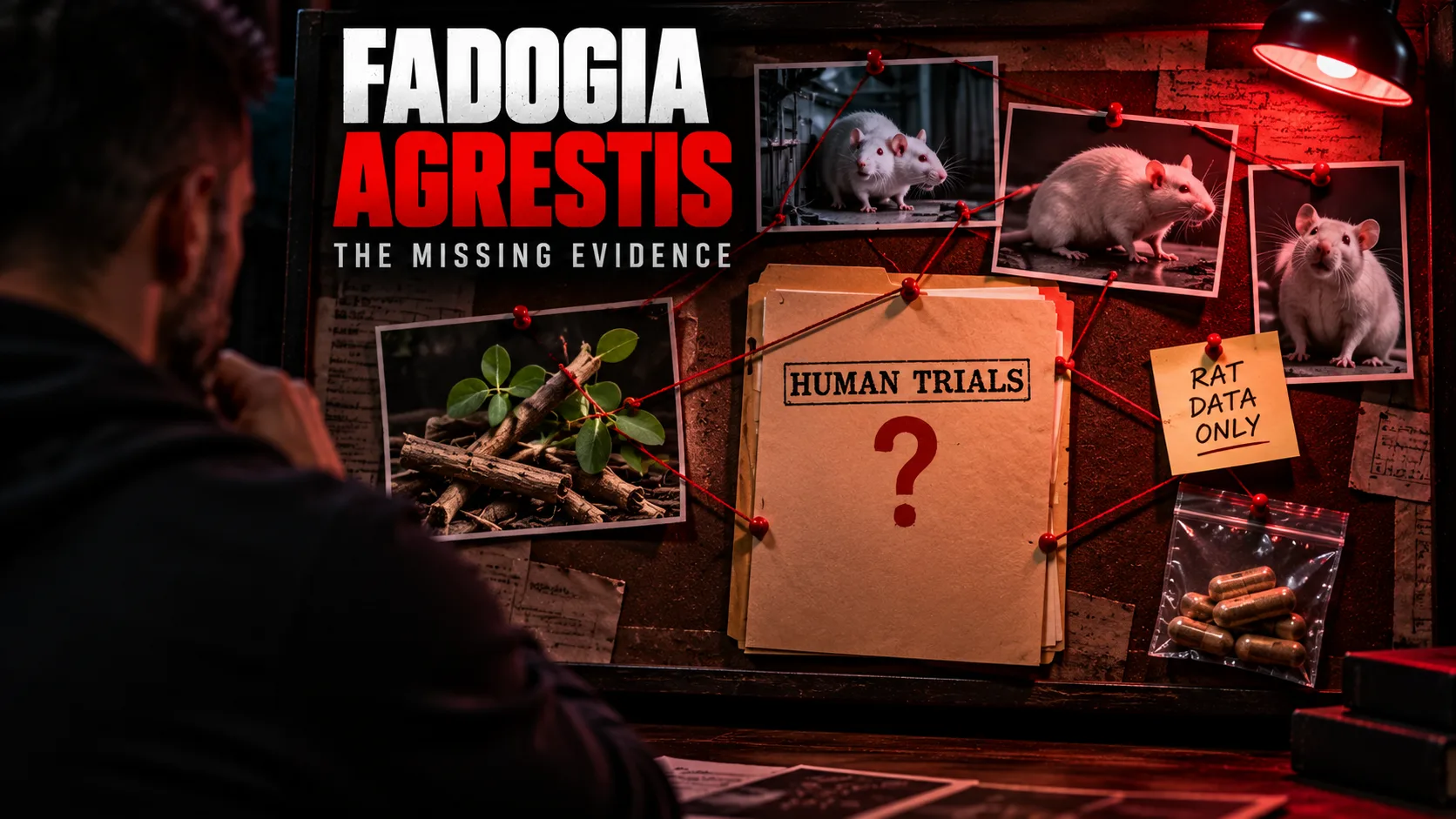
Fadogia agrestis went from an African folk remedy to a bestselling testosterone booster almost overnight, mostly thanks to podcasts. Here is what sits behind it. A handful of rat studies from one research group. No published human trial at all. And a rat study that found changes in the testes at every dose tested.
This guide explains in plain words what fadogia agrestis is, what the rat studies found, what lab tests found in the supplements, how it compares with tongkat ali, and what we know about side effects. Every figure comes from a PubMed abstract listed at the end. For a herb with human data, see KSM 66 ashwagandha.
Fadogia agrestis in brief
Three numbers sum up the evidence on fadogia agrestis. How many human trials exist, how many rat doses changed the testes, and how many tested products held none of the plant markers.
Published trials of fadogia agrestis in people
Every testosterone result for fadogia agrestis comes from rats. A PubMed search turns up rat studies and plant chemistry, but no trial in humans.
Doses that changed the rats testes after 28 days
All three doses changed testis markers. The authors called these signs of possible harm, with recovery mainly at the lowest dose (PMID 18023305).
Supplements with none of the plant marker compounds
A 2019 lab study tested 17 products sold as fadogia agrestis. Five had none of the plant compounds it looked for (PMID 30170324).
Every figure on this page comes from a PubMed abstract listed at the end. The human dose conversion is our own calculation with the standard method, and it is labelled as such. Nothing here is a dose recommendation.
What this guide covers
What fadogia agrestis is and why it became popular.
What the rat studies found, both the testosterone rise and the warning signs.
Fadogia agrestis side effects, lab tests of real products, and how it compares with tongkat ali.
Not covered
A dose to take. There is no human data to base one on.
Treatment for low testosterone. That needs a doctor and a blood test. See evidence based supplements for what has human data.
What is fadogia agrestis and why did it get popular?
Fadogia agrestis is a shrub from West Africa. Its stem is used in traditional medicine there for pain, inflammation and as an aphrodisiac (PMID 30170324).
It became popular in the West after it was talked about on health podcasts as a natural testosterone booster. Sales grew far faster than the science. The research behind those claims is a small set of rat studies. Three of the four come from the same research team (PMID 16281088, PMID 18023305, PMID 19755438).
It is now sold alone or mixed with tongkat ali in many "test booster" products. A 2020 study of 50 such boosters found that 90 percent claimed to raise testosterone. Only 24.8 percent of their ingredients had any data showing a rise (PMID 31385468).
What the fadogia agrestis rat studies showed
The testosterone study. In 2005, male rats got a water extract of the stem at 18, 50 or 100 mg per kg for 5 days. Their mating behaviour increased, and blood testosterone rose at all doses (PMID 16281088). This is the study behind most fadogia agrestis benefits claims.
The testes study. In 2008, the same group gave the same doses for 28 days. The extract changed many markers of testis function. The authors called these signs of adverse effects on the testes. Rats recovered on some markers, mainly at the lowest dose (PMID 18023305).
The liver and kidney study. In 2009, the group looked at the liver and kidneys of the same kind of rats. There were no outward signs of illness and no deaths. But enzymes leaked from liver and kidney cells into the blood, and a marker of cell damage rose. The authors suggested damage to the cell membranes (PMID 19755438).
The erection study. A 2023 study gave the extract to rats with drug induced erection problems. It restored several chemical markers of erection, similar to sildenafil (PMID 35969364). Again, these were rats.

Does fadogia agrestis increase testosterone in humans?
Nobody knows. We found no published trial of fadogia agrestis in people. There is no human data on testosterone, muscle, strength, fertility or safety.
Rat results often fail in people. Rats process plant compounds differently, and the doses per kilogram are not the same as in a capsule. That is why a rise in rat testosterone is a reason to study a plant, not a reason to take it.
Reviews of popular boosters show the same gap across the market. Of 191 studies on the 10 most common booster ingredients, only 19 percent were in humans; 53 percent were in animals (PMID 30770069).
The rat doses, converted to a person
Rat doses cannot simply be multiplied by your body weight. Scientists convert them with a body surface area method, because small animals burn through compounds faster (PMID 17942826, PMID 27057123).
The chart shows the three rat doses converted to a 70 kg person with that method. This is our calculation, not a figure from the studies, and it is not a dose suggestion.
Compare the serving on your label with this range. If it falls inside it, you are taking an amount similar to the rat doses that changed the testes, with no human safety data. This comparison is a rule of thumb, because rats and people also differ in other ways.
Fadogia agrestis side effects
Because there are no human trials, nobody has measured side effects in people. What we have is the rat data:
| Area | What the rat studies found | Source |
|---|---|---|
| Testes | Changed markers of testis function at all doses; recovery mainly at the lowest dose | PMID 18023305 |
| Liver and kidneys | Enzymes leaked into the blood; a marker of cell damage rose | PMID 19755438 |
| General health | No outward signs of illness, no deaths, normal organ weights | PMID 19755438 |
Fadogia agrestis and tongkat ali: unequal partners
Fadogia agrestis and tongkat ali are often sold together. They are not equal. Tongkat ali, also called Eurycoma longifolia, has human trials.
| Fadogia agrestis | Tongkat ali | |
|---|---|---|
| Human trials | None found | Several, pooled in a review (PMID 36013514) |
| Testosterone in men | Only shown in rats (PMID 16281088) | Total testosterone rose in a review of trials (PMID 36013514) |
| Safety data in people | None | Short trials, for example 5 weeks in older adults (PMID 23754792) |
| Warning signs | Testis, liver and kidney changes in rats | None reported in the abstracts we read |
A 2022 review pooled 5 trials. Tongkat ali raised total testosterone in men, especially in men with low levels (PMID 36013514). In one uncontrolled study, 76 men with low testosterone took 200 mg a day for a month. The share with normal testosterone went from 35.5 to 90.8 percent (PMID 21671978).
In a small pilot study, 25 active adults aged 57 to 72 took 400 mg a day for 5 weeks. Total and free testosterone and grip strength rose in both men and women (PMID 23754792).
What labs found inside fadogia agrestis supplements
Even if fadogia agrestis worked, you would need the real plant in the capsule. A 2019 study built a lab test for 11 compounds found in the plant. Then it checked 17 supplements sold as fadogia agrestis.
Twelve products contained the plant compounds, adding up to 0.3 to 2.7 mg a day. Five contained none of them at all (PMID 30170324). That does not prove those five were fake, but it raises the question of what was in them.
Seven critical facts about fadogia agrestis
1. It is a West African shrub used in folk medicine. Mainly as a pain reliever and aphrodisiac (PMID 30170324).
2. Its testosterone rise was seen in rats, over 5 days. (PMID 16281088).
3. There is no published human trial. Not for testosterone, muscle or safety.
4. A 28 day rat study found testis changes at every dose. (PMID 18023305).
5. Rats also showed liver and kidney cell stress. (PMID 19755438).
6. Five of 17 tested products had none of the plant markers. (PMID 30170324).
7. Tongkat ali has human data; fadogia agrestis does not. (PMID 36013514).
So, is fadogia agrestis worth taking?
The case for it is one 5 day rat study showing more testosterone and mating behaviour (PMID 16281088). The case against is a 28 day rat study with testis changes at every dose (PMID 18023305). Add liver and kidney cell stress in rats (PMID 19755438), and no human trial at all.
Our take: fadogia agrestis is not worth the risk for most people. The evidence is all in rats, the warning signs are in the same rats, and product quality varies. If you want a herb with human data, tongkat ali and KSM 66 ashwagandha at least have trials. More guides sit on the supplements hub.
Fadogia agrestis: frequently asked questions
Does fadogia agrestis work?
It has never been tested in people. In rats, a stem extract raised testosterone and mating behaviour over 5 days (PMID 16281088). Rat results often do not carry over to humans.
What are the side effects of fadogia agrestis?
No human side effects have been measured. In rats, 28 days at all three doses changed markers of testis function (PMID 18023305). Liver and kidney enzymes also leaked into the blood (PMID 19755438).
Is fadogia agrestis safe?
Its safety in people is unknown because there are no human trials. The rat studies found testis, liver and kidney changes (PMID 18023305, PMID 19755438). Anyone trying to have children should avoid it.
What are fadogia agrestis benefits for men?
The claimed benefits are higher testosterone and libido. Both come from rat studies (PMID 16281088, PMID 35969364). No benefit has been shown in men.
Fadogia agrestis and tongkat ali: should you take them together?
No study has tested the pair. Tongkat ali raised total testosterone in a review of human trials (PMID 36013514). Fadogia agrestis has no human data, so it adds unknown risk.
How much fadogia agrestis is in a supplement?
It varies. In a 2019 lab study, 12 of 17 products contained the plant compounds and 5 contained none (PMID 30170324).
What is fadogia agrestis?
It is a West African shrub whose stem is used in traditional medicine for pain, inflammation and as an aphrodisiac (PMID 30170324). It is now sold as a testosterone booster.
Do testosterone booster supplements work?
Most are not backed by data. In 50 boosters, 90 percent claimed to raise testosterone, but only 24.8 percent of their ingredients had data showing a rise (PMID 31385468).
Sources and further reading
Every figure on this page comes from one of the 12 papers below, checked against their PubMed abstracts on 26 October 2026. The human dose conversion in the chart is our own calculation with the method from the dose conversion papers. Rat results are labelled as rat results. Reference links are dofollow to support open science.
Verified
Verified
Verified
Verified
Verified
Verified
Verified
Verified
Verified
Verified
Verified
Verified
More on supplements and evidence
Four pages on test boosters, herbs with human data, and what to check before you buy.
Final Educational Note
This article is educational and is not medical advice. It reports what rat studies, lab tests and human trials of related herbs found. There is no human trial of fadogia agrestis, so its effects and safety in people are unknown. If you are worried about testosterone, fertility or libido, see a doctor and get a blood test. Do not use it if you are trying to have children, take hormone products, have liver or kidney disease, or are under 18. More guides sit on the supplements hub.
Read more about how this site works on the about page and in the full disclaimer.