Performance Supplements: What the Evidence Actually Shows

PERFORMANCE SUPPLEMENTS: THE 5 ERGOGENIC AIDS WITH REAL EVIDENCE, THEIR EFFECT SIZES AND STUDY DOSES
Performance supplements are products taken to train harder or compete better. The IOC consensus names only a few with good evidence: caffeine, creatine, specific buffering agents and nitrate (PMID 29540367). Even those give small effects.
This guide covers the five ergogenic aids with meta-analysis support, their effect sizes and study doses. It also covers what pre workouts contain, and the mistakes. More guides sit on the supplements hub.
Performance supplements in three numbers
Three study figures show what performance supplements can and cannot do.
IOC consensus
Caffeine, creatine, buffers, nitrate (PMID 29540367).
Creatine, upper body
53 studies, 1,138 people (PMID 27328852).
Average pre workout
Effective dose is 4 to 6 g (PMID 30678328, 26175657).
Study figures come from PubMed papers. Doses are quoted from position stands as study facts, not as a plan. Practice notes are marked.
What this performance supplements guide covers
The five ergogenic aids with meta-analysis or position stand support, and how big their effects are.
Tier B ingredients with promising but thin data.
Pre workout blends measured against effective doses.
Not covered
Recovery and health products. See recovery supplements.
Hormones and drugs. Those are not supplements and sit in other hubs.
What performance supplements are
Ergogenic aids are products taken to improve performance directly. The IOC sorts supplements by purpose, and performance is one of four purposes (PMID 29540367).
Supplements claiming to enhance performance are the largest group marketed to athletes. Only a few have good evidence: caffeine, creatine, specific buffering agents and nitrate (PMID 29540367).
Responses vary widely between people because of genetics, the microbiome and habitual diet. The IOC advises trialling any supplement in training before competition (PMID 29540367).
| Supplement | Best use | Pooled effect | Source |
|---|---|---|---|
| Creatine | Strength, efforts under 3 min | 0.32 upper, 0.27 lower body | PMID 27328852, 25946994 |
| Caffeine | Endurance, strength, power | Ergogenic in 21 meta-analyses | PMID 30926628 |
| Beta alanine | Efforts of 0.5 to 10 min | 0.18; 0.43 with bicarbonate | PMID 27797728 |
| Sodium bicarbonate | High intensity, 30 s to 12 min | Position stand supports | PMID 34503527 |
| Nitrate | Recreational endurance | 0.17 | PMID 32936597 |
Creatine: the best studied of all performance supplements
Creatine raises muscle creatine stores, which supports high intensity exercise and training adaptations (PMID 28615996).
Upper body: across 53 studies with 1,138 people, the pooled effect on strength was 0.317. Bench press alone was 0.265 (PMID 27328852).
Lower body: across 60 studies with 1,297 people, squat was 0.336 and leg press 0.297. Results held regardless of dose, loading or training status (PMID 25946994).
Safety: up to 30 g a day for 5 years was safe and well tolerated in healthy people. About 3 g a day covers habitual low dietary intake (PMID 28615996).
Caffeine: the broadest of the performance supplements
An umbrella review of 21 meta-analyses found caffeine ergogenic for aerobic endurance, muscle strength, muscle endurance, power, jumping and speed (PMID 30926628).
The effect is generally larger for aerobic than anaerobic exercise. Most studies were in young men (PMID 30926628).
The ISSN position stand puts the effective dose at 3 to 6 mg per kg, usually taken 60 minutes before exercise. Minimal effective doses may be as low as 2 mg per kg (PMID 33388079).
Genetics, habitual intake and sleep or anxiety effects explain much of the variation between people (PMID 33388079).
Beta alanine: performance supplements for 1 to 4 minute efforts
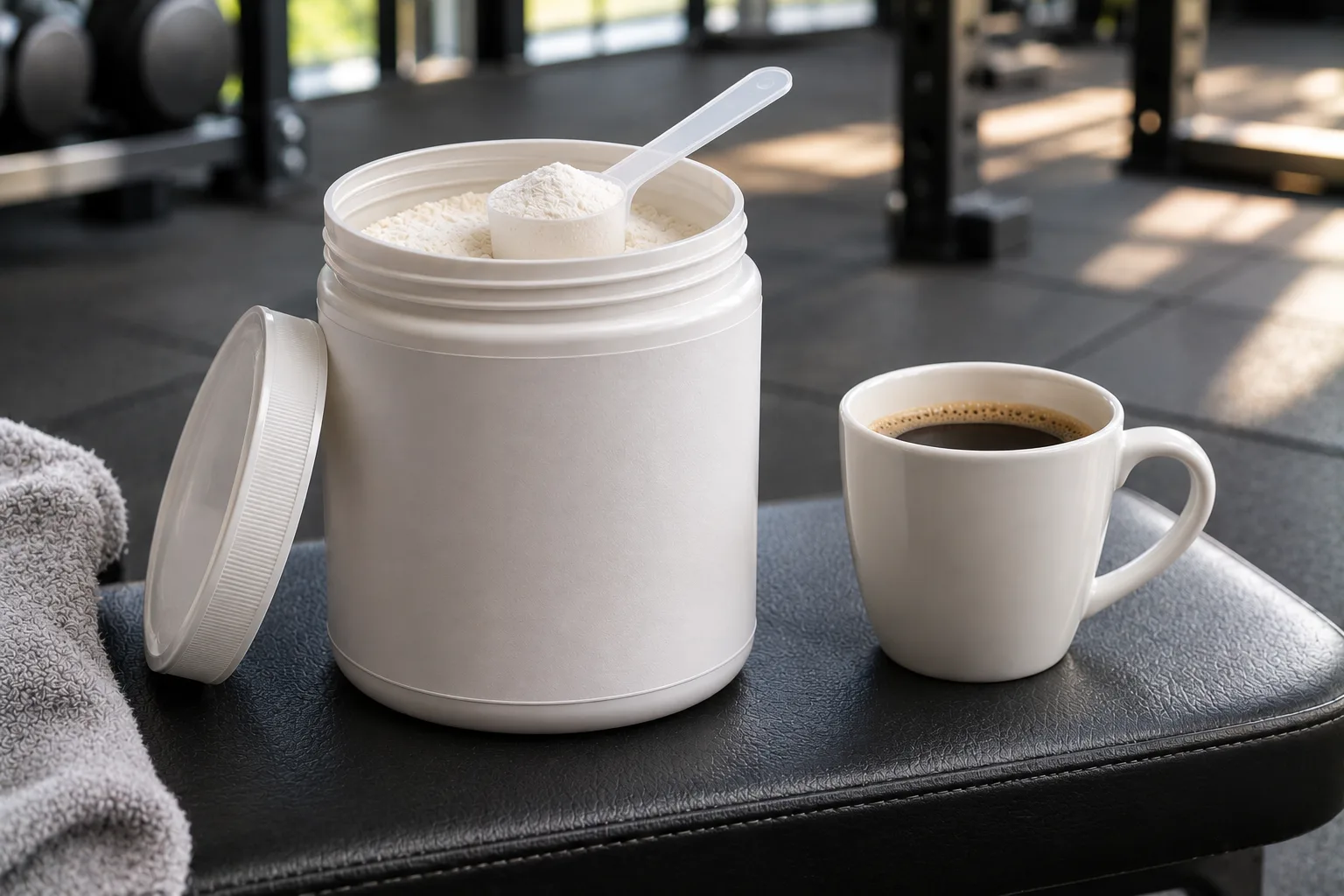
Beta alanine raises muscle carnosine, an intracellular buffer. 4 to 6 g a day for at least 2 to 4 weeks is the ISSN range (PMID 26175657).
Across 40 studies with 1,461 participants, the pooled effect was 0.18. Exercise lasting 0.5 to 10 minutes benefited most (PMID 27797728).
Stacking matters. Beta alanine with sodium bicarbonate gave the largest effect against placebo, 0.43 (PMID 27797728).
The only reported side effect is tingling, reduced by splitting the dose into 1.6 g portions or using sustained release (PMID 26175657).
Sodium bicarbonate: the cheapest of the performance supplements
The ISSN position stand supports sodium bicarbonate for muscular endurance and combat sports. It also covers high intensity cycling, running, swimming and rowing lasting 30 seconds to 12 minutes (PMID 34503527).
Study doses ran 0.2 to 0.5 g per kg. 0.3 g per kg was optimal; higher doses added side effects without extra benefit (PMID 34503527).
Bloating, nausea and abdominal pain are the common side effects. Taking it 60 to 180 minutes before exercise with a carbohydrate meal, or in enteric coated capsules, reduced them (PMID 34503527).
Combining bicarbonate with creatine or beta alanine may be additive. Part of its effect seems placebo driven (PMID 34503527).
Nitrate: performance supplements for recreational athletes
Across 80 randomised crossover studies, nitrate improved performance with a pooled effect of 0.174 (PMID 32936597).
The effect was absent in two groups. Studies with only women showed none, and well trained endurance athletes above 65 ml per kg per minute showed none (PMID 32936597).
The authors called the effect objectively small and said nitrate has limited use for people with excellent aerobic fitness (PMID 32936597).
Tier B: performance supplements with thinner evidence
Citrulline malate. In 8 studies with 137 people, 6 to 8 g taken 40 to 60 minutes before lifting added 3 repetitions, or 6.4%. The effect was small, 0.196 (PMID 34010809).
Protein. Not an ergogenic aid in the acute sense. Across 49 trials, extra protein added 0.30 kg fat free mass and 2.49 kg to one rep max (PMID 28698222).
| Ingredient | Evidence | Verdict |
|---|---|---|
| Citrulline malate | Small effect on reps to failure, 8 studies (PMID 34010809) | Promising, lower body only |
| Protein powder | +0.30 kg fat free mass over months (PMID 28698222) | Nutrition, not a stimulant |
| Taurine, tyrosine | Common in pre workouts (PMID 30678328) | Practice, not studied for performance here |
| Herbal boosters | See individual guides | Mostly unproven |
Most tier B ingredients are in pre workouts for the label, not the dose. No trial here supports them at the amounts blends typically allow.
What pre workout performance supplements contain
The top 100 pre workouts averaged 18.4 ingredients, with 8.1 of them in a proprietary blend at undisclosed amounts (PMID 30678328).
Beta alanine appeared in 87% at an average 2.0 g, below the 4 to 6 g effective range. Caffeine appeared in 86% at 254 mg, the low end for a 70 kg person (PMID 30678328, 26175657, 33388079).
Creatine appeared in only 49%, at 2.1 g (PMID 30678328). Nearly half of all ingredients, 44.3%, had no disclosed amount (PMID 30678328).
Muscle building products are the category most often adulterated with synthetic steroids: 82 of 92 tainted products (PMID 30646238).
5 mistakes with performance supplements
Expecting big effects
Pooled effects run 0.17 to 0.32, small by convention (PMID 27328852, 32936597).
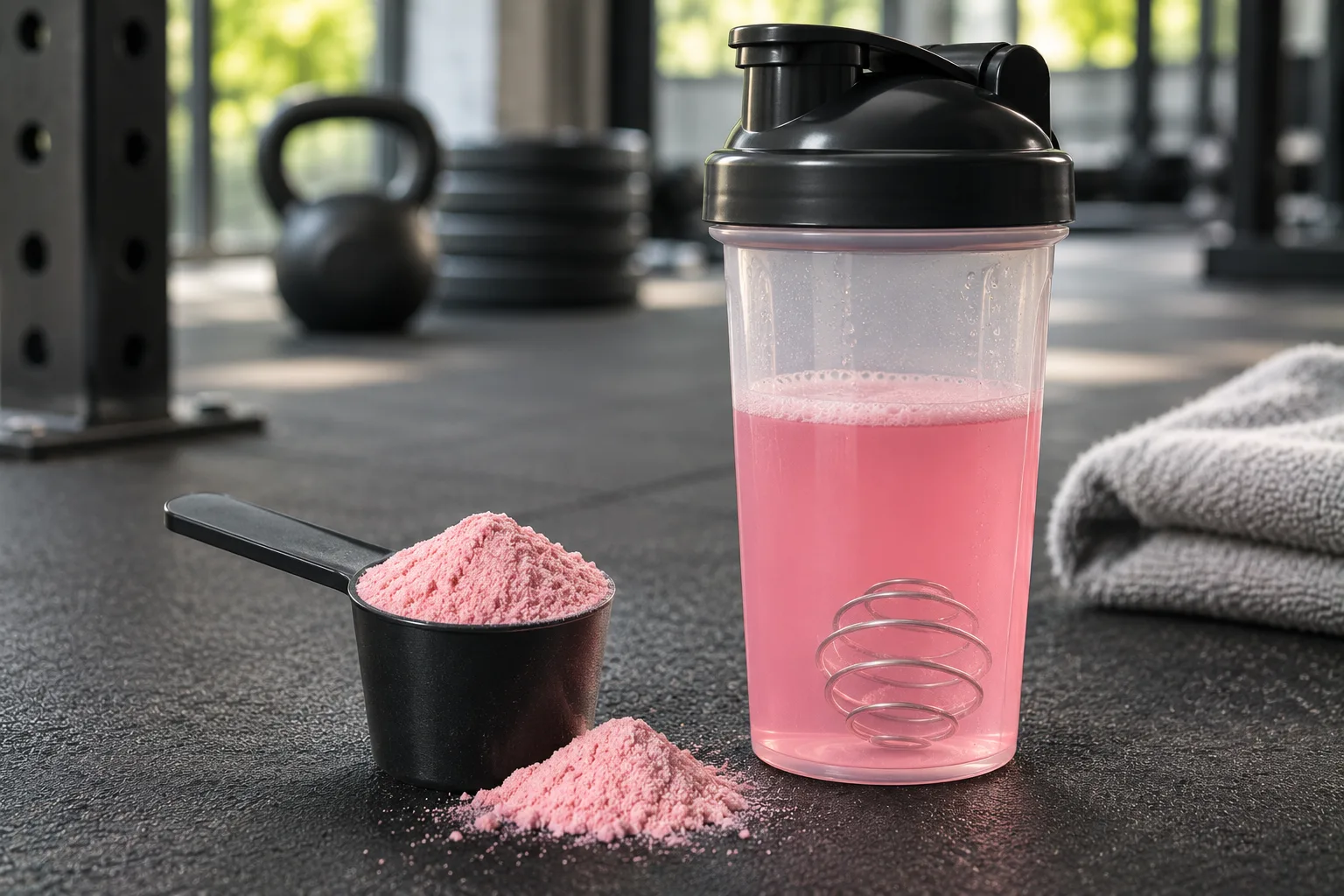
Underdosing beta alanine
Pre workouts average 2.0 g; the effective range is 4 to 6 g (PMID 30678328, 26175657).
Trying bicarbonate on race day
Bloating and nausea are common; test it 60 to 180 minutes before training first (PMID 34503527).
Buying nitrate as an elite endurance athlete
No effect above 65 ml per kg per minute (PMID 32936597).
Trusting a muscle building blend
89.1% of tainted muscle products contained synthetic steroids (PMID 30646238).
Verdict: 7 facts about performance supplements
1. Four have good evidence. Caffeine, creatine, buffers, nitrate (PMID 29540367).
2. Creatine is the best studied. Effect 0.317 upper body across 53 studies (PMID 27328852).
3. Caffeine helps almost every task. 21 meta-analyses agree (PMID 30926628).
4. Beta alanine needs 4 to 6 g. Pooled effect 0.18; 0.43 with bicarbonate (PMID 26175657, 27797728).
5. Bicarbonate works at 0.3 g per kg. Higher doses add side effects, not results (PMID 34503527).
6. Nitrate is for recreational athletes. No effect in well trained endurance athletes (PMID 32936597).
7. Pre workouts are underdosed. 44.3% of ingredients in blends (PMID 30678328).
Performance supplements: frequently asked questions
What are performance supplements?
Products taken to improve exercise performance directly. The IOC names caffeine, creatine, buffers and nitrate as the ones with good evidence (PMID 29540367).
What are ergogenic aids?
Another name for performance supplements. In meta-analyses their effects are small: creatine 0.317, beta alanine 0.18, nitrate 0.174 (PMID 27328852, 27797728, 32936597).
What are the best supplements for athletic performance?
Creatine for strength, caffeine for most tasks, beta alanine and bicarbonate for 1 to 10 minute efforts, nitrate for recreational endurance (PMID 29540367).
How much caffeine improves performance?
3 to 6 mg per kg, about 60 minutes before exercise, per the ISSN (PMID 33388079).
Does beta alanine work?
Yes, with a pooled effect of 0.18 across 40 studies, mainly for efforts of 0.5 to 10 minutes (PMID 27797728).
Does baking soda improve performance?
Sodium bicarbonate at 0.2 to 0.5 g per kg improves high intensity efforts of 30 seconds to 12 minutes (PMID 34503527).
Does beetroot juice work for athletes?
A small effect, 0.174, in recreational men. None in well trained endurance athletes (PMID 32936597).
Are pre workouts worth it?
They average 2.0 g beta alanine and 254 mg caffeine, with 44.3% of ingredients in blends (PMID 30678328). Single ingredients at studied doses are the alternative.
Sources and further reading
Every study figure on this page comes from one of the 14 papers below, checked against PubMed on 4 November 2026. Practice notes are marked as practice. Reference links are dofollow to support open science.
Verified
Verified
Verified
Verified
Verified
Verified
Verified
Verified
Verified
Verified
Verified
Verified
Verified
Verified
Go deeper
Four pages that follow from this one: the proven list, creatine loading, a pre workout read line by line, and the recovery side.
Final Educational Note
This article is educational and is not medical advice. It reports what meta-analyses, umbrella reviews and position stands found about performance supplements. Doses are quoted as study facts, not as recommendations. Anyone subject to drug testing should use certified products and expert advice.
More guides sit on the supplements hub. Read more on the about page and in the full disclaimer.