How to Read Supplement Labels: 7 Checks Before You Buy
How to Read Supplement Labels: 7 Checks Before You Buy
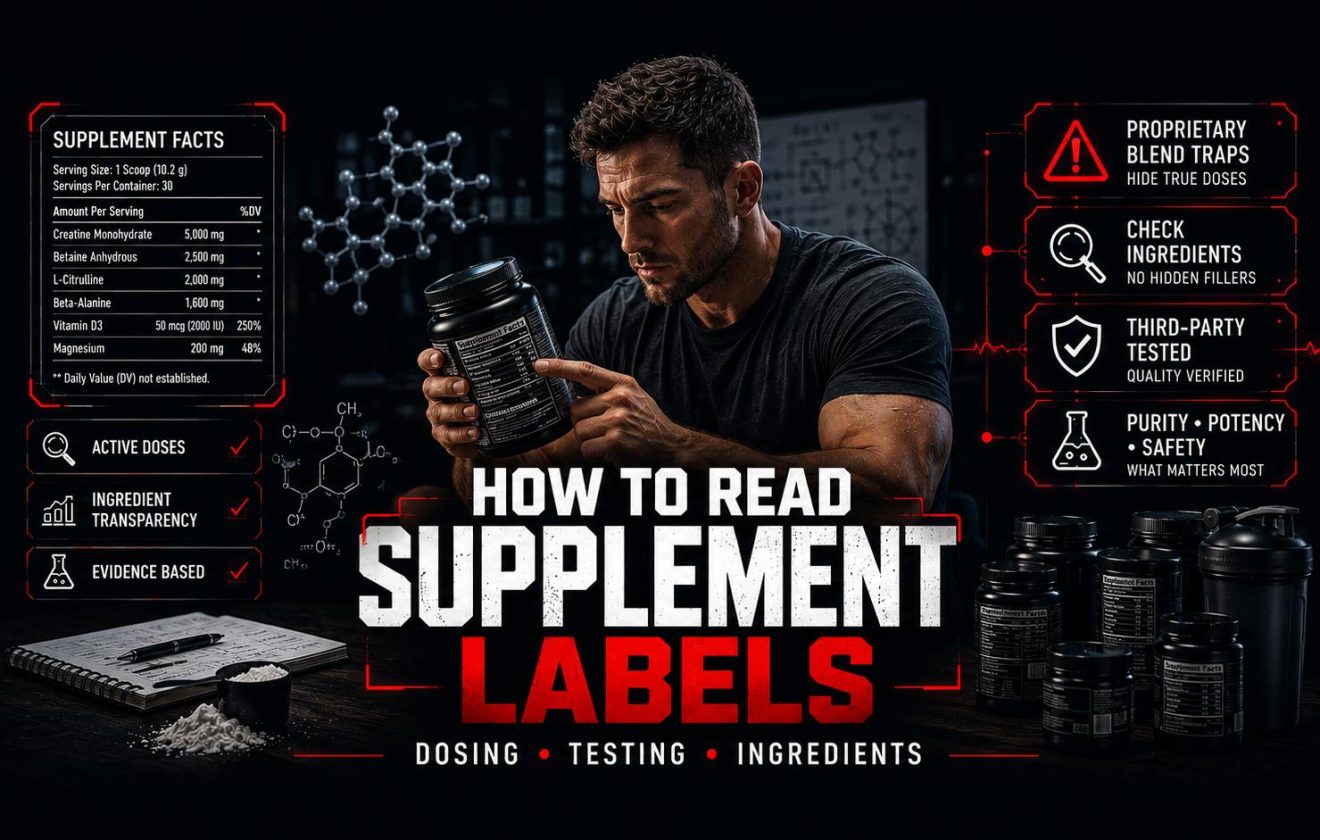
Learning how to read supplement labels is the single skill that separates buyers who get what the research promises from buyers who pay for the front of the tub. When Jagim and colleagues analyzed the 100 best-selling pre-workouts, the average product listed 18 ingredients, 8 of them hidden in proprietary blends, and the average beta-alanine dose was 2 g against a research dose of 3.2 g. This guide gives you seven label checks, in order, with real examples from the labels we have audited on this site.
Independent editorial guide. MuscleScience has no commercial relationship with any supplement manufacturer and does not sell products.
Supplement Labels: 3 Numbers That Explain Why Reading Them Matters
Knowing how to read supplement labels starts with one fact: a supplement label is a legal document with a marketing document wrapped around it. The Supplement Facts panel is regulated and has to be accurate; everything else on the tub is persuasion. Three published findings show how wide the gap between the two can be.
In the top 100 pre-workouts, an average of 8 ingredients per product sat inside a proprietary blend with no individual dose (Jagim 2019). You cannot check a dose you cannot see.
The same survey found beta-alanine in 87 percent of products at an average 2.0 g, below the 3.2 g per day minimum used in research. The ingredient list looked evidence-based; the dose was not.
Of 634 non-hormonal supplements bought in 13 countries, 94 contained undeclared anabolic steroids (Geyer 2004). The label cannot show you what is not on it, which is why third-party testing seals exist.
What This Guide to Reading Supplement Labels Covers
This is the method behind every product review on MuscleScience. Each review checks the label against the research doses in our evidence-based supplements framework; this page teaches the checking so you can do it in the shop without us.
The anatomy of a Supplement Facts panel and which lines are regulated versus decorative.
Seven checks in order: serving size, active doses, proprietary blends, ingredient form, other ingredients, testing seals, and claims and aliases.
Worked examples from labels we have audited: C4, Jack3d, Mother Bucker, David and Creatine HMB.
The mistakes that make experienced buyers overpay.
Food nutrition labels (Nutrition Facts) beyond where protein products use them; the rules differ.
Regulatory detail of DSHEA and FDA labeling law beyond what a buyer needs.
Brand rankings. The checks apply to every brand equally, which is the point.
Supplement Labels Line by Line: What Each Part Tells You and Where the Trap Is
Every US supplement label has the same regulated parts. The table walks through them in the order you should read them, with the trap that most often hides in each and how much weight to give the line.
| Label element | What it must tell you | The trap | Weight |
|---|---|---|---|
| Serving size and servings per container | The amount all other numbers refer to | A "serving" of two scoops when the tub is priced per scoop; a 20-serving tub that lasts 10 days at the directed dose | ● Read first |
| Supplement Facts panel, individual doses | Amount of each active ingredient per serving, with percent Daily Value where one exists | Under-dosing: the ingredient is present, the amount is a fraction of the research dose | ● The evidence line |
| Proprietary blend | Total blend weight and ingredient names in descending order of weight; no individual amounts | The first ingredient may be 90 percent of the blend and the last a few milligrams; you cannot tell | ● Assume under-dosed |
| Ingredient form | The chemical form (creatine monohydrate vs creatine nitrate; magnesium glycinate vs oxide) | A well-studied ingredient in a poorly studied or poorly absorbed form | ● Check the form |
| Other ingredients | Sweeteners, flavors, fillers, capsule material, in descending order | Sugar, maltodextrin or sugar alcohols that change the calorie or GI picture; allergens | ● Situational |
| Third-party seal (Informed Choice, Informed Sport, NSF Certified for Sport, USP) | An independent lab tested this batch or product for contaminants or banned substances | Invented seals ("lab tested", "GMP certified" badges) that no third party issued | ● Verify on the certifier site |
| Front-of-label claims | Nothing binding beyond the name and net weight | "Clinically dosed", "pharmaceutical grade", "anabolic", athlete endorsements | ● Ignore |
| Structure-function claims and the FDA disclaimer | "Supports", "promotes", "helps maintain" plus the statement that FDA has not evaluated the claim | Reading "supports muscle growth" as a demonstrated effect | ● Ignore |
The one-sentence method: find the Supplement Facts panel, read the serving size, then compare each active dose with the research dose from the tier table. Everything printed outside that panel is optional reading.
How to Read Supplement Labels in Under a Minute: The 7 Checks in Order
This is how to read supplement labels in practice: do the checks in this order. Most products fail at check two or three, which means you rarely need to get to seven. Each one takes a few seconds once you know what you are looking at.
Serving size: what does every other number refer to?
Read the serving size and the servings per container before anything else. A pre-workout that lists "2 scoops" as a serving and 40 scoops per tub is a 20-day product at the directed dose; a protein powder that lists 30 g of protein per "2 scoops" delivers 15 g per scoop. Every dose on the panel is per serving, so a serving-size trick rescales the whole label at once.
Active doses: is each ingredient at the research dose?
Compare each listed amount with the evidence-based dose: creatine 3 to 5 g, caffeine 3 to 6 mg per kg, beta-alanine 3.2 to 6.4 g per day, citrulline 3 g or more, protein 0.4 g per kg per feeding. A product can list a Tier 1 ingredient and still be useless if the number beside it is a fraction of the trial dose. The current C4 Original, for example, lists 1 g of creatine nitrate (about 0.7 g of creatine) against a 3 g minimum; our C4 ingredients audit walks through every line.
Proprietary blends: assume the worst
A blend lists a total weight and the ingredients in descending order, nothing more. The first ingredient could be almost the entire blend and the last a token milligram. Jagim's survey found an average of 8 blended ingredients per top-100 pre-workout; the original Jack3d hid five ingredients, including the stimulant DMAA, in a 4.2 g blend. If the manufacturer will not tell you the dose, treat the ingredient as absent for evidence purposes and decide whether the disclosed ingredients alone justify the price.
Ingredient form: the same name can be a different compound
"Creatine" can be monohydrate (hundreds of trials) or nitrate, HCL and ethyl ester (a handful, and the ester performed worse). "Magnesium" can be glycinate (well absorbed) or oxide (mostly laxative). "Protein" can be whey isolate or a collagen blend that contributes no leucine. The form is printed in parentheses after the ingredient name; the research dose applies to the studied form, not to the family. Our creatine HCL vs monohydrate analysis is the worked example.
Other ingredients: where the calories and the allergens hide
The "Other ingredients" line lists everything that is not an active: sweeteners, flavors, fillers, oils, emulsifiers, capsule shells. It is where you find the maltodextrin that turns a "lean" protein into a carbohydrate product, the sugar alcohols that explain digestive upset, and the fat replacer that makes a 150-calorie bar possible. The David protein bar review shows how much of a product's story sits on that one line.
Third-party seals: verify them on the certifier's website
Informed Choice, Informed Sport, NSF Certified for Sport and USP Verified are the seals that mean an independent laboratory tested the product or batch for contaminants and banned substances. They matter because contamination is real: Geyer's 634-sample study found undeclared steroids in 14.8 percent of supplements, and the IOC consensus statement treats certification as the minimum standard for athletes. Every genuine certifier maintains a searchable product database; a seal you cannot find there is a graphic, not a certification.
Claims and aliases: the words that should send you back to check two
"Clinically dosed" has no legal definition. "Pharmaceutical grade" describes nothing about a food supplement. "Supports" and "promotes" are structure-function claims that by law must carry the disclaimer that the FDA has not evaluated them. And a plant-sounding name can be a synthetic stimulant: "geranium extract" was DMAA, and later products used other botanical aliases for amphetamine-like compounds that Cohen and colleagues identified in analytical studies. An ingredient you cannot find in a pharmacology reference is a reason to look harder, not to trust the label more.
What Supplement Labels Actually Contain: The Top 100 Pre-Workouts Measured
The chart uses the average listed doses from Jagim's survey of the 100 best-selling pre-workouts and compares them with the research doses. The animated bars underneath show a different number from the same study: how many of the 100 products contain each ingredient at all.
%20as%20a%20percentage%20of%20the%20evidence-based%20dose%2C%2075%20kg%20lifter.%3C%2Ftext%3E%3Ctext%20x%3D%2240%22%20y%3D%22106%22%20fill%3D%22%23E5E7EB%22%20font-family%3D%22Arial%2CHelvetica%2Csans-serif%22%20font-size%3D%2214%22%20font-weight%3D%22700%22%3ECaffeine%20254%20mg%20vs%20225%20mg%20(3%20mg%20per%20kg)%3C%2Ftext%3E%3Ctext%20x%3D%22860%22%20y%3D%22106%22%20text-anchor%3D%22end%22%20fill%3D%22%23F4F4F5%22%20font-family%3D%22Arial%2CHelvetica%2Csans-serif%22%20font-size%3D%2214%22%20font-weight%3D%22900%22%3E113%20percent%3C%2Ftext%3E%3Crect%20x%3D%2240%22%20y%3D%22114%22%20width%3D%22820%22%20height%3D%2214%22%20rx%3D%227%22%20fill%3D%22%231F2937%22%2F%3E%3Crect%20x%3D%2240%22%20y%3D%22114%22%20width%3D%22820%22%20height%3D%2214%22%20rx%3D%227%22%20fill%3D%22%2322C55E%22%2F%3E%3Ctext%20x%3D%2240%22%20y%3D%22158%22%20fill%3D%22%23E5E7EB%22%20font-family%3D%22Arial%2CHelvetica%2Csans-serif%22%20font-size%3D%2214%22%20font-weight%3D%22700%22%3ECitrulline%204.0%20g%20vs%203%20g%3C%2Ftext%3E%3Ctext%20x%3D%22860%22%20y%3D%22158%22%20text-anchor%3D%22end%22%20fill%3D%22%23F4F4F5%22%20font-family%3D%22Arial%2CHelvetica%2Csans-serif%22%20font-size%3D%2214%22%20font-weight%3D%22900%22%3E133%20percent%3C%2Ftext%3E%3Crect%20x%3D%2240%22%20y%3D%22166%22%20width%3D%22820%22%20height%3D%2214%22%20rx%3D%227%22%20fill%3D%22%231F2937%22%2F%3E%3Crect%20x%3D%2240%22%20y%3D%22166%22%20width%3D%22820%22%20height%3D%2214%22%20rx%3D%227%22%20fill%3D%22%2322C55E%22%2F%3E%3Ctext%20x%3D%2240%22%20y%3D%22210%22%20fill%3D%22%23E5E7EB%22%20font-family%3D%22Arial%2CHelvetica%2Csans-serif%22%20font-size%3D%2214%22%20font-weight%3D%22700%22%3EBeta-alanine%202.0%20g%20vs%203.2%20g%20per%20day%3C%2Ftext%3E%3Ctext%20x%3D%22860%22%20y%3D%22210%22%20text-anchor%3D%22end%22%20fill%3D%22%23F4F4F5%22%20font-family%3D%22Arial%2CHelvetica%2Csans-serif%22%20font-size%3D%2214%22%20font-weight%3D%22900%22%3E63%20percent%3C%2Ftext%3E%3Crect%20x%3D%2240%22%20y%3D%22218%22%20width%3D%22820%22%20height%3D%2214%22%20rx%3D%227%22%20fill%3D%22%231F2937%22%2F%3E%3Crect%20x%3D%2240%22%20y%3D%22218%22%20width%3D%22517%22%20height%3D%2214%22%20rx%3D%227%22%20fill%3D%22%23F59E0B%22%2F%3E%3Ctext%20x%3D%2240%22%20y%3D%22262%22%20fill%3D%22%23E5E7EB%22%20font-family%3D%22Arial%2CHelvetica%2Csans-serif%22%20font-size%3D%2214%22%20font-weight%3D%22700%22%3ETyrosine%20348%20mg%20vs%20about%207.5%20g%3C%2Ftext%3E%3Ctext%20x%3D%22860%22%20y%3D%22262%22%20text-anchor%3D%22end%22%20fill%3D%22%23F4F4F5%22%20font-family%3D%22Arial%2CHelvetica%2Csans-serif%22%20font-size%3D%2214%22%20font-weight%3D%22900%22%3E5%20percent%3C%2Ftext%3E%3Crect%20x%3D%2240%22%20y%3D%22270%22%20width%3D%22820%22%20height%3D%2214%22%20rx%3D%227%22%20fill%3D%22%231F2937%22%2F%3E%3Crect%20x%3D%2240%22%20y%3D%22270%22%20width%3D%2241%22%20height%3D%2214%22%20rx%3D%227%22%20fill%3D%22%23B91C1C%22%2F%3E%3C%2Fsvg%3E)
A different view: share of the top 100 pre-workouts that list each ingredient (Jagim 2019), regardless of dose.
Almost every product contains the right ingredients; the average dose of beta-alanine, the most common one, sits below its research threshold. That is the whole reason to read the panel rather than the ingredient list: presence is universal, dose is not.
Reading Real Supplement Labels: 5 Products Through the 7 Checks
These are labels we have audited in full on this site, using exactly this method for how to read supplement labels. Each row shows which check the product passes or fails and links to the complete breakdown.
Mother Bucker pre-workout: every dose disclosed, caffeine 400 mg and beta-alanine 6.4 g at or above threshold. Fails only on stimulant load for most users, which is a fit question, not a label question.
Creatine HMB: four ingredients, four doses, Informed Choice certified. The check it fails is number two: HMB at 1.5 g is half the research dose.
David protein bar: full Nutrition Facts and ingredient statement published; check five (other ingredients) is where the EPG fat replacer and 7 g of maltitol live.
Original Jack3d: a 4.2 g proprietary blend (check three) hiding a synthetic stimulant under a botanical alias (check seven). The template for everything this guide warns about.
C4 Original, previous formula: a 425 mg "Explosive Energy Blend" with undisclosed caffeine; the current label discloses 200 mg and passes check three, but still under-doses creatine and citrulline (check two).
Any "protein water" built on collagen: passes check two on grams, fails check four on form, because collagen is not a muscle-building protein at any dose.
4 Mistakes People Make When Reading Supplement Labels
- Reading the ingredient list instead of the dose column. The list tells you what is present; only the panel tells you how much, which is the core of how to read supplement labels. "Contains creatine" and "contains 5 g of creatine" are different products.
- Trusting a seal without checking the certifier's database. Genuine certifications are searchable online by product and batch. A badge on the tub is a claim until you find the listing.
- Comparing products by price per tub. Price per gram of the active ingredient at the research dose is the only fair comparison, and it often reverses the ranking.
- Assuming a label is current. Formulas change without the name changing; C4, Mother Bucker and David all reformulated while reviews online kept quoting the old panel. Read the tub in your hand, not the one in the review.
Reading Supplement Labels: Common Questions Answered
What is the most important part of a supplement label?
The Supplement Facts panel, specifically the serving size and the individual dose of each active ingredient. It is the only regulated, verifiable part of the label. Compare each dose with the amount used in the research; everything printed outside the panel is marketing.
What is a proprietary blend on a supplement label?
A group of ingredients listed under one name with a single combined weight and no individual doses. Ingredients appear in descending order of weight, but the first could be nearly the whole blend and the last a token amount. Because you cannot verify any dose, treat blended ingredients as unproven and judge the product on its disclosed ingredients alone.
Which third-party testing seals actually mean something?
Informed Choice and Informed Sport (LGC), NSF Certified for Sport, USP Verified and BSCG are independent programs that test for contaminants and banned substances and publish searchable product databases. "GMP certified", "lab tested" and similar badges without a named certifier are self-declarations.
What does "clinically dosed" mean on a supplement label?
Legally, nothing; there is no regulatory definition. In practice it should mean every active ingredient is at the dose used in published trials. Check it yourself: compare each dose on the panel with the research dose. Products that are actually clinically dosed disclose every amount, because the numbers are the selling point.
How do I know if a supplement is under-dosed?
Look up the evidence-based dose for each ingredient (creatine 3 to 5 g, caffeine 3 to 6 mg per kg, beta-alanine 3.2 to 6.4 g per day, citrulline 3 g or more) and compare it with the amount per serving on the panel. If the ingredient is inside a proprietary blend, you cannot know, which is itself the answer.
Are supplement labels regulated by the FDA?
Yes, but supplements are regulated as food, not drugs. Manufacturers must follow labeling rules and are responsible for accuracy, but products do not need FDA approval before sale and the FDA does not verify claims in advance. That is why third-party testing and dose checking matter more than they would for a medicine.
Sources & Further Reading
The market figures and contamination data behind this guide to how to read supplement labels come from the following peer-reviewed sources; each PMID was verified against the PubMed record before publication.
More from the Supplements series
The framework, and the labels we have already put through it.
Final Educational Note
This article is for educational purposes and does not constitute medical advice. Labeling rules described here reflect United States practice; other jurisdictions differ. Research doses quoted are for healthy adults and vary with body weight and goal.
MuscleScience has no commercial relationship with any supplement manufacturer. Individuals with medical conditions or taking prescription medication should consult a licensed clinician before using any supplement. For the doses behind every check, see evidence-based supplements; for the category overview, see the supplements hub.