Are Quest Protein Chips Healthy? 7 Honest Label Facts
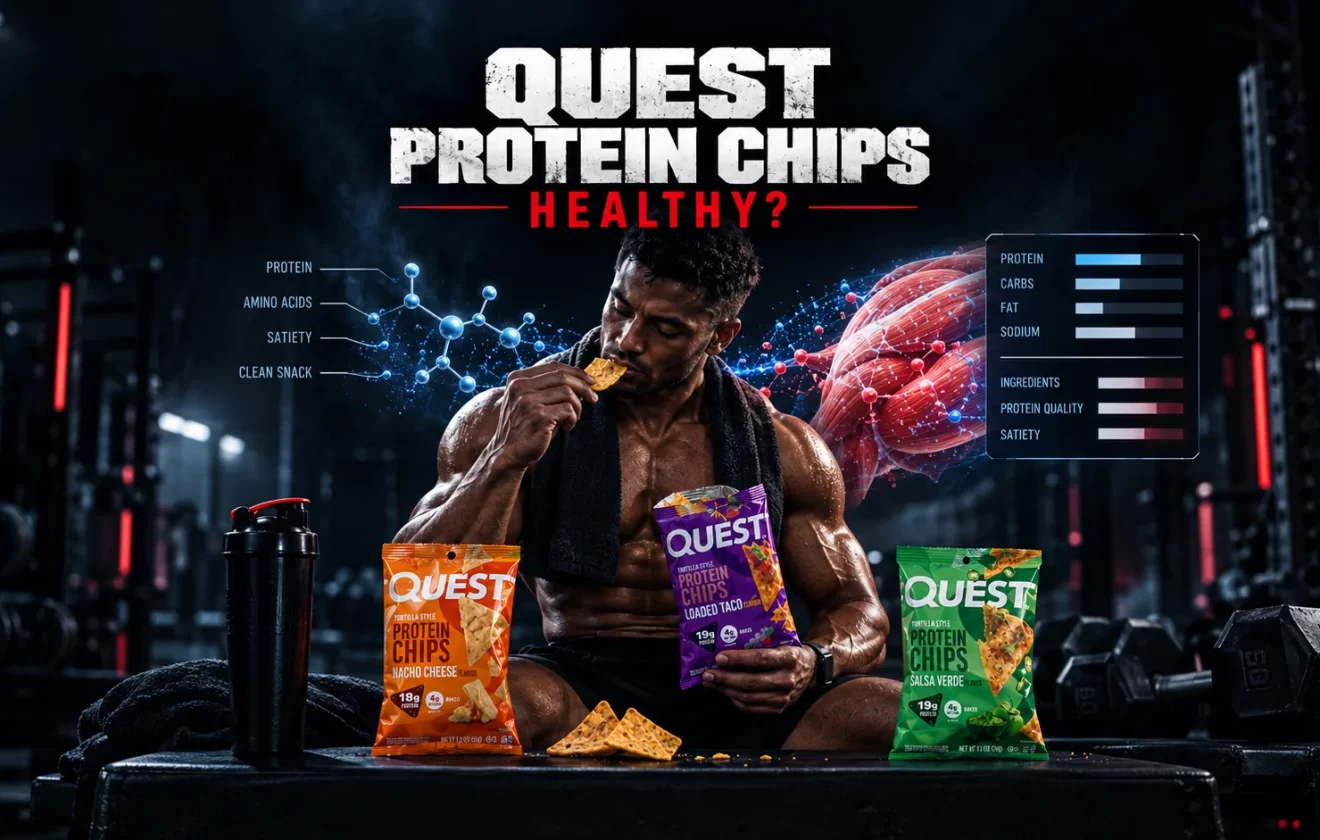
Are Quest Protein Chips Healthy? 7 Honest Label Facts
Are Quest protein chips healthy? The label claims 19 to 20 g of dairy protein in a 140 calorie bag with 0 to 1 g of sugar. If those figures are accurate, Quest protein chips beat ordinary chips on every protein measure. So are Quest chips healthy in the full sense? The same panel lists 290 to 340 mg of sodium, 1 g of fibre and a long ingredient list, which makes the honest answer conditional. We did not lab test the product, so every product figure below is a label claim by the manufacturer.
Educational content only. This page reads the manufacturer label against published research. It is not medical advice. If you have high blood pressure, kidney disease or a milk allergy, your clinician or dietitian should decide where a salty protein snack fits.
Supplements Editor · Updated September 2026
Three numbers that decide it
The Chili Lime panel lists 20 g of protein at 40 percent of the daily value. Most other flavours list 19 g. The sources named on the label are milk protein isolate, whey protein isolate and calcium caseinate.
A 32 g bag of Quest protein chips is listed at 140 calories, close to a small bag of potato chips. On label figures the difference is where the calories come from: 80 of the 140 come from protein.
The label puts one bag at 14 percent of the daily value for sodium. That is about twice what a typical serving of salted potato chips lists, and it is the main reason the verdict is conditional.
All figures for Quest protein chips on this page were read from the manufacturer nutrition panels and ingredient lists in September 2026. Formulas and flavours change, so check your own bag.
What this review covers
The full panel. Six flavours side by side, with protein per 100 calories added so a bag can be compared with a bar, a shake or another brand.
The lines people worry about. Sodium, stevia, vegetable oil and the ultra processed question, each checked against human research rather than headlines.
A direct rival. Quest protein chips against Legendary chips on protein, fat, sodium and list price per gram of protein.
A conditional verdict. Who the chips suit, who should limit them, and what a bag cannot replace.
Quest chips nutrition, flavour by flavour
Every flavour of Quest protein chips we checked is sold as a 32 g single serve bag listed at 140 calories. The differences sit in protein, which the label gives as 19 or 20 g, and in sodium, which runs from 290 to 340 mg. The table adds one column the panel does not print: grams of protein per 100 calories, the fairest way to compare snacks of different sizes. The same yardstick applied to bars is in our guide to protein bars for weight loss.
| Flavour | Bag | Calories | Protein | Sodium | Share of 2,300 mg | Per 100 kcal | Status |
|---|---|---|---|---|---|---|---|
| Chili Lime | 32 g | 140 | 20 g | 320 mg | 14 percent | 14.3 g | ● middle |
| Spicy Sweet Chili | 32 g | 140 | 19 g | 290 mg | 13 percent | 13.6 g | ● lowest |
| Pizza | 32 g | 140 | 19 g | 290 mg | 13 percent | 13.6 g | ● lowest |
| BBQ | 32 g | 140 | 19 g | 330 mg | 14 percent | 13.6 g | ● middle |
| Buffalo Ranch | 32 g | 140 | 19 g | 330 mg | 14 percent | 13.6 g | ● middle |
| Sour Cream and Onion | 32 g | 140 | 19 g | 340 mg | 15 percent | 13.6 g | ● highest |
The rest of the Chili Lime panel reads: 4.5 g of fat with 0.5 g saturated, 10 mg of cholesterol, 4 g of carbohydrate, 1 g of fibre and 0 g of sugar. The BBQ panel lists 5 g of fat, 5 g of carbohydrate and 1 g of sugar. For comparison, a typical 28 g serving of salted potato chips lists about 160 calories, 10 g of fat, 2 g of protein and 170 mg of sodium.
One detail on Quest protein chips is easy to miss. The ingredient list includes sugar in the under 2 percent group while the panel shows 0 g. Both can be true, because labelling rules let anything under half a gram per serving round down to zero. If you want a primer on tricks like this, see our guide on how to read supplement labels.
Protein per bag and per 100 calories
The label names three protein ingredients: milk protein isolate, whey protein isolate and calcium caseinate. All three come from milk, which means Quest protein chips carry a complete amino acid profile, and also that they are off the table for anyone with a milk allergy.
The daily value column supports the quality claim. The panel lists 20 g at 40 percent of the daily value, which is exactly 20 divided by the 50 g reference. That percentage is corrected for protein quality, so a full 40 percent means the manufacturer is claiming a top quality score. Mathai and colleagues, who compared eight protein ingredients, reported higher amino acid digestibility for whey isolate, whey concentrate and milk protein concentrate than for pea, soy and wheat.
How much do Quest protein chips matter in a day? Morton and colleagues found in their meta analysis that protein supplementation beyond a total intake of 1.62 g per kg per day produced no further gains in fat free mass from resistance training. For an 80 kg lifter that is about 130 g. If the label is accurate, one bag covers roughly 15 percent of it, about the same as three eggs.
Against liquid protein, Quest protein chips lose. A ready to drink shake such as the one in our review of Premier Protein lists 18.8 g per 100 calories, because a shake carries no starch or oil. Against anything else in the snack aisle, 13.6 to 14.3 g per 100 calories is a high figure on paper.
Are Quest chips healthy on sodium? The line that makes it conditional
Most people who type “are Quest chips healthy” into a search bar look at protein and sugar and stop. On Quest protein chips the sodium line deserves the same attention. At 290 to 340 mg per 32 g bag, the label works out to roughly 230 mg of sodium per 100 calories. The salted potato chips described above come to about 105 mg per 100 calories.
Does that matter? For one bag of Quest protein chips in an otherwise home cooked day, probably not. The research concern is the daily total. Aburto and colleagues pooled randomised trials for the BMJ and reported that reducing sodium intake lowered resting systolic blood pressure by 3.39 mm Hg in adults. Wang and colleagues, pooling 616,905 participants, reported that cardiovascular risk rose by up to 6 percent for every extra gram of sodium per day.
So the fair reading is this: if the rest of your day is already salty, with deli meat, bread, sauces and restaurant food, a bag or two of Quest protein chips adds sodium faster than it adds anything else. If your diet is mostly unprocessed, 320 mg is easy to absorb.
Share of the 2,300 mg sodium daily value in one serving, on label figures
Sweeteners, oils and the ultra processed question
After the protein blend, the Chili Lime list for Quest protein chips reads: vegetable oil (sunflower, canola and or soybean), calcium caseinate, natural flavors, corn starch and salt. The under 2 percent group includes psyllium husk, chia seed, spices, yeast extract, lecithin, acacia gum and, last of all, stevia sweetener.
Stevia. Quest protein chips are sweetened with stevia, and this is the mildest sweetener story we have covered. Anton and colleagues gave 19 lean and 12 obese adults preloads sweetened with stevia, aspartame or sucrose. On the stevia days people did not compensate by eating more at lunch or dinner and reported similar satiety. A 2024 meta analysis by Zare and colleagues found a small reduction in blood glucose with stevia, rated low certainty.
In the randomised trial by Suez and colleagues, 120 healthy adults received one of four sweeteners, and the two that significantly impaired glycemic responses were saccharin and sucralose. Stevia was tested and was not one of them. The BMJ review by Toews and colleagues found that most health outcomes did not differ between users and non users of non sugar sweeteners, while warning that the studies were small and short.
Ultra processed. By any definition, Quest protein chips are an ultra processed food: isolated proteins, refined oil, flavors and a sweetener. Hall and colleagues fed 20 adults ultra processed and unprocessed diets for two weeks each. People ate 508 calories a day more on the ultra processed diet and gained 0.9 kg, then lost 0.9 kg on the unprocessed one. Protein intake did not differ between diets.
Pagliai and colleagues pooled observational studies and linked the highest ultra processed intake to a 39 percent higher risk of overweight and obesity. Both papers studied whole diets, not one snack, and neither tested a high protein product. What they support is a limit: Quest protein chips are a convenience, and the evidence gets worse as convenience foods take over the day.
Quest vs Legendary: two bags, label against label
The closest rival on the shelf is Legendary, which we took apart in our Legendary chips review. Quest protein chips and Legendary both claim about 20 g of dairy protein in a single serve bag. The panels differ in fat, sodium and what you pay for each gram of protein.
Quest Chili Lime
Label figures. Price is the manufacturer list price of $22.99 for a box of 8, September 2026.
Legendary
Label figures. Price is the manufacturer list price of $22.99 for a box of 7, September 2026.
On label figures Quest protein chips are leaner, less salty and about 12 percent cheaper per gram of protein at list price. Legendary leads with calcium caseinate and lists 8 g of fat, almost twice the Quest figure. Neither panel has been lab verified by us, and retail prices move weekly, so treat the cents as a method: divide what you pay by the grams of protein in the box.
If you are choosing between a bag and a bar, our David protein bar review runs the same maths on a 28 g protein bar.
Are Quest protein chips good for weight loss
There is no trial of Quest protein chips and body weight, so the answer has to come from research on high protein snacks in general. Ortinau and colleagues gave 20 healthy women three different 160 calorie afternoon snacks. After a yogurt snack with 14 g of protein, the women asked for dinner about 30 minutes later than after chocolate and ate roughly 100 fewer calories at that dinner.
Leidy and colleagues reviewed the wider evidence and concluded that higher protein diets improve appetite control and help preserve lean mass during energy restriction, with meals of about 25 to 30 g of protein as a practical target. A bag of Quest protein chips, at 19 to 20 g, sits just under that range.
So the mechanism is plausible and the effect is modest. If the label is accurate, swapping a 160 calorie bag of potato chips for Quest protein chips changes almost nothing in calories and adds about 17 g of protein. It helps inside a calorie deficit you already have. It does nothing on top of an unchanged diet, and a second or third bag is 140 calories each time.
Your daily protein target. Multiply body weight in kg by 1.6. An 80 kg lifter lands near 130 g a day, the point where Morton and colleagues saw the benefit of extra protein level off.
Your sodium budget. The daily value is 2,300 mg. Each bag of Quest protein chips uses 13 to 15 percent of it on label figures.
Your ceiling on bags. If chips supply more than a quarter of your protein, food has been pushed out. Fix the meals first.
What your bags add up to
Uses label figures of 19 g protein, 140 kcal and 320 mg sodium per bag, the 2,300 mg sodium daily value and a protein target you set. The bar shows the share of the sodium daily value. An educational estimate, not medical advice.
Seven label facts worth knowing before you buy
The protein claim carries a full quality score
40% DVThe panel lists 20 g at 40 percent of the daily value, the maximum possible for that amount. That is the manufacturer claiming milk grade protein quality, consistent with the isolates named in the ingredient list.
Flavours are not identical
19 or 20 gAmong Quest protein chips, Chili Lime lists 20 g of protein. BBQ, Pizza, Buffalo Ranch, Spicy Sweet Chili and Sour Cream and Onion list 19 g. Sodium moves more than protein does, by 50 mg between the lowest and highest flavour.
Sodium is about double ordinary chips
320 mgOn label figures Quest protein chips carry roughly 230 mg of sodium per 100 calories against about 105 mg for salted potato chips. One bag is minor. Three bags is close to 1,000 mg from a snack.
Almost no fibre
1 gPsyllium husk and chia seed appear in the ingredient list, but in the under 2 percent group. The panel lists 1 g of fibre per bag, so Quest protein chips do not replace vegetables, fruit or whole grains in any meaningful way.
Stevia, listed last
SteviaThe only sweetener named on the Chili Lime label is stevia, at the very end of the list. In the Suez trial the sweeteners that impaired glycemic responses were saccharin and sucralose, not stevia.
The keto claim holds on paper
3 g netThe product page calls Quest protein chips keto friendly. With 4 g of carbohydrate and 1 g of fibre listed, that is 3 g of net carbs by our arithmetic. The starch comes from corn starch, listed after the oils.
You pay for the protein
$2.87At the list price of $22.99 for 8 bags, each gram of protein in Quest protein chips costs about 14 cents. A tub of whey usually costs a fraction of that per gram. The premium buys crunch and convenience, not better protein.
Allergen note: every protein source on the label is derived from milk, and the oil line allows for soybean oil. Check the allergen statement on your own bag.
So, are Quest protein chips healthy
As a swap for ordinary chips, the label on Quest protein chips makes a strong case: if the panel is accurate, you get roughly ten times the protein for fewer calories and less fat. As a food in its own right, a bag is a salty, low fibre, ultra processed snack with a useful amount of protein in it. Both statements are true at once.
- You already eat chips and want the same habit with more protein
- You struggle to reach a protein target and need something that travels
- You are cutting and want a 140 calorie snack that slows the next meal
- You follow a low carb diet and want a crunchy option at 3 g net carbs
- You have high blood pressure or have been told to cut sodium
- You have a milk allergy, since every protein source is dairy
- You would eat several bags a day in place of meals
- You expect chips to cover fibre, potassium or vegetables
The research caveat is the same one that applies to every packaged snack. The trials behind high protein snacking used plain foods such as yogurt, and the trials on ultra processed diets suggest people eat more when convenience foods dominate. Quest protein chips sit between those two findings, which is why the amount matters more than the product.
Common questions
Are Quest protein chips healthy?
Conditionally. The label claims 19 to 20 g of dairy protein, 140 calories and 0 to 1 g of sugar per bag, which is far better than ordinary chips on protein. The same label lists 290 to 340 mg of sodium and 1 g of fibre. One bag a day fits most diets. Several bags in place of meals does not.
Are Quest chips actually healthy compared with regular chips?
On label figures, yes for protein and fat, no for sodium. A 32 g bag lists about 20 g of protein and 4.5 to 5 g of fat against roughly 2 g of protein and 10 g of fat in a typical 28 g serving of potato chips. Sodium is about double, at 320 mg against 170 mg.
How much protein is in Quest protein chips?
The manufacturer lists 20 g per 32 g bag for Chili Lime and 19 g for the other flavours we checked. That works out to 13.6 to 14.3 g of protein per 100 calories. The protein comes from milk protein isolate, whey protein isolate and calcium caseinate.
Are Quest protein chips good for weight loss?
Quest protein chips can help as a swap inside a calorie deficit. In a trial by Ortinau and colleagues, a high protein afternoon snack delayed the next meal by about 30 minutes and cut roughly 100 calories from dinner compared with a chocolate snack. No trial has tested these chips directly, and extra bags still add 140 calories each.
How much sodium is in Quest chips?
Between 290 and 340 mg per bag depending on flavour, according to the labels. Pizza and Spicy Sweet Chili are the lowest, Sour Cream and Onion the highest. That is 13 to 15 percent of the 2,300 mg daily value from a 32 g snack, so people watching blood pressure should count it.
What sweetener is in Quest protein chips?
The Chili Lime ingredient list names stevia sweetener, in last position. No sucralose or acesulfame potassium appears on that label. A small amount of sugar is also listed in the under 2 percent group, which is why the panel can still round total sugar down to 0 g.
Are Quest protein chips keto friendly?
The manufacturer describes them as keto friendly. The Chili Lime panel lists 4 g of total carbohydrate and 1 g of fibre, so about 3 g of net carbs per bag by simple subtraction. The BBQ flavour lists 5 g of carbohydrate. Both fit a typical low carb day.
Can you eat Quest protein chips every day?
For a healthy adult, one bag of Quest protein chips a day is reasonable on label figures: about 19 g of protein for 14 percent of the sodium daily value. The concern is displacement. Studies of ultra processed diets suggest people eat more when packaged foods dominate, so keep the chips as a snack and build meals from whole food.
References
More protein snack reviews
Final Educational Note
This article is for educational purposes and does not constitute medical advice. Protein and sodium needs depend on body weight, training, blood pressure, kidney function and medical history, and product formulas change without notice. Do not replace meals or change a clinical nutrition plan based solely on general guidance from any website, including this one. If you have hypertension, kidney disease or a food allergy, a clinician or registered dietitian should make the call.
MuscleScience does not sell protein snacks, supplements or medical services. We have no financial relationship with Quest Nutrition, Legendary Foods or any other manufacturer. The goal of this article is to give you the label claims and the research so you can decide for yourself. For more product breakdowns, see the supplements hub.
Community Reviews
Tried this product? Rate it and share your experience. A valid email is required, kept private and never shown; reviews appear after moderation.
What readers say
There are no reviews yet. Be the first one to write one.