Is Premier Protein Good For You? 7 Honest Label Facts
Is Premier Protein Good For You? 7 Honest Label Facts
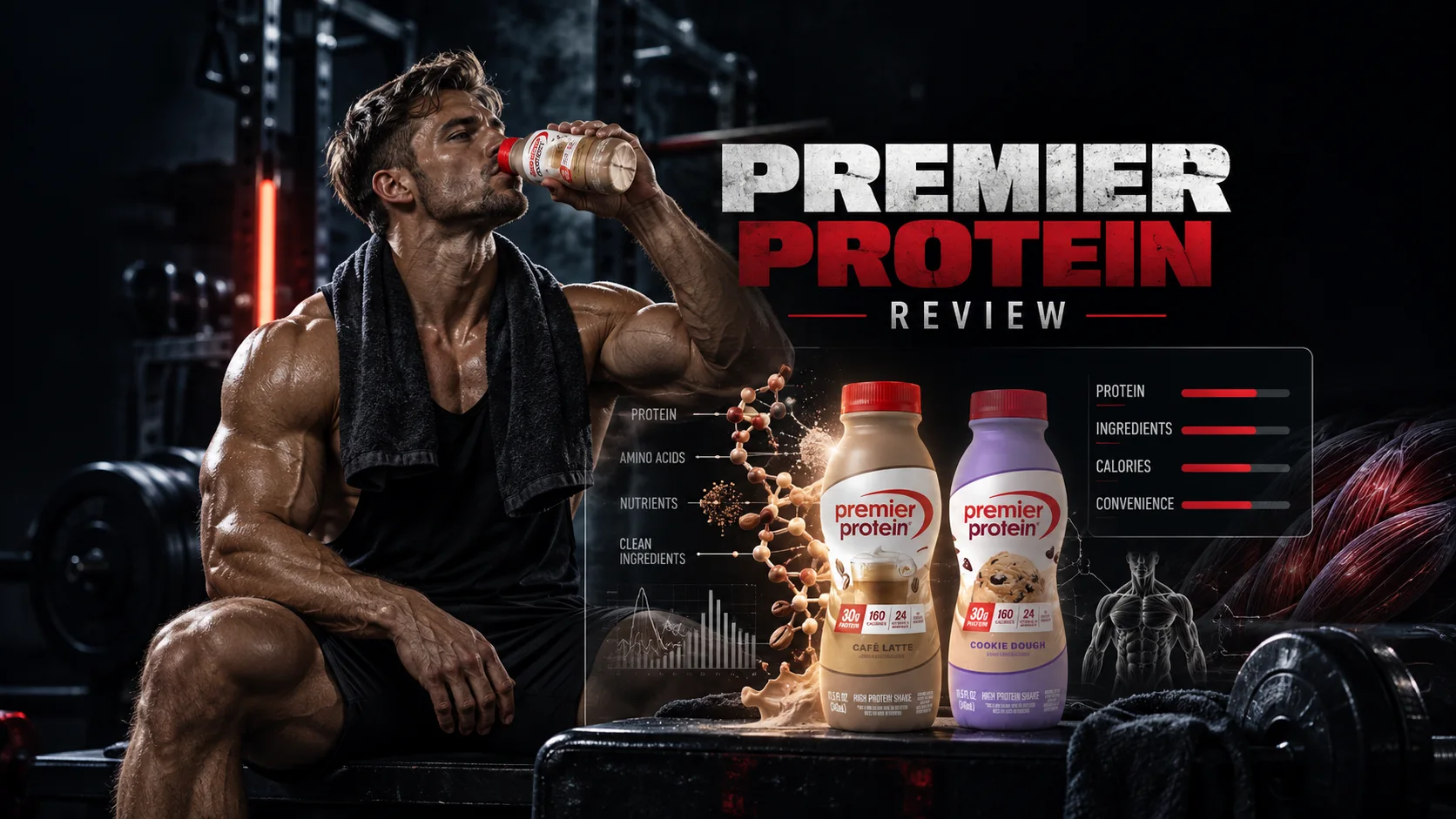
Is Premier Protein good for you? The manufacturer's label claims 30 g of milk protein, 160 calories and 1 g of sugar in one 11 fl oz shake. If those figures are accurate, that is a high protein density for a ready to drink product. The caveats sit lower on the same label. Premier Protein lists sucralose and acesulfame potassium as sweeteners, carrageenan as a thickener and three phosphate salts as stabilisers, and its own panel says not to use it for weight reduction.
Educational content only. This page reads the manufacturer label against published research. We did not lab test the product, so every product figure below is a label claim by the manufacturer. It is not medical advice. If you have kidney disease, a milk or soy allergy, or you are using shakes around bariatric surgery or a GLP-1 medication, your clinician or dietitian should set your protein plan.
Supplements Editor · Updated September 2026
Three numbers that decide it
Each Premier Protein shake lists milk protein concentrate and calcium caseinate as its protein sources. That is 60 percent of the daily value in one bottle, and it digests more slowly than a whey isolate.
With 3 g of fat and 4 g of carbohydrate, 120 of the 160 calories come from protein. On the label figures, that is a ratio few ready to drink products claim.
The label claims zero added sugar, and the ingredient list shows how: sucralose and acesulfame potassium. Whether Premier Protein is good for you depends largely on how you feel about that trade.
All label figures on this page were read from the manufacturer nutrition panels for the 11 fl oz chocolate shake, the Cafe Latte shake, the 42 g Ultimate shake, the vanilla powder and the original pancake mix in September 2026. Formulas change, so check your own bottle.
What this review covers
The full label. Every Premier Protein product line is set side by side, with protein per 100 calories so bottles, powders and pancake mix can be compared fairly.
The ingredients people worry about. Sucralose, acesulfame potassium, carrageenan and phosphate salts, each checked against human research rather than headlines.
The questions people actually ask. Is it safe every day, does it help with weight loss, what was the lawsuit about, and what did the lead testing find.
A straight verdict. Who Premier Protein suits, who should skip it, and how it stacks up against the protein powders we have already reviewed.
Premier Protein nutrition facts, product by product
Premier Protein is best known for the 11 fl oz bottle, but the name now covers powders, a 42 g shake, pancake mixes and even protein soda. They are not nutritionally interchangeable. The table below uses the manufacturer panels and adds one column the label does not print: grams of protein per 100 calories, which is the fairest way to compare a bottle with a scoop or a stack of pancakes.
| Product | Serving | Calories | Protein | Carbs | Sugar | Sodium | Per 100 kcal | Status |
|---|---|---|---|---|---|---|---|---|
| Chocolate protein shake | 11 fl oz bottle | 160 | 30 g | 4 g | 1 g | 230 mg | 18.8 g | ● high |
| Cafe Latte protein shake | 11.5 fl oz bottle | 160 | 30 g | 4 g | 1 g | 260 mg | 18.8 g | ● high |
| Ultimate 42 g Cafe Latte | 14 fl oz bottle | 220 | 42 g | 5 g | 2 g | 330 mg | 19.1 g | ● high |
| Vanilla milkshake powder | 2 scoops, 39 g | 150 | 30 g | 3 g | 1 g | 170 mg | 20.0 g | ● high |
| Original pancake and waffle mix | Half cup dry, 65 g | 240 | 15 g | 39 g | 6 g | 720 mg | 6.3 g | ● low |
Two details are easy to miss. Premier Protein powder is a different product, not a dried version of the shake: it is built on whey protein isolate and whey concentrate, while the bottle uses milk protein concentrate and calcium caseinate. And the Cafe Latte flavours list coffee extract and added caffeine, 95 mg per bottle according to the manufacturer. That is about one cup of coffee and well under the caffeine in Monster Energy, but it still makes them the wrong bottle to reach for at 9 pm.
The micronutrient panel is unusually long for a shake. One bottle of Premier Protein supplies 650 mg of calcium, which is 50 percent of the daily value, plus 30 percent of vitamin D and 20 to 25 percent of most B vitamins, zinc and vitamin C. If you need a wider primer on reading panels like this one, our guide on how to read supplement labels walks through serving tricks and daily value maths.
What kind of protein is in Premier Protein
The two protein ingredients are milk protein concentrate and calcium caseinate. Milk protein concentrate keeps the natural split of cow's milk, roughly four parts casein to one part whey, and calcium caseinate pushes the blend further toward casein. So a Premier Protein shake behaves like a casein dominant drink, not like the whey isolate you mix after training.
For Premier Protein that matters for timing more than for quality. In the classic tracer study by Boirie and colleagues, whey produced a fast, short spike in blood amino acids while casein produced a slower, longer release. Neither is better in the abstract. A slow protein is a reasonable fit for breakfast, a long gap between meals or the hours before bed, and a slightly less obvious fit for the 30 minutes after lifting.
The claimed Premier Protein dose lines up with the research. Schoenfeld and Aragon concluded that a sensible target is about 0.4 g of protein per kg of body weight per meal, across at least four meals, to reach 1.6 g per kg per day. For a 75 kg adult that is 30 g per meal, which is what one bottle claims to provide. Morton and colleagues found in their meta analysis that protein supplementation beyond a total intake of 1.62 g per kg per day produced no further gains in fat free mass from resistance training.
The International Society of Sports Nutrition position stand on protein and exercise lands in the same place: spread intake across the day and hit the daily total. A Premier Protein shake is a tool for doing that on days when food does not get you there. For context on where it sits among other options, see our roundup of protein drinks to build muscle.
Sucralose, carrageenan and phosphates: what the research says
This is the section that decides whether Premier Protein is good for you personally, because the protein itself is not controversial. A Premier Protein shake contains four things that draw criticism: two non sugar sweeteners, a seaweed derived thickener and a trio of phosphate salts.
Sucralose and acesulfame potassium. A BMJ systematic review by Toews and colleagues found that most health outcomes did not differ between people who consumed non sugar sweeteners and people who did not, while also warning that the underlying studies were small and short. The sharper finding comes from Suez and colleagues, who ran a randomised trial in 120 healthy adults and reported that two weeks of sucralose or saccharin, at doses below the acceptable daily intake, significantly impaired glycemic responses and altered the gut microbiome. The effect varied a great deal between individuals.
Carrageenan. The strongest human data is narrow. Bhattacharyya and colleagues randomised ulcerative colitis patients in remission to carrageenan capsules or placebo. Twelve patients completed the study: three on carrageenan relapsed and none on placebo did. That is a tiny trial in people with an existing bowel disease, so it does not show harm in healthy adults, but it is a fair reason for anyone with inflammatory bowel disease to choose a shake without it.
Phosphate salts. Tripotassium phosphate, dipotassium phosphate and sodium hexametaphosphate keep the protein in Premier Protein from settling. Ritz and colleagues point out that natural phosphate in food is incompletely absorbed, whereas inorganic phosphate from additives is absorbed efficiently and can measurably raise serum phosphate. For healthy kidneys that is a footnote. For chronic kidney disease it is a real reason to read the ingredient list.

Share of the daily value delivered by one Premier Protein shake
Premier Protein against the powders we have reviewed
A bottle of Premier Protein competes with a tub, so the honest comparison is against the protein powders already taken apart on this site. The table uses label figures only. Prices move weekly, so cost is left out on purpose: divide what you pay by the grams of protein in the pack and you have the only price metric that matters.
| Product | Format | Protein | Calories | Protein source | Status |
|---|---|---|---|---|---|
| Premier Protein shake | Ready to drink | 30 g | 160 | Milk protein concentrate, caseinate | ● convenience |
| Premier Protein powder | Powder, 2 scoops | 30 g | 150 | Whey isolate and concentrate | ● neutral |
| CBUM Itholate | Powder, 1 scoop | About 25 g | 110 to 120 | Whey isolate | ● tested every batch |
| Dymatize ISO100 | Powder, 1 scoop | About 25 g | 110 to 120 | Hydrolysed whey isolate | ● fastest digesting |
| MRE protein shake | Powder, 2 scoops | About 47 g | Meal sized | Whole food protein blend | ● a meal, not a snack |
On label figures the isolates win narrowly per 100 calories, at about 21 g of protein against 18.8 g for the bottle. What Premier Protein buys you is zero preparation and a shelf stable product. What it costs you is control: you cannot choose the sweetener, skip the carrageenan or change the dose. Full breakdowns are in our reviews of CBUM protein, ISO100 and the MRE protein shake.
Are Premier Protein shakes good for weight loss
Here the Premier Protein label says something most reviews skip. The nutrition panel carries a printed notice: use this product as a food supplement only, do not use for weight reduction. That is the manufacturer telling you the bottle is not designed or tested as a meal replacement programme, even though many people use Premier Protein exactly that way.
The research on the general idea is mildly positive. Astbury and colleagues pooled trials of meal replacements and found that people assigned to a diet that included them lost 1.44 kg more than people on other diets, and 2.22 kg more when the programme came with support. Leidy and colleagues reviewed the role of protein in weight loss and maintenance and concluded that higher protein diets improve appetite control and help preserve lean mass during energy restriction.
So the mechanism is real and the effect is modest. A 160 calorie bottle of Premier Protein with 30 g of protein is a useful swap for a 450 calorie pastry breakfast. It does nothing on top of an unchanged diet, and at 160 calories it is too small to stand in for a full meal day after day without leaving gaps in fibre and energy. For a solid snack with a similar idea behind it, see are Quest protein chips healthy.
Your daily target. Multiply body weight in kg by 1.6. An 80 kg lifter lands at 128 g of protein a day, the point where Morton and colleagues saw the benefit of extra protein level off.
Your per meal target. Multiply body weight by 0.4. At 75 kg that is 30 g, the content of one bottle.
Your ceiling on shakes. If more than half of your daily protein comes from bottles, food has been pushed out. Fix the meals before adding a third shake.
How much of your day does a shake cover
Uses the label figure of 30 g protein and 160 kcal per bottle, a per meal target of 0.4 g per kg and a daily target you set. An educational estimate, not medical advice.
Seven label facts worth knowing before you buy
The claimed dose matches the research
30 gThe 30 g in Premier Protein is 0.4 g per kg for a 75 kg adult, the per meal figure Schoenfeld and Aragon recommend. Smaller people get slightly more than they need per sitting, larger lifters slightly less.
It is a slow protein, not a post workout whey
Casein ledMilk protein concentrate plus calcium caseinate means a slow, sustained release of amino acids, in line with the casein arm of the Boirie study. Good between meals, fine after training, not the fastest option.
No added sugar means two sweeteners
2Sucralose and acesulfame potassium do the work. Large reviews find little measurable harm, while one randomised trial found sucralose impaired glycemic responses in some healthy adults. If you drink several a day, this is the variable to watch.
Half your calcium in one bottle
650 mgIf the panel is accurate, calcium at 50 percent of the daily value makes Premier Protein useful for people whose diets run low in calcium. Two bottles plus a calcium supplement can push intake higher than you intended, so count it.
The label itself says not for weight reduction
NoticeThe panel states the product is a food supplement only and should not be used for weight reduction. It can support a calorie deficit as a swap, but it is not a structured meal replacement.
The lawsuit was about protein content, and it is old
$9MA class action alleged the ready to drink shakes may not contain as much protein as labelled. It was settled for 9 million dollars in October 2018 and covered purchases from August 2011 to October 2018. The company denied wrongdoing and the court made no ruling on liability. It is the reason this review treats every figure as a label claim.
Lead testing came back low
LowConsumer Reports found high lead in many protein products in October 2025, mostly plant based ones, which averaged nine times the lead of dairy based products. Premier Protein was added in follow up testing at readers' request and was reported to have low levels of lead.
On heavy metals more broadly, a risk assessment by Bandara and colleagues concluded that typical protein powder intake did not pose an increased health risk from the metals studied, with the highest values in mass gainer products rather than in standard dairy protein.
Premier Protein pancakes: the mix and the shake trick
There are two different things behind this search. The first is the branded pancake and waffle mix. The second is the home recipe where a Premier Protein shake replaces the milk in ordinary batter. They give very different results.
The Premier Protein mix is a baking product with protein added, not a protein product. On its label the first ingredient is bleached wheat flour, followed by vital wheat gluten and sugar, with whey protein isolate fourth. The shake trick does better on paper, because one bottle brings milk protein and no added sugar to the whole batch.
The branded mix
Label figures per serving of dry mix. Wheat gluten and sugar come before whey isolate in the ingredient list.
The shake trick
Label figures for one 11 fl oz bottle. Expect a slightly denser pancake than one made with milk, and keep the heat moderate so the outside does not brown before the middle sets.
That gap exists because the percentage on a label is corrected for protein quality, and much of the protein in the mix comes from wheat gluten rather than milk. If both panels are accurate, the bottle in your batter is the higher quality route, and the mix is closer to ordinary pancakes with a protein claim on the box.
So, is Premier Protein good for you
It depends on whether the label holds and on what you want from it. The manufacturer claims a research sized dose of complete protein with very little sugar, fat or energy attached and a long list of vitamins and minerals, and follow up lead testing reported by Consumer Reports came back low. If those claims are accurate, Premier Protein is a reasonable way to close a protein gap at breakfast or between meals.
- You struggle to reach your protein target from food.
- You want something shelf stable for work or travel.
- You are eating less on a GLP-1 medication and need protein in a small volume.
- You simply prefer a bottle to a shaker.
- You have chronic kidney disease and have been told to watch phosphate.
- You have inflammatory bowel disease and want to avoid carrageenan.
- You have a milk or soy allergy.
- You would rather not consume sucralose daily.
Devries and colleagues found that higher protein intakes did not adversely affect kidney function in healthy adults, so the kidney caution is about existing disease, not about protein itself.
Common questions
Is Premier Protein good for you?
The label claims 30 g of complete milk protein, 160 calories and 1 g of sugar per bottle, plus 24 vitamins and minerals. If that is accurate, it is a dense protein source for most healthy adults. The trade offs listed on the same label are two artificial sweeteners, carrageenan and added phosphate salts, so the answer depends on how you weigh those.
Are Premier Protein shakes healthy?
On their label figures, Premier Protein shakes claim more protein and less sugar than most bottled shakes, with 75 percent of calories coming from protein. They are less wholesome than food in the obvious ways: little fibre, a long additive list and sweetness from sucralose and acesulfame potassium. Healthy as a supplement to meals, not as a replacement for them.
Is it safe to drink Premier Protein every day?
One bottle of Premier Protein a day fits comfortably inside the protein intakes studied in healthy adults, and a meta analysis by Devries and colleagues found higher protein intakes did not harm kidney function in people with healthy kidneys. People with chronic kidney disease, inflammatory bowel disease or a milk or soy allergy should check with a clinician first.
Are Premier Protein shakes good for weight loss?
Premier Protein can help as a low calorie, high protein swap, and meal replacement trials show an extra 1.44 kg of weight loss on average. The label, however, states the product is a food supplement only and should not be used for weight reduction. It works inside a calorie deficit, never on top of an unchanged diet.
Why was there a lawsuit against Premier Protein?
A class action alleged that the ready to drink shakes may not have contained as much protein as the labelling indicated. It was settled for 9 million dollars in October 2018, covering purchases between August 2011 and October 2018. The manufacturer denied wrongdoing and the court made no finding on liability.
Does Premier Protein contain lead?
Consumer Reports tested protein powders and shakes in October 2025 and found the highest lead in plant based products. Premier Protein was not in the original 23 products, but was added in follow up testing at readers' request and was reported to have low levels of lead. Dairy based products generally tested lowest.
What kind of protein is in a Premier Protein shake?
The bottle uses milk protein concentrate and calcium caseinate, which makes it a casein dominant, slow digesting protein. The brand's powder is different and is built on whey protein isolate and whey concentrate. Both are complete proteins, and the shake label lists its 30 g at 60 percent of the daily value.
Does the Cafe Latte flavour have caffeine?
Yes. The Cafe Latte shake lists coffee extract and caffeine in its ingredients, and the manufacturer states 95 mg of caffeine per bottle, roughly the same as a cup of brewed coffee. The macros match the other flavours at 160 calories and 30 g of protein, with slightly higher sodium at 260 mg.
References
More protein reviews
Final Educational Note
This article is for educational purposes and does not constitute medical advice. Protein needs depend on body weight, training, age, kidney function and medical history, and product formulas change without notice. Do not start a shake based diet, replace meals or change a clinical nutrition plan based solely on general guidance from any website, including this one. If you have kidney disease, inflammatory bowel disease, a food allergy or are under medical weight management, a clinician or registered dietitian should make the call.
MuscleScience does not sell protein shakes, supplements or medical services. We have no financial relationship with the maker of Premier Protein or any other manufacturer. The goal of this article is to give you the label facts and the research so you can decide for yourself. For more product breakdowns, see the supplements hub.
Community Reviews
Tried this product? Rate it and share your experience. A valid email is required, kept private and never shown; reviews appear after moderation.
What readers say
There are no reviews yet. Be the first one to write one.