David Protein Bar Review: 7 Facts From the Current Label
David Protein Bar Review: 7 Facts From the Current Label
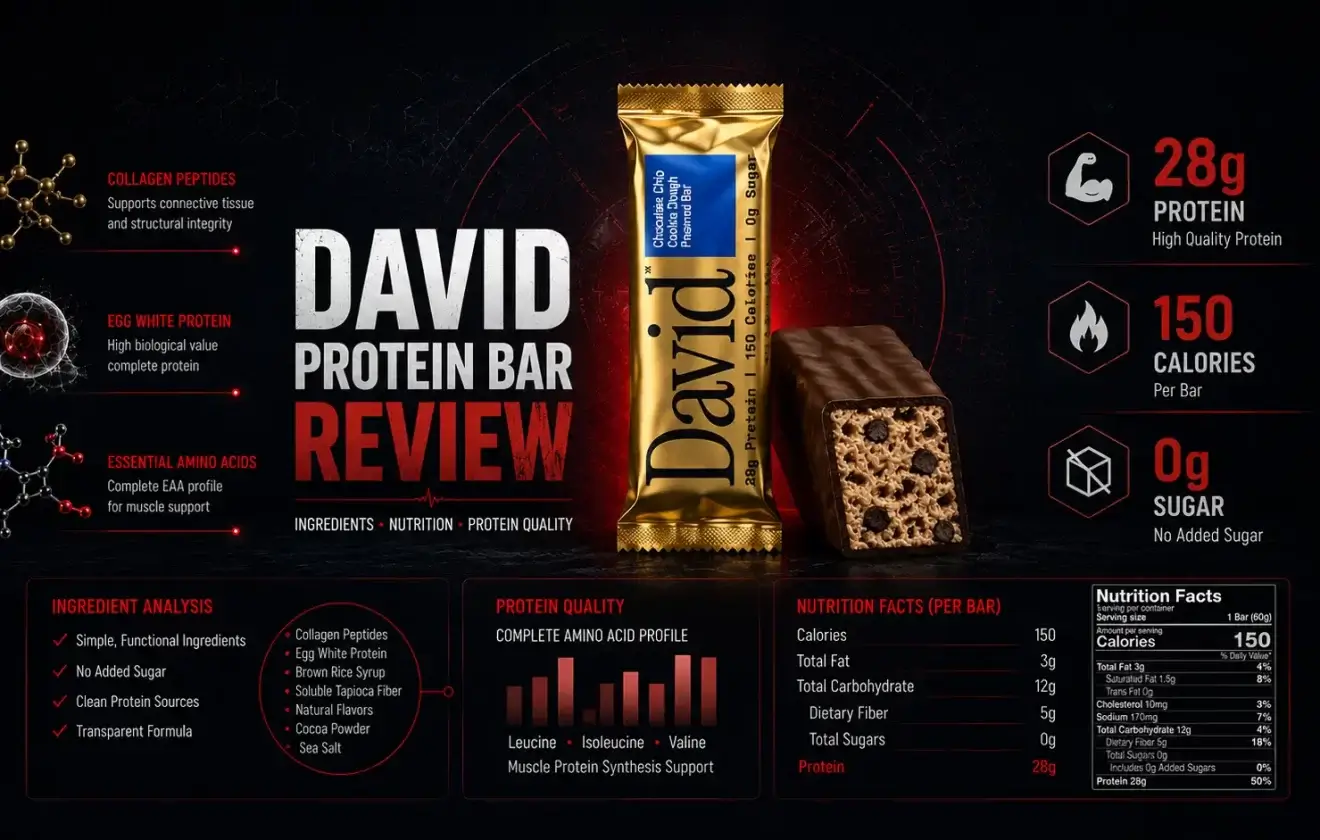
David protein bar is built around one number: 28 g of protein in a 150 calorie bar, which works out to 75 percent of calories from protein and 0 g of sugar. It gets there with a four-source protein blend, a fat replacer called EPG and 7 g of sugar alcohol. Much of what is written about the bar online describes an ingredient list it no longer uses. This review works from the current Nutrition Facts panel and ingredient statement published by David, checks the protein-quality claim against the research, and covers the newer 20 g Bronze line. Where a 150 kcal bar fits in a diet, and how it compares with other bars on that job, is in our guide to protein bars for weight loss.
Independent editorial review. MuscleScience has no commercial relationship with David and does not sell this or any other product.
David Protein Bar: 3 Things the Label Tells You
A protein bar is a trade between protein, calories, taste and what has to go into the bar to make the first three work. David protein bar pushes that trade further than any mainstream competitor, and the label shows exactly how. Here is the short version for the standard (Gold) bar, using Fudge Brownie as the reference flavor.
18.7 g of protein per 100 calories, roughly double a typical 20 g bar at 200 calories. The protein comes from milk protein isolate, whey protein concentrate, collagen and egg white, in that order.
The low fat number relies on EPG (esterified propoxylated glycerol), a modified plant fat that is mostly not absorbed. The sweetness comes from maltitol, allulose, sucralose and acesulfame potassium, so each bar carries 7 g of sugar alcohol.
Sold in 12-bar cartons at $39 on davidprotein.com, with a subscription discount and a buy-4-get-1 bundle. The 20 g Bronze line (coated, softer core) costs the same per bar but delivers 8 g less protein.
What This David Protein Bar Review Covers
David publishes a full Nutrition Facts panel, an ingredient statement and third-party test results for each flavor, which makes this an easy product to audit. What the label cannot tell you is whether 28 g from a collagen-containing blend does the same job as 28 g of whey, what EPG actually is, and whether the sugar alcohol load matters. Those are the questions this review answers.
The current David protein bar nutrition facts and ingredients, Gold and Bronze lines, from the manufacturer's own panels.
Protein quality: what the milk, whey, collagen and egg white blend means for leucine and muscle protein synthesis.
EPG, maltitol and allulose: what each ingredient does and what the research says about tolerance and blood sugar.
Who the bar suits, who should choose something else, and the mistakes people make with it.
Flavor rankings. David sells Gold bars in flavors including Fudge Brownie, Cake Batter, Cinnamon Roll, Red Velvet, Salted Peanut Butter, Blueberry Pie and Chocolate Chip Cookie Dough; macros are nearly identical across flavors.
Medical dietary advice. Anyone managing diabetes, kidney disease or a digestive condition should discuss high-protein, high-polyol foods with a clinician.
David Protein Bar Nutrition Facts: Gold vs Bronze, Per Bar
Both panels below are taken from davidprotein.com. Gold is the original 28 g bar (Fudge Brownie, 62 g); Bronze is the newer 20 g line with a softer core and chocolate coating (Peanut Butter Chocolate, 58 g). The status column reads each line the way a lifter would: is this number an advantage, something to watch, or a real drawback?
| Per bar | David Gold (62 g) | David Bronze (58 g) | Status |
|---|---|---|---|
| Calories | 150 | 150 | ● Low for the protein |
| Protein | 28 g (75 percent of calories) | 20 g (53 percent of calories) | ● Gold: highest ratio on the market |
| Total fat / saturated | 2 g / 1.5 g | 4.5 g / 3.5 g | ● Low, via EPG fat replacer |
| Total carbohydrate | 12 g | 15 g | ● Neutral |
| Dietary fiber | 3 g | 6 g | ● Soluble corn fiber |
| Total sugars / added | 0 g / 0 g | 0 g / 0 g | ● Zero sugar |
| Sugar alcohol (mainly maltitol) | 7 g | 8 g | ● GI tolerance varies |
| Net carbs (carb minus fiber and polyols) | 2 g | 1 g | ● Keto-compatible |
| Sodium | 170 mg | 55 mg | ● Neutral |
| Cholesterol | 10 mg | 15 mg | ● Neutral |
| Calcium / iron | 150 mg / 0.7 mg | 100 mg / 8 mg | ● Minor |
| Price (12-bar carton, $39) | $3.25 per bar, 11.6 cents per g protein | $3.25 per bar, 16.3 cents per g protein | ● Premium; Bronze poor value |
David Protein Bar Ingredients by Function
The ingredient statement is easier to read when grouped by what each ingredient is there to do. This is the Gold Fudge Brownie list as published by David; other flavors swap the flavor components but keep the same protein, fat and sweetener systems.
| Function | Ingredients (Gold, Fudge Brownie) | What it means |
|---|---|---|
| Protein | Milk protein isolate, whey protein concentrate, collagen, egg white | Three complete proteins plus collagen. Collagen is incomplete (no tryptophan, low leucine), so a share of the 28 g is lower quality than whey. |
| Sweeteners | Maltitol, allulose, sucralose, acesulfame potassium | Maltitol is the bulk sweetener and the source of the 7 g sugar alcohol; allulose is a rare sugar with almost no calories; sucralose and Ace-K add intensity. |
| Fat system | Modified plant fat (EPG), coconut oil, unsweetened chocolate | EPG replaces most of the fat you would expect in a chocolate bar. It is largely unabsorbed, which is how a bar with real chocolate reports 2 g of fat. |
| Texture, fiber, binders | Soluble corn fiber, tapioca starch, glycerin, soy lecithin, Dutch process cocoa | Fiber and glycerin keep the bar soft without sugar syrups; lecithin is an emulsifier. Glycerin contributes a small number of calories that the FDA counts as carbohydrate. |
| Allergens | Contains milk, egg; may contain soy, peanut, sesame, tree nuts. Gluten-free. | Not suitable for dairy or egg allergy. Bronze Peanut Butter Chocolate additionally contains peanut and soy and uses gelatin. |
What changed: earlier versions of this review, and many still online, described David protein bar as a collagen and egg white bar sweetened with allulose, monk fruit and stevia. The current ingredient statement lists milk protein isolate first, adds whey protein concentrate, and uses maltitol and sucralose. That is a better protein blend and a different sweetener profile, and it changes the verdict on both protein quality and digestive tolerance below.
5 Systems Inside a David Protein Bar: What Each Ingredient Group Does
Getting 28 g of protein into 150 calories is not a protein achievement so much as a fat and sugar achievement: the protein is ordinary, the engineering is in what was removed. Each of the five systems below explains one of the numbers on the panel.
Milk protein isolate + whey concentrate + egg white: the complete-protein core
Milk protein isolate is about 80 percent casein and 20 percent whey, so it digests slowly and holds amino acid levels up for hours; whey protein concentrate adds a fast, leucine-rich fraction; egg white is a complete protein with a high biological value. Between them these three supply most of the 28 g and all of the essential amino acid coverage. Witard and colleagues showed that 20 g of whey is enough to maximize muscle protein synthesis in young men, with only a small additional effect from 40 g, so a 28 g bar is a legitimate protein feeding rather than a snack.
Collagen: the ingredient that dilutes the number
Collagen peptides count as protein on the panel but contain no tryptophan and roughly a third of the leucine found in whey. Oikawa and colleagues gave older women 30 g of whey or 30 g of collagen peptides twice daily during an energy deficit and found that only whey raised muscle protein synthesis.
David does not disclose how much of the 28 g is collagen; it is listed third of four protein sources, so it is a minority share but not a trivial one.
The practical effect is that a David protein bar supplies somewhat less leucine than 28 g of whey would, which matters most if the bar is your only protein at a meal.
EPG (esterified propoxylated glycerol): how a chocolate bar reports 2 g of fat
EPG is a modified plant-based fat in which the fatty acids are attached to a propoxylated glycerol backbone rather than plain glycerol. Digestive lipases cannot break that bond efficiently, so most of the EPG passes through unabsorbed and contributes a fraction of the calories of ordinary fat while behaving like fat in the mouth.
Its maker, Epogee, holds FDA GRAS status for the ingredient and it is now used in several low-calorie confectionery products.
Two things are worth knowing: EPG is the reason David protein bar can include real unsweetened chocolate and coconut oil at 2 g of listed fat, and because it is largely unabsorbed, eating several bars a day can loosen stools in some people. One bar is rarely an issue.
Maltitol, allulose, sucralose and Ace-K: zero sugar, 7 g of polyols
Maltitol is the bulk sweetener and the source of the sugar alcohol line. It has about 2 kcal per gram and a real, if modest, blood sugar effect (glycemic index around 35), and it is the sugar alcohol most often linked with bloating and laxative effects above 20 to 30 g per day, per the Livesey review.
At 7 g per bar this is within the range most people tolerate, but two or three bars a day, or a bar on top of other sugar-free products, can exceed it. Allulose is a rare sugar that is absorbed but not metabolized; meta-analysis of controlled trials shows it does not raise glucose and modestly blunts the glucose response of meals it is eaten with.
Sucralose and acesulfame potassium supply sweetness intensity at milligram doses.
Soluble corn fiber, tapioca starch, glycerin: texture without syrup
Conventional bars use glucose syrup or honey as the binder. David uses soluble corn fiber (which supplies the 3 g of fiber and a partially fermentable carbohydrate), tapioca starch for structure, and glycerin to keep the bar moist and shelf-stable without refrigeration. Glycerin is counted as carbohydrate on the panel, which is why the 12 g total carbohydrate is higher than fiber plus sugar alcohol alone. None of these ingredients is a concern at bar quantities; they are the reason the bar is dense and slightly chewy rather than crumbly.
David Protein Bar vs Other Protein Sources: Protein Per 100 Calories
The clearest way to judge a protein bar is grams of protein per 100 calories, because it strips out serving size and marketing. The chart compares the David Gold and Bronze bars with a whey isolate powder, a high-protein chip and a typical 20 g bar at 200 calories. The animated bars below then break each bar down by where its calories come from.
%3C%2Ftext%3E%3Ctext%20x%3D%22860%22%20y%3D%22106%22%20text-anchor%3D%22end%22%20fill%3D%22%23F4F4F5%22%20font-family%3D%22Arial%2CHelvetica%2Csans-serif%22%20font-size%3D%2214%22%20font-weight%3D%22900%22%3E22.7%20g%3C%2Ftext%3E%3Crect%20x%3D%2240%22%20y%3D%22114%22%20width%3D%22820%22%20height%3D%2214%22%20rx%3D%227%22%20fill%3D%22%231F2937%22%2F%3E%3Crect%20x%3D%2240%22%20y%3D%22114%22%20width%3D%22820%22%20height%3D%2214%22%20rx%3D%227%22%20fill%3D%22%2322C55E%22%2F%3E%3Ctext%20x%3D%2240%22%20y%3D%22158%22%20fill%3D%22%23E5E7EB%22%20font-family%3D%22Arial%2CHelvetica%2Csans-serif%22%20font-size%3D%2214%22%20font-weight%3D%22700%22%3EDavid%20Gold%20bar%20(28%20g%20per%20150%20kcal)%3C%2Ftext%3E%3Ctext%20x%3D%22860%22%20y%3D%22158%22%20text-anchor%3D%22end%22%20fill%3D%22%23F4F4F5%22%20font-family%3D%22Arial%2CHelvetica%2Csans-serif%22%20font-size%3D%2214%22%20font-weight%3D%22900%22%3E18.7%20g%3C%2Ftext%3E%3Crect%20x%3D%2240%22%20y%3D%22166%22%20width%3D%22820%22%20height%3D%2214%22%20rx%3D%227%22%20fill%3D%22%231F2937%22%2F%3E%3Crect%20x%3D%2240%22%20y%3D%22166%22%20width%3D%22676%22%20height%3D%2214%22%20rx%3D%227%22%20fill%3D%22%2322C55E%22%2F%3E%3Ctext%20x%3D%2240%22%20y%3D%22210%22%20fill%3D%22%23E5E7EB%22%20font-family%3D%22Arial%2CHelvetica%2Csans-serif%22%20font-size%3D%2214%22%20font-weight%3D%22700%22%3EDavid%20Bronze%20bar%20(20%20g%20per%20150%20kcal)%3C%2Ftext%3E%3Ctext%20x%3D%22860%22%20y%3D%22210%22%20text-anchor%3D%22end%22%20fill%3D%22%23F4F4F5%22%20font-family%3D%22Arial%2CHelvetica%2Csans-serif%22%20font-size%3D%2214%22%20font-weight%3D%22900%22%3E13.3%20g%3C%2Ftext%3E%3Crect%20x%3D%2240%22%20y%3D%22218%22%20width%3D%22820%22%20height%3D%2214%22%20rx%3D%227%22%20fill%3D%22%231F2937%22%2F%3E%3Crect%20x%3D%2240%22%20y%3D%22218%22%20width%3D%22480%22%20height%3D%2214%22%20rx%3D%227%22%20fill%3D%22%23F59E0B%22%2F%3E%3Ctext%20x%3D%2240%22%20y%3D%22262%22%20fill%3D%22%23E5E7EB%22%20font-family%3D%22Arial%2CHelvetica%2Csans-serif%22%20font-size%3D%2214%22%20font-weight%3D%22700%22%3ELegendary%20Chips%20(20%20g%20per%20160%20kcal)%3C%2Ftext%3E%3Ctext%20x%3D%22860%22%20y%3D%22262%22%20text-anchor%3D%22end%22%20fill%3D%22%23F4F4F5%22%20font-family%3D%22Arial%2CHelvetica%2Csans-serif%22%20font-size%3D%2214%22%20font-weight%3D%22900%22%3E12.5%20g%3C%2Ftext%3E%3Crect%20x%3D%2240%22%20y%3D%22270%22%20width%3D%22820%22%20height%3D%2214%22%20rx%3D%227%22%20fill%3D%22%231F2937%22%2F%3E%3Crect%20x%3D%2240%22%20y%3D%22270%22%20width%3D%22452%22%20height%3D%2214%22%20rx%3D%227%22%20fill%3D%22%23F59E0B%22%2F%3E%3Ctext%20x%3D%2240%22%20y%3D%22314%22%20fill%3D%22%23E5E7EB%22%20font-family%3D%22Arial%2CHelvetica%2Csans-serif%22%20font-size%3D%2214%22%20font-weight%3D%22700%22%3ETypical%20protein%20bar%20(20%20g%20per%20200%20kcal)%3C%2Ftext%3E%3Ctext%20x%3D%22860%22%20y%3D%22314%22%20text-anchor%3D%22end%22%20fill%3D%22%23F4F4F5%22%20font-family%3D%22Arial%2CHelvetica%2Csans-serif%22%20font-size%3D%2214%22%20font-weight%3D%22900%22%3E10.0%20g%3C%2Ftext%3E%3Crect%20x%3D%2240%22%20y%3D%22322%22%20width%3D%22820%22%20height%3D%2214%22%20rx%3D%227%22%20fill%3D%22%231F2937%22%2F%3E%3Crect%20x%3D%2240%22%20y%3D%22322%22%20width%3D%22361%22%20height%3D%2214%22%20rx%3D%227%22%20fill%3D%22%23B91C1C%22%2F%3E%3C%2Fsvg%3E)
A different view: where the 150 calories in each bar actually come from. Protein at 4 kcal per g, fat at 9 kcal per g, the remainder from carbohydrate, fiber, sugar alcohol and glycerin.
Three quarters of a Gold bar is protein by calories, which is the number David advertises and the label supports. Bronze trades a fifth of those protein calories for fat and coating, which is why it tastes more like a candy bar and counts more like one.
Is David Protein Bar Good for Building Muscle? An Evidence-Based Answer
Yes, with one qualification. The ISSN position stand recommends 1.4 to 2.0 g of protein per kg per day for people who train, spread across meals of roughly 0.4 g per kg. For a 70 kg lifter that is about 28 g per feeding, which a Gold bar meets exactly; at 90 kg the target is closer to 36 g and the bar covers most of it. The qualification is leucine. Because part of the 28 g is collagen, the leucine content is lower than the same weight of whey, and leucine is the amino acid that triggers muscle protein synthesis. Two practical rules follow.
You are cutting and need 25 to 30 g of protein for the fewest possible calories.
You are replacing a lower-protein snack or bar, where any complete protein is an upgrade. If you would rather have something crunchy, see are Quest protein chips healthy.
You need shelf-stable protein for travel, work or between classes and a shake is impractical.
You eat it alongside a meal that already contains whey, meat, eggs or dairy, which covers the leucine gap.
The bar is your post-workout protein and nothing else is coming for hours: a whey isolate shake delivers more leucine for fewer dollars.
Sugar alcohols bother you. 7 to 8 g of maltitol per bar is enough to cause bloating in sensitive people, and it stacks with other sugar-free foods.
You are bulking, where 150 calories per bar makes it an expensive way to eat and a higher-calorie bar or real food serves better.
You are choosing Bronze for the protein. At 20 g for the same $3.25 it is a treat with protein, not a protein product.
4 Mistakes People Make With David Protein Bar
- Treating it as a meal. 150 calories is a snack. A bar plus fruit, yogurt or a handful of nuts is a small meal; a bar alone at lunch leaves most people hungry within two hours and reaching for something worse.
- Eating three in a day. That is 21 g of maltitol plus a meaningful amount of EPG, which is where digestive complaints usually start. Two bars a day is a sensible ceiling for most people; one is plenty if your other protein is in order.
- Reading the 28 g as 28 g of whey. The number is real, but the collagen share means less leucine. If the bar is your main protein at a meal, pair it with a dairy or egg source, or make your other meals whey- or meat-based.
- Buying Bronze expecting Gold macros. Both lines say David on the wrapper and cost the same. Bronze has 20 g of protein, 4.5 g of fat and no collagen or egg (its blend is whey isolate, milk protein isolate, calcium caseinate and hydrolyzed whey). Better protein quality per gram, far fewer grams.
David Protein Bar: Common Questions Answered
What are the ingredients in a David protein bar?
For the Gold Fudge Brownie bar: milk protein isolate, whey protein concentrate, collagen and egg white for protein; maltitol, allulose, sucralose and acesulfame potassium as sweeteners; modified plant fat (EPG), coconut oil and unsweetened chocolate as the fat system; and soluble corn fiber, tapioca starch, glycerin, soy lecithin and Dutch process cocoa for texture. It contains milk and egg and is gluten-free.
What is EPG in David protein bars and is it safe?
EPG stands for esterified propoxylated glycerol, a plant-based fat that has been modified so that digestive enzymes cannot break most of it down. It provides the mouthfeel of fat with a fraction of the calories, and its manufacturer holds FDA GRAS (generally recognized as safe) status for it. Because it is largely unabsorbed, large amounts can have a mild laxative effect; a bar or two a day is well tolerated by most people.
How much protein is in a David bar?
28 g in the standard Gold bar (150 calories, 62 g) and 20 g in the newer Bronze bar (150 calories, 58 g). The Gold bar delivers about 75 percent of its calories from protein, the highest ratio of any widely sold protein bar.
Is David protein bar healthy?
By the numbers it is one of the leanest protein bars available: 0 g sugar, 2 g fat, 2 g net carbs and 28 g protein. It is a processed food built on sugar alcohols, a fat replacer and protein isolates, so it is best treated as a convenient protein source rather than a whole food. People who are sensitive to maltitol or who eat several sugar-free products a day may notice bloating.
Is David protein bar keto-friendly?
Yes for most ketogenic diets. The Gold bar has 12 g of total carbohydrate, of which 3 g is fiber and 7 g is sugar alcohol, leaving about 2 g of net carbs. Note that maltitol has a modest glycemic effect, so people tracking blood glucose closely may see a small rise.
David Gold vs Bronze: what is the difference?
Gold is the original 28 g protein bar with a dense, chewy texture. Bronze is a newer line with a fluffy core and chocolate coating that delivers 20 g of protein, 4.5 g of fat and 6 g of fiber at the same 150 calories and the same $3.25 per bar. Bronze uses a whey and casein blend without collagen, so its protein quality per gram is higher, but it delivers 8 g less.
Sources & Further Reading
Nutrition facts and ingredient statements are taken from the product pages and label images published on davidprotein.com. The protein and sweetener claims above rest on the following peer-reviewed sources; each PMID was verified against the PubMed record before publication.
More from the Supplements series
Label-checked reviews of the protein products people actually buy, plus the framework behind every verdict on this site. Each guide is dose-verified and written for readers who read the panel before they buy.
Final Educational Note
This article is for educational purposes and does not constitute medical or dietary advice. Nutrition facts and ingredients reflect the David protein bar labels published by the manufacturer at the time of writing and may change by flavor or over time; always read the panel on the product you purchase. Individual tolerance of sugar alcohols and fat replacers varies.
MuscleScience has no commercial relationship with David or any other manufacturer. Individuals with diabetes, kidney disease, digestive disorders or food allergies should consult a licensed clinician before making high-protein processed foods a regular part of their diet. For the framework we apply to every product, see evidence-based supplements and how to read supplement labels.
Community Reviews
Tried this product? Rate it and share your experience. A valid email is required, kept private and never shown; reviews appear after moderation.
What readers say
There are no reviews yet. Be the first one to write one.