Best Electrolyte Supplement: 7 Rules for Choosing
Best Electrolyte Supplement: 7 Rules for Choosing
The best electrolyte supplement is the one whose sodium matches what you lose, and for many training sessions that amount is small enough for food to cover. In the largest published set of athlete sweat tests, sodium differed fourfold between people and sweat rate far more, so a ranking of brands cannot tell you what to buy. A scenario can. Long sessions in heat, very low carbohydrate diets and heavy salty sweaters justify a high sodium electrolyte supplement. An hour in a cool gym does not. This guide replaces the usual best powder electrolyte list with seven rules and a selection table, and it explains why the best electrolyte powder for everyday use is, for most people, a salted meal.
Educational content only. This page summarises published research. It is not medical advice. People with high blood pressure, kidney or heart disease, or those on diuretics should ask a clinician before adding sodium or potassium supplements.
Supplements Editor · Updated September 2026
Three numbers that frame the choice
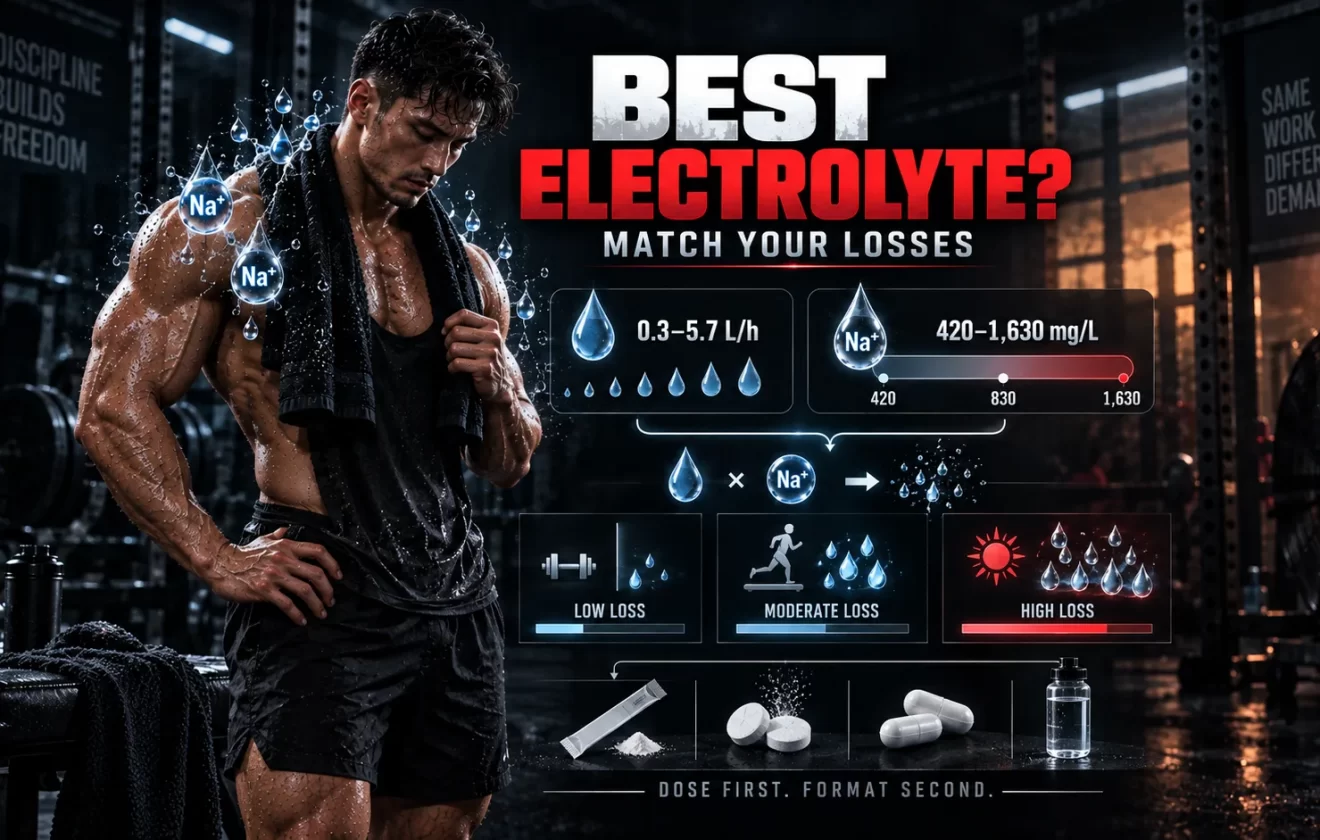
From about 420 to 1,630 mg per litre in the 506 athletes compiled by Baker and colleagues. No single electrolyte supplement can be best across that spread.
The ACSM position stand advises limiting fluid loss to about 2 percent of body weight and never gaining weight during exercise.
Everyday electrolyte use adds to an intake that is already too high for most people.
Study figures come from the published abstracts, retrieved in September 2026. No product was lab tested.
What this guide covers
How much sodium you need. Sweat rate, sweat sodium and a simple way to estimate both.
Heat, duration and diet. When losses become large, and why low carbohydrate diets change the picture.
Strength against endurance. Why lifters and runners need different answers.
Formats and a selection table. Powder, tablets, capsules and ready to drink, matched to scenarios.
Work out the sodium you actually lose
Every sensible choice starts here. The numbers come from Baker and colleagues, who compiled sweat tests from 506 athletes. Predicted whole body sweat sodium averaged 35.9 mmol per litre, about 830 mg, and ranged from 18.2 to 70.8 mmol, roughly 420 to 1,630 mg per litre. Whole body sweating rate averaged 1.21 litres an hour with a range from 0.26 to 5.73. Multiply the two and the hourly loss runs from a couple of hundred milligrams to several grams. No best electrolyte supplement list can average that away.
Your sodium loss, and the product class that fits
The marker shows 1,000 mg. Weigh yourself before and after a session: one kilogram lost is about one litre of sweat. White salt marks on dark clothing suggest a sweat sodium above average. Educational estimate only.
Two free measurements get you most of the way. Body weight before and after a session gives sweat rate. Salt crust on a cap or shirt, stinging eyes and a salty taste point to a high sweat sodium. A laboratory sweat test gives a number, though McCubbin's modelling work found that targeted sodium replacement, and therefore testing, was unnecessary in every realistic scenario modelled for a soccer match or an elite marathon.
Let heat and duration decide, not the brand
Loss scales with time and temperature. The ACSM position stand gives the boundaries: avoid losing more than about 2 percent of body weight, and never finish heavier than you started. Inside those limits, healthy people tolerate a temporary sodium deficit during exercise, and the next meals make it up. The loss ranges in the table are our estimates, calculated from the Baker averages and ranges above multiplied by session length. They are not measured values from a study.
| Session | Typical sodium loss | What fits |
|---|---|---|
| Under 60 minutes, cool gym | Under 500 mg | Water. Nothing to replace |
| 60 to 90 minutes, moderate sweat | 500 to 1,300 mg | Optional. A 300 to 500 mg serving or a salted meal after |
| Over 90 minutes, or hot conditions | 1,300 to 3,000 mg | A sodium drink during, 300 to 1,000 mg per serving by sweat type |
| Multi hour events in heat | 3,000 mg and up | Planned sodium and fluid together, rehearsed in training |
The systematic review by Veniamakis and colleagues on sodium in endurance sport concluded that sodium and fluid have to be managed together. That matters because the serious hydration emergency in sport is low blood sodium from overdrinking, described in the consensus statement by Hew-Butler and colleagues. In the Boston Marathon study by Almond and colleagues, 13 percent of finishers tested had hyponatremia and weight gain during the race was the strongest predictor. An electrolyte supplement does not protect someone who drinks far beyond thirst.
Adjust for a low carbohydrate diet
Diet changes how much sodium the kidneys keep. DeFronzo and colleagues showed the mechanism in a classic experiment: raising insulin in healthy volunteers, with blood glucose held constant, cut urinary sodium excretion from 401 to 213 microequivalents per minute, a fall of 47 percent. Insulin tells the kidney to hold sodium.
Urinary sodium excretion in healthy adults, microequivalents per minute
A ketogenic or very low carbohydrate diet does the reverse. Insulin stays low, the kidneys release more sodium and water, and the first weeks are often reported to bring headaches, fatigue and light headedness that ease with added salt. That is a common clinical description and user report. We found no controlled trial that measured it, so treat it as experience rather than evidence. This is the one everyday situation where a high sodium electrolyte supplement has a clear physiological rationale outside long exercise.
People who eat mostly unprocessed food are in a similar position, because about 71 percent of sodium in the typical US diet comes from food prepared outside the home, according to the Harnack study of three US regions.
Strength training and endurance need different answers
Most electrolyte supplement marketing is aimed at gym goers, and most electrolyte physiology comes from endurance sport. The two do not overlap much. A lifting session has long rests, often happens indoors, and rarely produces more than a litre of sweat. Shirreffs and Sawka place the clearest role for sodium after exercise, where it helps the body keep the fluid drunk with a meal.
Cramps are the usual reason lifters buy an electrolyte supplement. The review by Maughan and Shirreffs explains why that often disappoints: most exercise cramps track with muscle fatigue, and only a subgroup of heavy, salty sweaters appears to respond to sodium. If cramps strike in the last sets of a long leg day, more rest between sets is a better first experiment than more salt.
Endurance athletes over 90 minutes. Runners, cyclists and field sport players in warm conditions.
Outdoor workers and hot gym sessions. Long exposure matters more than the type of exercise.
Two a day trainers. Sodium with fluid between sessions speeds rehydration.
Lifters cutting on low carbohydrate diets. The diet, not the lifting, drives the need.
For everyone else, a best powder electrolyte purchase solves a problem they do not have.
Pick the format after the dose
The format of an electrolyte supplement is about convenience. It changes how much sodium you can practically take in, and what comes with it.
Maughan and colleagues compared 13 drinks for how well they were retained over four hours. An oral rehydration solution and milk beat water clearly. A typical sports drink, along with cola, tea, coffee and juice, did not. The lesson for choosing an electrolyte supplement is that a token amount of sodium in a flavoured drink does little. Either the serving carries a meaningful dose, in the hundreds of milligrams, or it is flavoured water.
| Format | Typical sodium per serving | Strength | Weakness |
|---|---|---|---|
| Powder or stick | 200 to 1,000 mg | Widest dose range, easy to split | Taste at high doses |
| Effervescent tablet | Often 200 to 400 mg | Portable, light | Usually low dose. Two may be needed |
| Capsule | Around 200 to 250 mg | No taste, exact count | Easy to forget the fluid |
| Ready to drink bottle | Often under 300 mg | No mixing | Heavy, costly per milligram, often sugary |
The ranges in the table are approximate, drawn from typical labels, and vary by brand, so the panel on the product in your hand is what counts. Sweeteners are a matter of preference. The BMJ review by Toews and colleagues found no clear harm or benefit from non sugar sweeteners, with low certainty evidence.
A selection table, and the everyday question
Rule six is to match the electrolyte supplement to the scenario. Rule seven is to be honest about whether you have a scenario at all.
| Your situation | Sodium per serving to look for | Notes |
|---|---|---|
| Gym sessions up to an hour | None needed | Salt your food normally |
| Long runs or rides, average sweater | 300 to 500 mg | One serving per hour is a common starting point |
| Heavy, salty sweater or hot climate | 700 to 1,000 mg | Test in training, never first on race day |
| Ketogenic or very low carbohydrate diet | 500 to 1,000 mg, once or twice daily | Broth and salted food do the same job |
| Illness with vomiting or diarrhoea | Oral rehydration solution | Contains glucose on purpose. See a clinician if it persists |
| High blood pressure, kidney or heart disease | Ask a clinician first | Extra sodium or potassium can be harmful |
The best electrolyte powder for everyday use is a hard case to make. Cogswell and colleagues found that 90.7 percent of US adults already exceed the 2,300 mg upper limit from food. A daily 1,000 mg stick on top of that is a 40 percent increase in a nutrient most people are advised to cut. Everyday use makes sense for the groups in rule three, and for almost nobody else. More on reading panels in how to read supplement labels. If the symptoms are the question rather than the product, start with the signs of electrolyte imbalance, and if you have settled on a stick, the sugar free electrolyte powder guide compares what is inside them.
Seven rules for choosing the best electrolyte supplement
Estimate your own sodium loss first
10x rangeSweat sodium and sweat rate vary too much for any universal pick. Weigh in and out, and look for salt marks.
Let heat and duration decide
90 minutesUnder an hour in a cool gym needs nothing. Long or hot sessions are where sodium earns its place.
Adjust for diet
-47%Insulin makes the kidneys retain sodium. Very low carbohydrate diets remove that signal and raise needs.
Separate lifting from endurance
Under 1 LMost strength sessions produce modest sweat losses. Cramps there are usually fatigue, not salt.
Choose the dose, then the format
100s of mgA serving should carry a meaningful sodium dose. Tablets and bottles are often low.
Match the electrolyte supplement to the scenario
300 to 1,000 mgAverage sweaters at the low end, heavy salty sweaters and hot climates at the high end.
Question everyday use
90.7%Most adults already exceed the sodium limit. Daily sticks suit low carbohydrate eaters and heavy daily sweaters.
So, what is the best electrolyte supplement?
There is no single best electrolyte supplement, because the right sodium dose depends on the person and the session more than on the brand. Any clean electrolyte supplement with a clearly stated sodium amount can be the right one if that amount fits your losses.
- You exercise for more than 90 minutes, often in heat
- You see salt marks on clothing or skin after training
- You follow a ketogenic or very low carbohydrate diet
- You have tested it in training and tolerate it
- Your sessions are an hour or less indoors
- You eat a typical diet with processed or restaurant food
- You have high blood pressure or kidney disease
- You are buying it to fix cramps or fatigue
With any electrolyte supplement, decide the milligrams first, then the format and flavour you will actually drink. Drink to thirst, and treat weight gain during a long event as a warning, not an achievement.
Common questions
Which electrolyte supplement should I buy?
Estimate your sodium loss first. Average sweaters doing long sessions suit 300 to 500 mg of sodium per serving. Heavy, salty sweaters and people on very low carbohydrate diets suit 700 to 1,000 mg. For sessions under an hour most people need none.
Do lifters need electrolytes?
Usually not. An electrolyte supplement is rarely needed for lifting, because a strength session in a cool gym produces modest sweat losses that a normal salted meal replaces. Long sessions in heat, two a day training and low carbohydrate diets are the exceptions.
Is more sodium always better?
No. Most adults already exceed recommended sodium intake, and excess sodium raises blood pressure in many people. Match the dose to what you lose.
What is the best electrolyte powder for everyday use?
For most people none is needed every day. Daily use is reasonable on ketogenic diets, in physically demanding outdoor work, or with heavy daily sweating, and a moderate sodium dose is enough.
What is the best powder electrolyte for running?
One with a stated sodium dose that matches your sweat, usually 300 to 1,000 mg per serving, in a flavour you can drink for hours. Test it in training.
Do electrolyte supplements prevent cramps?
The evidence that an electrolyte supplement prevents cramps is weak. Most exercise cramps track with muscle fatigue. A subgroup of heavy, salty sweaters may benefit from sodium.
Are potassium and magnesium important in an electrolyte supplement?
They are lost in sweat in much smaller amounts than sodium and are easy to obtain from food. Their presence matters less than the sodium dose.
Can electrolyte drinks cause harm?
Yes. Overdrinking any fluid during long events can cause dangerously low blood sodium, and a high sodium electrolyte supplement can worsen high blood pressure. Potassium supplements are risky with kidney disease or certain medicines.
References
More on supplements and labels
Final Educational Note
This article is for educational purposes and does not constitute medical advice. Sodium and fluid needs depend on sweat losses, diet, climate and medical history. Do not start or change supplementation based solely on general guidance from any website, including this one. If you have high blood pressure, kidney or heart disease, or take diuretics or potassium sparing medication, a clinician should make the call.
MuscleScience does not sell electrolyte products, supplements or medical services. We have no financial relationship with any brand. The goal of this article is to give you a way to choose based on published research instead of a ranking. For more breakdowns, see the supplements hub.