Sugar Free Electrolyte Powder: 7 Critical Facts
Sugar Free Electrolyte Powder: 7 Critical Facts
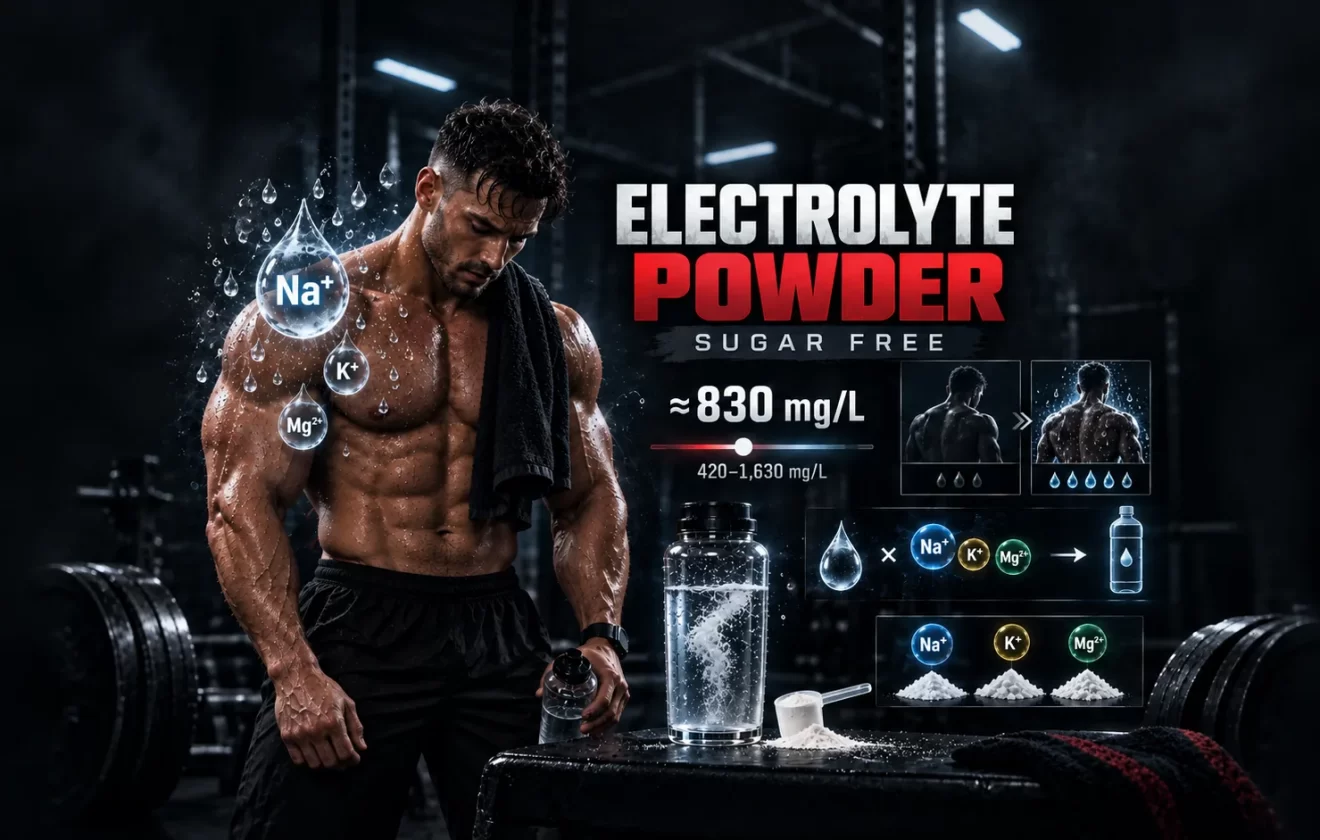
A sugar free electrolyte powder is mostly salt: sodium chloride or citrate, some potassium, a little magnesium, flavour and a sweetener. What separates products is the sodium per serving, which differs several fold between brands, and whether that amount matches how much you sweat. A litre of sweat carries about 830 mg of sodium on average, with a fourfold range between people. For most gym sessions food replaces that easily, and nine in ten American adults already exceed the sodium limit. This guide covers what is in the stick, how to scale a dose, when an unflavored electrolyte powder or a DIY electrolyte powder makes more sense, and when you need none.
Educational content only. This page summarises published research and product labels. It is not medical advice. People with high blood pressure, kidney or heart disease, or those on diuretics should ask a clinician before adding sodium or potassium supplements.
Supplements Editor · Updated September 2026
Three numbers that frame electrolyte powder
Baker and colleagues compiled sweat tests from 506 athletes. Individual values ran from about 420 to 1,630 mg per litre, so the right dose for one person is double or half the right dose for another.
LMNT lists 1,000 mg of sodium, 200 mg of potassium and 60 mg of magnesium per stick. Many other sticks list far less sodium, so read the panel and not the front of the box.
In NHANES data, 90.7 percent of US adults exceeded 2,300 mg a day from food alone, before any supplement.
The LMNT figures are label claims read from the brand site in September 2026. We did not lab test any product.
What this guide covers
What is in a stick. The salts behind the sodium, potassium and magnesium numbers, plus sweeteners and flavours.
How to scale the dose. Sweat rate, session length and why full replacement is not the goal.
Sugar free, unflavored and DIY options. What sugar does in a hydration drink, what unflavored really tastes like, and a recipe a brand publishes itself.
When you do not need any. Most gym sessions, and most people with high blood pressure.
What is in a sugar free electrolyte powder
Strip away the branding and an electrolyte powder is a short list of mineral salts. The numbers on the front of the pack are amounts of the mineral, not of the salt that carries it, which is why a 6 g stick can claim only 1,000 mg of sodium.
| Line | Per 6 g stick | Source on the ingredient list |
|---|---|---|
| Sodium | 1,000 mg, 43% DV | Salt, sodium chloride |
| Potassium | 200 mg, 4% DV | Potassium chloride |
| Magnesium | 60 mg, 15% DV | Magnesium malate |
| Calories and sugar | 5 kcal, 0 g sugar | 1 g carbohydrate from flavour and acids |
| Sweetener | Not quantified | Stevia leaf extract |
| Other | Not quantified | Citric acid, natural flavours |
Sodium does the real work. It is the main electrolyte lost in sweat, and it is what helps the body hold on to the fluid you drink. Potassium and magnesium are lost in much smaller amounts and are easy to get from food, so their presence on a label matters less than marketing suggests. At 60 mg, the magnesium in this example is 15 percent of the daily value, which is a top up and not a treatment for anything.
Sugar free versions replace glucose with stevia, sucralose or monk fruit. The BMJ review by Toews and colleagues found no clear benefit or harm from non sugar sweeteners across 56 studies, with low certainty evidence, so the choice between them is mostly about taste. For more on reading panels, see how to read supplement labels.
How to scale electrolyte powder to your sweat
Sodium loss is sweat volume multiplied by sweat sodium concentration. The figures used here come from the normative data set of Baker and colleagues, who compiled sweat tests from 506 athletes. Whole body sweat sodium averaged 35.9 mmol per litre, about 830 mg, with a range of 18.2 to 70.8 mmol, roughly 420 to 1,630 mg per litre. Whole body sweating rate averaged 1.21 litres an hour and ranged from 0.26 to 5.73. A heavy, salty sweater on a long run in the heat can lose several grams. A lifter in an air conditioned gym may lose a few hundred milligrams. That gap is why no single electrolyte powder dose suits everyone.
Sodium lost in a session, in servings of your powder
Uses the average sweat sodium of about 830 mg per litre from Baker and colleagues. The marker shows 1,000 mg. One kilogram of body weight lost is about one litre of sweat. Educational estimate only.
Full replacement during exercise is not the target. McCubbin modelled sodium needs across sports and found that in realistic scenarios for a soccer match or an elite marathon, targeted sodium replacement was unnecessary, and athletes could choose sodium intake by taste. Substantial, planned replacement only became necessary when prolonged exercise was combined with aggressive drinking, above 80 percent of losses, and sweat sodium of 40 mmol per litre or more. The ACSM position stand gives the simpler rule: limit body weight loss to about 2 percent and do not gain weight.
Does a sugar free electrolyte powder hydrate as well?
Oral rehydration solutions contain glucose for a reason: sodium and glucose are absorbed together in the small intestine, and water follows. That matters most when someone is losing fluid fast through illness. For routine training the question is whether a drink stays in the body, and sodium is what drives that.
Maughan and colleagues gave healthy adults a litre of 13 different drinks and measured urine output over four hours. An oral rehydration solution, full fat milk and skimmed milk were retained clearly better than water. Cola, diet cola, tea, coffee, orange juice, sparkling water and a typical sports drink were no different from water. The drinks that won were the ones with meaningful sodium or with protein and fat that slow emptying. A lightly salted sports drink with sugar did not.
So sugar is not what makes a hydration drink work for a healthy person who is not acutely dehydrated. Sodium content is. A sugar free electrolyte powder with a real sodium dose will hold fluid as well as a sugary one, and it spares you 20 to 30 g of sugar per bottle if you do not need the energy. During sessions longer than about 90 minutes carbohydrate becomes useful as fuel, which is a separate decision from hydration.
DIY electrolyte powder: the recipe a brand publishes itself
The cheapest sugar free electrolyte powder is the one you mix. LMNT publishes a home recipe on its own site that it says matches its stick.
| Ingredient | Amount | Supplies |
|---|---|---|
| Sodium chloride, table salt | 2,500 mg | 1,000 mg sodium |
| Potassium chloride, sold as salt substitute | 385 mg | 200 mg potassium |
| Magnesium malate | 390 mg | 60 mg magnesium |
| Flavour | Lemon or lime juice, to taste | Optional |
At supermarket prices the salts for one serving cost a few cents, against $1.50 for the retail stick at list price. What you pay for in a commercial electrolyte powder is flavour that masks a gram of sodium, convenience, and the accuracy of a factory scale. A half teaspoon of table salt weighs about 3 g, so kitchen spoons are too crude for this. If you mix at home, batch a larger quantity with a gram scale and measure servings from that.
Potassium chloride is the one ingredient to respect. It is safe in these amounts for healthy people, but anyone with kidney disease or on potassium sparing medication should not add it without medical advice.
Unflavored electrolyte powder: who it suits
An unflavored electrolyte powder removes sweeteners, acids and flavourings and leaves the salts. It suits people who react to stevia or sucralose, who want to add electrolytes to another drink, or who object to paying for flavour.
It tastes like salt water. There is nothing to mask a gram of sodium. Most people dilute it more or mix it into a flavoured drink.
Check that it is truly plain. Some unflavored products still contain citric acid or a carrier. The ingredient list should be three or four salts and nothing else.
It is the easiest format to dose. Without flavour to balance, you can use half a serving without the drink tasting wrong.
It is closest to DIY. If you are comfortable with unflavored powder, the home recipe above is the same thing for less money.
There is no performance difference between a flavoured and a plain electrolyte powder with the same minerals. The only real risk of going unflavored is drinking less because it tastes bad.
When you do not need electrolyte powder
Electrolyte powder is sold as a daily wellness habit. The physiology does not support that for most people. Cogswell and colleagues analysed national survey data and found that 90.7 percent of US adults ate more than the 2,300 mg upper limit for sodium, and 99.4 percent ate more than the 1,500 mg the American Heart Association recommends. For a typical adult the sodium problem is excess, not shortage.
US adults eating more sodium than each guideline, percent
Extra sodium also does not prevent the problems it is often bought for. Schwellnus and colleagues found no link between blood electrolytes and cramping in distance runners, and the systematic review by Veniamakis and colleagues on sodium in endurance sport concluded that sodium and fluid intake have to be managed together, not sodium alone.
The hyponatremia consensus statement by Hew-Butler and colleagues, and the Boston Marathon data from Almond and colleagues, point to overdrinking as the main cause of low blood sodium, which salt in the bottle does not fix. Maughan and Shirreffs make the same point about cramps in their review, and Shirreffs and Sawka place the clearest benefit of sodium after exercise, where it helps retain the fluid you drink with a meal.
If your training is an hour in a gym, water during and a normal meal after covers it, and electrolyte powder adds nothing. The related symptoms and red flags are covered in our guide to the signs of electrolyte imbalance, and the wider overview of health support supplements puts sodium next to the other minerals. For choosing between sticks, tablets and drink mixes by situation, see the best electrolyte supplement guide.
Seven critical facts about sugar free electrolyte powder
It is mostly salt
1,000 mgIn the example stick, 2.5 g of the 6 g is sodium chloride. Everything else is minor by weight and by effect.
Sodium per serving varies several fold
Read the panelThe front of the pack rarely tells you. The right electrolyte powder is the one whose sodium matches your sweat, not the strongest one.
Sweat sodium varies fourfold between people
420 to 1,630 mg/LThis is why one athlete swears by salt and another feels nothing. A sweat test or a before and after weigh in tells you more than a label.
Sugar is not what retains fluid
SodiumIn a 13 drink comparison, a sugary sports drink was retained no better than water. The oral rehydration solution and milk were.
Full replacement is unnecessary for most sport
Over 80%Targeted sodium dosing mattered only with prolonged exercise, aggressive drinking and salty sweat.
You can make it for cents
3 saltsA brand publishes its own recipe: 2.5 g salt, 385 mg potassium chloride, 390 mg magnesium malate.
Most adults already eat too much sodium
90.7%Daily electrolyte powder without heavy sweating adds to a load that guidelines already consider too high.
So, is sugar free electrolyte powder worth buying?
For long, sweaty sessions it is a convenient way to get sodium into a bottle without sugar, and a good product is simple and honest about its numbers. For everyday gym training it is an expensive way to salt your water.
- You train or work longer than 90 minutes, especially in heat
- You finish with salt marks on skin or clothes
- You eat very low carbohydrate or very little processed food
- You want sodium without the sugar of a sports drink
- Your sessions are an hour in a cool gym
- You have high blood pressure, kidney or heart disease
- You are buying it to stop cramps
- You are happy to weigh three salts on a gram scale
If you buy an electrolyte powder, choose by sodium per serving and by whether you like the taste enough to drink it. If you mix your own, weigh carefully and keep potassium chloride modest. In both cases drink to thirst, because more fluid than you need is the real hydration risk.
Common questions
Do I need electrolyte powder every day?
Most people do not. Around nine in ten US adults already exceed the sodium limit from food. Daily use makes sense mainly for people who sweat heavily most days or eat very low sodium diets.
How much electrolyte powder should I use in hot weather?
Estimate sweat loss by weighing before and after a session. Each kilogram lost is about a litre of sweat and roughly 830 mg of sodium on average. Replacing part of that during exercise and the rest with food afterwards is enough.
Is plain salt water the same as electrolyte powder?
For sodium, yes. A quarter teaspoon of table salt in a litre of water supplies about 580 mg of sodium. Commercial powders add small amounts of potassium and magnesium, flavour and sweetener.
How do I make a DIY electrolyte powder?
One published recipe per serving is 2,500 mg of table salt, 385 mg of potassium chloride and 390 mg of magnesium malate, with citrus juice for taste. Use a scale that reads to 0.1 g.
Is unflavored electrolyte powder better?
It is not more effective than a flavoured electrolyte powder. It avoids sweeteners and flavourings and is easier to add to other drinks, but it tastes salty.
Does sugar free electrolyte powder break a fast?
It contains almost no calories, about 5 per stick in the example on this page, so it does not meaningfully affect a fast.
Do electrolytes stop muscle cramps?
The evidence that electrolyte powder stops cramps is weak. Studies of cramping endurance athletes found no meaningful differences in blood electrolytes. Fatigue and pace are better predictors.
Can you take too much electrolyte powder?
Yes. Several high sodium servings a day can push intake far above guidelines, which matters for blood pressure. Potassium supplements are risky for people with kidney disease or on certain medicines.
References
More on supplements and labels
Final Educational Note
This article is for educational purposes and does not constitute medical advice. Sodium and potassium needs depend on sweat losses, diet and medical history, and product formulas and prices change without notice. Do not start or change supplementation based solely on general guidance from any website, including this one. If you have high blood pressure, kidney or heart disease, or take diuretics or potassium sparing medication, a clinician should make the call.
MuscleScience does not sell electrolyte products, supplements or medical services. We have no financial relationship with LMNT or any brand named on this page. The goal of this article is to give you the label claims and the research so you can decide for yourself. For more breakdowns, see the supplements hub.