Low Testosterone Symptoms: Signs, Causes and When to Get Tested
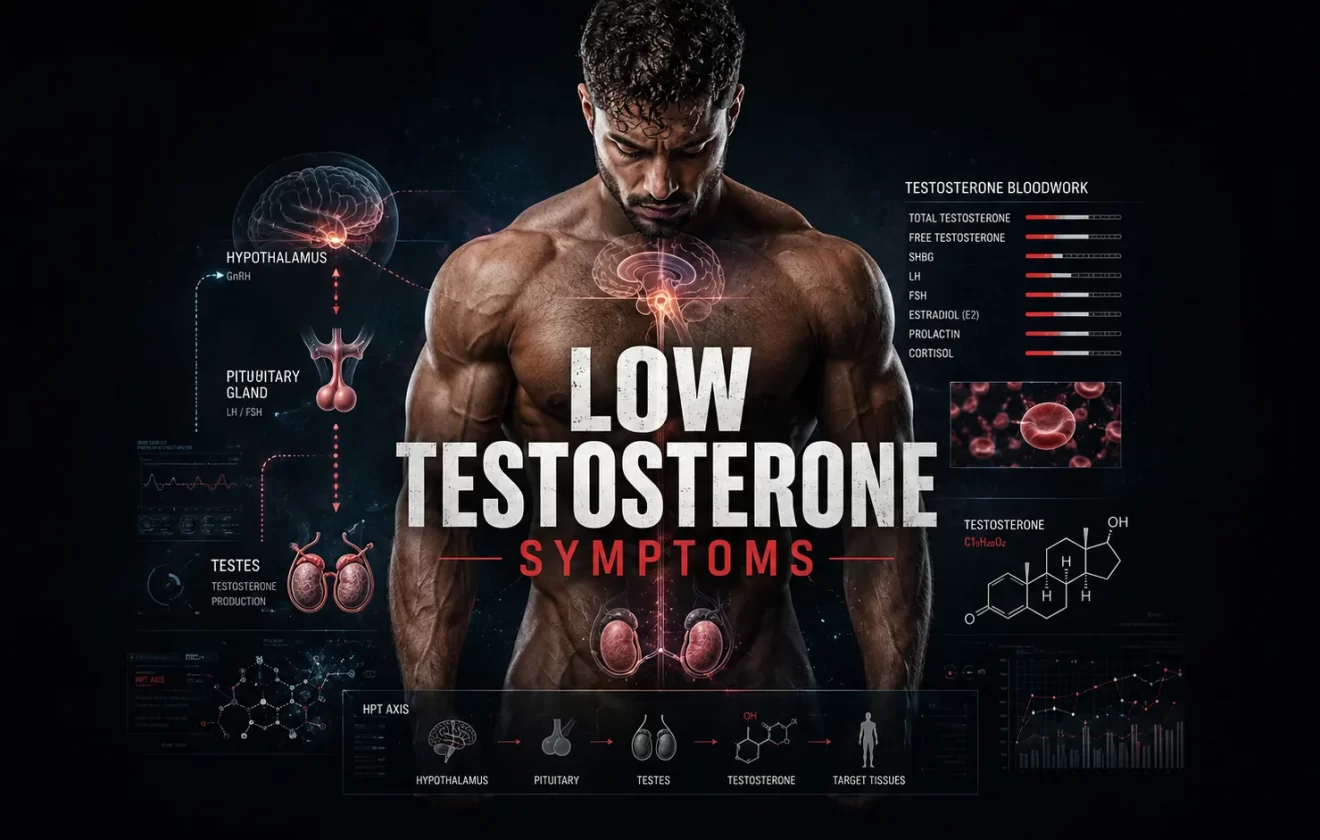
Low testosterone symptoms, decoded
Low testosterone rarely announces itself with one dramatic sign; it usually arrives as a slow drift - flatter mood, softer erections, less drive in and out of the gym - that is easy to blame on stress or age. Knowing which low testosterone symptoms genuinely point to the condition, and which usually do not, is what turns a vague worry into a useful question for your doctor.
What Low Testosterone Symptoms Actually Feel Like
Of all the low testosterone symptoms men report, the sexual cluster - lower libido, weaker morning erections, erectile difficulty - is the one most specifically tied to a genuinely low level.
A diagnosis needs consistent symptoms AND at least two low morning blood tests. Neither symptoms alone nor a single reading is enough.
Fatigue, weight gain and low mood are common with normal testosterone. Chasing them as low testosterone symptoms often hides the real cause.
That vagueness is the whole problem. Most low testosterone symptoms are non-specific: they overlap heavily with poor sleep, depression, thyroid disease, and simply getting older. This is why symptoms on their own cannot diagnose low testosterone, and why the large studies that actually defined the condition always paired a symptom list with a confirmed blood level. Understanding which signs point most strongly toward low testosterone - and which usually do not - is what turns a vague worry into a useful question for your doctor.
This guide walks through the real low testosterone symptoms grouped by type, explains which ones carry diagnostic weight, covers the common look-alikes that get blamed on low T by mistake, and shows how bloodwork confirms the picture. It is educational and does not diagnose or treat - it explains what the evidence associates with low testosterone so you can have a better-informed conversation about testing.
What “Low Testosterone” Actually Means
Testosterone deficiency, or hypogonadism, is not a single number - it is a low blood testosterone level together with symptoms consistent with that deficiency.
Guidelines generally treat a repeated morning total testosterone below roughly 300 ng/dL as the threshold worth investigating, but the number is only half the definition. One man can sit slightly under a lab’s reference range and feel completely well; another can have clear low testosterone symptoms while still technically “in range.” Because total testosterone is strongly affected by SHBG - the protein that binds most of it - free testosterone sometimes explains symptoms better than the total does. That is exactly why a level is read together with symptoms and the rest of a hormone panel rather than in isolation.
Low testosterone is common, and it becomes more common with age. Large screening studies such as the HIM study found low testosterone in a substantial share of men aged 45 and older, and average levels decline gradually with age, weight gain, and chronic illness. But common does not mean universal: not every tired, heavier, lower-libido man has low testosterone, and that gap between assumption and reality is where most mistakes happen.
Why Testosterone Runs Low: Primary vs Secondary
Low testosterone symptoms are the surface; underneath, the cause falls into two broad categories that change what testing and treatment look like.
Primary hypogonadism means the testes themselves are not producing enough testosterone despite a normal or high signal from the brain. Causes include past testicular injury or infection, certain genetic conditions, chemotherapy, or ageing of the testes. On bloodwork it typically shows a low testosterone with a high LH, because the brain is shouting for more and not getting it.
Secondary hypogonadism means the signal from the brain - the pituitary and hypothalamus - is too weak, so the testes are never properly told to produce. Here both testosterone and LH tend to be low. Crucially, many secondary causes are at least partly reversible: obesity, obstructive sleep apnea, heavy alcohol use, opioid and some other medications, chronic stress, and poorly controlled illness all suppress the signal. This is why a good work-up does not stop at “low testosterone” - it asks why, because fixing a reversible driver can restore levels without lifelong therapy. It is also why the same low testosterone symptoms can sometimes be improved by weight loss or treating sleep apnea rather than by testosterone itself.
Sexual Symptoms - the Clearest Signals of Low Testosterone
The strongest link between symptoms and a low testosterone level is sexual. This is the low testosterone symptom group most worth taking seriously.

The European Male Ageing Study (EMAS), which defined late-onset hypogonadism, tested dozens of candidate complaints and found that only three sexual symptoms carried real diagnostic weight: reduced frequency of morning erections, reduced frequency of sexual thoughts (lower libido), and erectile dysfunction. When all three appeared together with a low measured level, testosterone deficiency became far more likely. No cluster of physical or mood complaints performed nearly as well.
This does not mean these symptoms always equal low testosterone. Erectile dysfunction in particular is more often vascular than hormonal, and libido is shaped by stress, relationship factors, sleep, and mood. But of everything men report, the sexual cluster is the signal most worth acting on - especially when it represents a clear change from a man’s own baseline rather than a lifelong pattern. If your libido and morning erections have genuinely fallen off from where they used to be, that is the low testosterone symptom pattern most deserving of a blood test.
Physical Symptoms - Body Composition, Strength, and Energy
Testosterone supports muscle mass, strength, bone density, red blood cell production, and fat distribution, so a genuine deficiency can show up in the body.
Physical low testosterone symptoms include loss of muscle and strength despite consistent training, an increase in body fat (often around the waist), reduced exercise tolerance, and persistently low physical energy. In the Testosterone Trials - the largest set of placebo-controlled trials in older men with confirmed low levels - treatment produced measurable but modest improvements in some of these domains. That tells us the link is real, yet smaller than supplement and clinic marketing usually implies.
The catch is specificity. Fatigue and weight gain are among the most common reasons men suspect low testosterone, yet they are also the least specific symptoms on the list. Both are driven far more often by sleep debt, a calorie surplus, overtraining, stress, or an undiagnosed condition than by hormones. Physical symptoms genuinely support the picture when they appear alongside the sexual cluster, but on their own they rarely confirm anything.
Mood, Motivation, and Cognitive Symptoms
Many men with low testosterone describe flatter mood, reduced drive, irritability, and trouble concentrating - and these symptoms can meaningfully hurt quality of life.
Some men notice low mood that shades toward depression, or a loss of the competitive, motivated edge they used to take for granted. These are real experiences, and treating confirmed low testosterone can help some of them. But mood and cognitive complaints are, once again, non-specific: clinical depression, chronic stress, burnout, and poor sleep produce an almost identical list. The relationship also runs both ways - depression itself can lower testosterone, which makes cause and effect hard to untangle from symptoms alone.
The practical takeaway is that mood and cognitive low testosterone symptoms are a strong reason to test and to look for other drivers, not proof of low T by themselves. If low mood is the dominant symptom, it deserves attention in its own right regardless of what a testosterone level shows.
Less Common but More Telling Signs
A handful of symptoms are less common but point more strongly toward significant deficiency when they do appear.
These include hot flushes or sweats (usually only with very low levels), breast tenderness or gynecomastia, a reduction in testicular size, and gradual loss of body or facial hair. Sleep is bidirectional: low testosterone can worsen sleep quality, and poor sleep - especially untreated sleep apnea - lowers testosterone in turn. None of these is common, but when one appears alongside the sexual cluster, the case for proper testing becomes strong. These are the low testosterone symptoms least likely to be explained by something else, so they carry extra weight in the overall picture.
Symptoms Often Blamed on Low T That Usually Are Not
Because “low T” has become a catch-all explanation, several everyday complaints get attributed to it without evidence.
| Symptom | How specific to low T | Common alternative causes |
|---|---|---|
| Reduced morning erections | High | Vascular disease, medications, anxiety |
| Low libido / fewer sexual thoughts | High | Stress, relationship factors, depression, sleep |
| Erectile dysfunction | Moderate-high | Vascular disease, diabetes, medications |
| Loss of muscle & strength | Moderate | Undertraining, low protein, ageing, illness |
| Increased body fat | Low-moderate | Calorie surplus, inactivity, sleep debt |
| Fatigue / low energy | Low | Poor sleep, overtraining, anaemia, thyroid, stress |
| Low or depressed mood | Low | Depression, stress, burnout, poor sleep |
| Hot flushes, shrinking testes, low body hair | High (but uncommon) | Usually signals marked deficiency; test promptly |
Tiredness after weeks of poor sleep, weight gain from a calorie surplus, low mood during a stressful stretch, and the normal age-related dip in energy are usually not caused by a testosterone level a doctor would treat. Iron deficiency, thyroid disease, depression, obstructive sleep apnea, and plain overtraining all mimic the low testosterone picture closely. Treating these as low T - especially by self-medicating with testosterone bought online - can leave the real problem untreated while adding risks of its own.
This is the single most useful thing to understand about low testosterone symptoms: they are a prompt to investigate, not a diagnosis. The value of knowing the symptom list is not to self-diagnose from it, but to recognise when the pattern - especially the sexual cluster combined with a clear change from your own normal - is worth a proper work-up.
Why Bloodwork Is the Only Way to Confirm Low Testosterone
Symptoms open the conversation; bloodwork settles it. This is where a suspicion of low testosterone becomes a diagnosis - or gets ruled out.

Both the Endocrine Society and the AUA require at least two separate morning blood tests showing a low total testosterone before diagnosing testosterone deficiency, because levels swing with the time of day, recent illness, and even a single bad night’s sleep. A morning draw matters because testosterone peaks early and falls through the day. A proper work-up reads total testosterone alongside free testosterone and SHBG, and usually LH, estradiol and other markers, to understand why a level is low and whether the problem is in the testes (primary) or the signal from the brain (secondary).
If you are trying to make sense of your own numbers, our guides on TRT bloodwork, total versus free testosterone, and SHBG explain how these values fit together, and estradiol covers why estradiol belongs on the panel too. A single below-range reading - taken in the afternoon, after a poor night, or during an illness - is not enough to conclude anything on its own.
When It Is Worth Getting Tested
It is reasonable to ask a doctor about testing when the sexual cluster appears as a clear shift from your own normal.
That means lower libido, weaker or fewer morning erections, and erectile changes - particularly when they come with unexplained loss of muscle or energy, or with the more specific signs such as hot flushes or shrinking testicular size. Testing is also sensible when low testosterone symptoms persist after the obvious drivers - sleep, stress, training load, body weight - have genuinely been addressed. What matters is that testosterone is measured and interpreted properly rather than assumed from a symptom checklist.
If low testosterone is confirmed on proper testing, testosterone replacement therapy is one option a clinician may discuss, and our main TRT and hormones hub covers the wider picture of monitoring and long-term management. But that decision comes after diagnosis, never before it. The right sequence is always symptoms first, testing to confirm, and treatment only once the cause is understood.
Related TRT guides
If low testosterone points you toward therapy, here is what to expect next: low libido on TRT, TRT and fertility, and TRT and sleep.
Low Testosterone Symptoms: Frequently Asked Questions
What are the most common symptoms of low testosterone?
Can you have low testosterone without symptoms?
Does low testosterone cause tiredness and weight gain?
At what age do low testosterone symptoms usually start?
How is low testosterone diagnosed?
Research and Authoritative Sources
Final Educational Note
This article is educational and does not diagnose, treat, or replace medical advice. Low testosterone symptoms overlap with many other conditions, and only a clinician using proper bloodwork can determine whether testosterone deficiency is present and what to do about it. Do not start, stop, or self-prescribe testosterone based on symptoms alone. See our full disclaimer.