Clear Whey Protein: 6 Honest Facts Before You Buy
Clear Whey Protein: 6 Honest Facts Before You Buy
Clear whey protein is ordinary whey protein isolate made acidic enough to stay transparent in water, so it drinks like juice instead of a milkshake. The protein is the same. The labels we read claim 20 to 22 g per scoop at 80 to 100 calories, against about 25 g in a regular isolate. A clear whey isolate is no better or worse for muscle, and it costs two to three times more per gram of protein. Whether a tub says clear whey protein isolate or just clear protein, the questions are the same. We did not lab test any product, so every product figure below is a label claim by the manufacturer.
Educational content only. This page compares manufacturer labels, list prices and published research. It is not medical advice. If you have kidney disease or a milk allergy, your clinician or dietitian should set your protein plan.
Supplements Editor · Updated September 2026
Three numbers that frame the choice
Myprotein and Isopure list 20 g of protein per 25 g scoop and SEEQ lists 22 g per 28 g scoop. A regular isolate such as ISO100 lists 25 g, so clear whey protein gives a little less per serving.
Because the labels list no fat and almost no carbohydrate, the Myprotein clear whey isolate works out to 25 g of protein per 100 calories. Regular isolates sit near 21 g and ready to drink shakes near 19 g.
The three clear products in our table cost 11 to 14 cents per gram of protein. The regular isolates in our own reviews cost 4 to 5 cents. The premium buys a different drink, not a better protein.
Label and price figures for clear whey protein were read from manufacturer pages in September 2026, and for Isopure from a public nutrition database. Formulas and prices change, so check your own tub.
What this guide covers
What clear whey protein is. The same isolate as a normal tub, made to stay transparent, and why that takes acid.
Protein per serving. Three clear products against regular isolates and a bottled shake, per scoop and per 100 calories.
Absorption and results. Whether hydrolysed or acidified whey does anything different for muscle.
Taste, texture and cost. Why it foams, how to mix it, and what each gram of protein costs.
What clear whey protein actually is
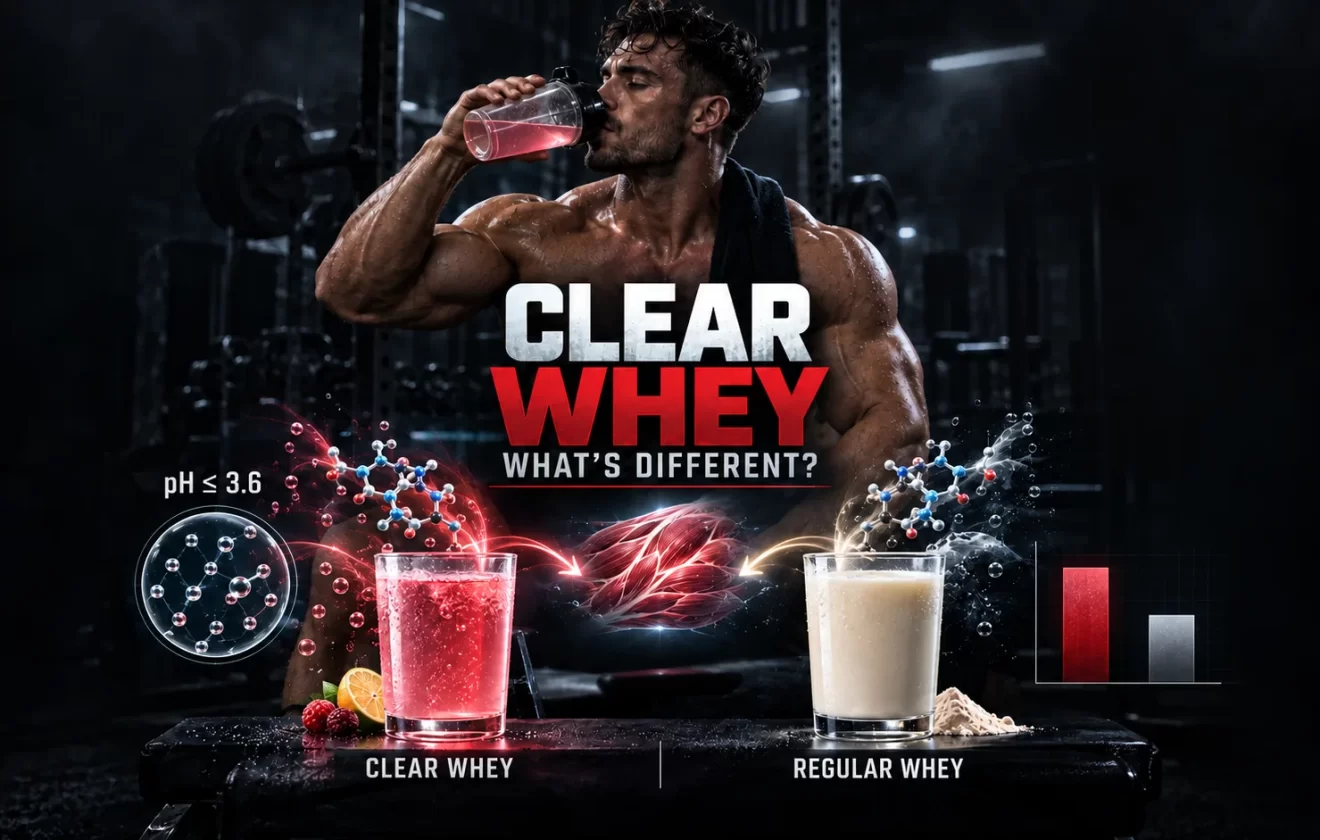
Clear whey protein is whey protein isolate formulated to dissolve into a transparent, fruit flavoured drink. A normal whey shake is cloudy because whey proteins scatter light at the near neutral pH of milk. Make the solution acidic and those proteins carry enough charge to stay apart, and the drink turns clear. That is why every clear whey protein lists an acid such as citric or malic acid near the top of the ingredients and why the flavours are lemonade, berry and tropical rather than chocolate.
The food science is well described. LaClair and Etzel tested whey protein beverages between pH 3.0 and 4.0 and found that at pH 3.6 and below all samples were essentially clear, while above pH 3.8 clarity depended heavily on the other ingredients, and added salts made things cloudier. A clear whey isolate is that finding turned into a consumer product.
Two label terms cause confusion. Some brands, including Myprotein, use hydrolysed whey protein isolate, which means the protein has been partly broken into shorter chains. Others, such as SEEQ and Isopure, list plain whey protein isolate. Both count as clear whey protein, and the difference matters less than the marketing suggests, as the absorption section below shows.
How a clear whey isolate is made
A tub of clear whey protein starts as the same raw material as any isolate. Etzel describes how whey is separated from milk during cheese making and then concentrated by membrane filtration or ion exchange into fractions, with isolates being the fraction that is mostly protein with very little fat or lactose. That low fat content matters here, because fat is one of the things that makes a shake opaque.
From there a clear whey protein takes three extra steps. The isolate is acidified so that it stays transparent. It may be hydrolysed, which also reduces the thickness of the drink. And an anti foaming agent is added, because acidified whey foams hard when shaken. Myprotein lists silicon dioxide and SEEQ lists silicone and polysorbate 80 for this job.
Foam is normal. With clear whey protein it always is. Myprotein, Isopure and SEEQ all tell you to shake and then wait 30 to 60 seconds for the foam to settle. It is the protein, not a fault.
Use more water. The labels call for 10 to 18 fl oz per scoop, about double a normal shake. Less water makes the drink sharper and more sour.
Cold helps. All three brands specify cold water. Warm water makes the acidity more obvious.
Do not add milk. Acidified whey will curdle milk. This format is built for water only.
Clear whey protein isolate against regular whey, per scoop and per 100 calories
Does clear whey protein have less protein? Per scoop, slightly. Per calorie, no. The table sets three clear products against two regular isolates we have already reviewed, a blended whey and a bottled shake, using label figures only.
| Product | Type | Scoop | Calories | Protein | Carbs | Fat | Per 100 kcal | Status |
|---|---|---|---|---|---|---|---|---|
| Myprotein Clear Whey Isolate | Clear, hydrolysed isolate | 25 g | 80 | 20 g | 0 g | 0 g | 25.0 g | ● high |
| Isopure Infusions | Clear isolate | 25 g | 90 | 20 g | 2 g | 0 g | 22.2 g | ● high |
| SEEQ Clear Protein | Clear isolate | 28 g | 100 | 22 g | 1 g | 0 g | 22.0 g | ● high |
| Dymatize ISO100 | Regular hydrolysed isolate | 1 scoop | 110 to 120 | 25 g | About 2 g | Under 1 g | About 21.7 g | ● moderate |
| CBUM Itholate | Regular isolate | 1 scoop | 110 to 120 | 25 g | Trace | Under 1 g | About 21.7 g | ● moderate |
| Optimum Nutrition Gold Standard | Regular whey blend | 1 scoop | About 120 | 24 g | About 3 g | About 1.5 g | About 20.0 g | ● moderate |
| Premier Protein shake | Ready to drink, milk protein | 11 fl oz | 160 | 30 g | 4 g | 3 g | 18.8 g | ● moderate |
On label figures clear whey protein is the leanest way to buy protein, because there is nothing else in the scoop. The trade with clear whey protein is a smaller dose. Full breakdowns of the regular products are in our reviews of ISO100, CBUM protein and Premier Protein.
Grams of protein per 100 calories, label figures
Is clear whey protein as good as regular whey for muscle
Yes, as far as the evidence goes. The protein in a clear whey isolate is whey, and whey is the fast protein: in the classic tracer work by Boirie and colleagues it produced a quick, short rise in blood amino acids compared with casein. Tang and colleagues then showed that whey hydrolysate stimulated muscle protein synthesis more than casein or soy, at rest and after resistance exercise.
Does the hydrolysed version add anything? Probably a little speed and nothing you would notice. Koopman and colleagues found that a protein hydrolysate was digested and absorbed faster than the same protein left intact and tended to increase incorporation into muscle, but that study used casein, a slow protein with more room to speed up. Intact whey isolate is already fast, so treat hydrolysed on a clear whey protein label as a texture choice more than a performance feature.
With clear whey protein the dose question matters more than the format. Moore and colleagues found the response after resistance exercise rose up to 20 g of protein, with extra protein beyond that mostly oxidised. Macnaughton and colleagues later found 40 g beat 20 g after whole body sessions in trained men. Schoenfeld and Aragon suggest about 0.4 g per kg per meal, and Morton and colleagues found no further gains above a daily total of 1.62 g per kg. One scoop of clear whey protein covers a small adult. A large lifter after a full body workout may want a scoop and a half.
Taste, texture and sweeteners
Taste is the real reason clear whey protein exists. A scoop of clear whey protein in 14 oz of cold water is thin, slightly tart and closer to a sports drink than a shake. People who cannot face a thick vanilla shake after training, or who feel full quickly, often find it far easier to drink. We did not run a taste panel, so treat this section as a description of the format rather than a ranking of brands.
The acidity cuts both ways. It is what makes the drink refreshing, and it is also why some people notice a sharp or sour aftertaste, especially with less water than the label suggests. Anyone with reflux or sensitive teeth should keep that in mind with a daily acidic drink, the same way they would with juice or soda.
Sweeteners in clear whey protein differ by brand, which is worth checking if you have a preference. The Myprotein label lists sucralose and acesulfame potassium. SEEQ lists stevia and monk fruit, and Isopure lists steviol glycosides. On sweeteners in general, the BMJ review by Toews and colleagues found most health outcomes did not differ between users and non users, while the trial by Suez and colleagues found sucralose and saccharin, but not stevia, impaired glycemic responses in some healthy adults.
Why clear whey protein costs more
Clear whey protein is sold in small tubs at premium prices. Dividing the list price by the grams of protein in the tub gives the only number worth comparing.
Clear whey isolate
Manufacturer list price, September 2026. It was discounted to $33.71 on the day we checked.
Regular isolate
Per serving figure from our ISO100 review, September 2026.
Why does clear whey protein cost so much more? Smaller production runs, the extra acidification and anti foam steps, small tubs of 14 to 22 servings, and the simple fact that clear whey protein is a newer, fashion led category. None of those reasons has anything to do with protein quality. Use the calculator to price the tub in your own cart.
What your tub costs per gram of protein
Divides the tub price by servings and by the grams of protein the label claims. The marker sits at 5 cents per gram, roughly what a regular isolate costs. Educational estimate only, and only as accurate as the label.
Six honest facts about clear whey protein
It is the same protein
Whey isolateEvery clear whey protein we checked lists whey protein isolate, plain or hydrolysed, as the only protein source. Amino acid quality is the same as a regular isolate.
Clarity comes from acid
pH 3.6Whey stays transparent when the drink is acidic enough. That is why the flavours are all fruit and why citric or malic acid sits high on the label.
A little less protein per scoop
20 gMost labels claim 20 g against 25 g for a regular isolate. It still reaches the 20 g at which the response levelled off in the study by Moore and colleagues.
The leanest format per calorie
25 gWith no fat and almost no carbohydrate listed, clear whey protein reaches 22 to 25 g of protein per 100 calories, ahead of every shake format we have reviewed.
Hydrolysed is mostly about texture
FasterHydrolysis sped up absorption of casein in the Koopman study. Whey isolate is already fast, so the practical gain is small.
You pay two to three times more
11-14 centsAt list price clear whey protein costs 11 to 14 cents per gram of protein, against 4 to 5 cents for the regular isolates in our reviews.
For where powders sit against ready to drink options, see our roundup of protein drinks to build muscle.
So, is clear whey protein worth buying
If you like normal shakes, clear whey protein is not worth the premium. A regular isolate gives you more protein per scoop for less than half the price per gram, and the research behind whey applies to both equally. If thick, milky shakes are the reason you skip protein, clear whey protein solves a real problem, and a protein you actually drink beats a cheaper one that stays in the cupboard.
- You dislike milky shakes or feel full too quickly after training
- You want the most protein for the fewest calories while cutting
- You are eating less on a GLP-1 medication and need protein in a light drink
- You tolerate isolates but not the lactose in cheaper whey concentrate
- Price per gram of protein is your main concern
- You have reflux, sensitive teeth or dislike sour drinks
- You have a milk allergy, since it is still whey
- You want to blend your protein with milk, oats or fruit
The research caveat is short. No trial has compared clear whey protein with regular whey for muscle growth, and none is really needed: the protein source is the same, and the differences are acid, flavour and price. The studies on hydrolysed protein show faster absorption, not bigger muscles.
Common questions
Is clear whey as good as regular whey?
For muscle, yes. Clear whey protein is whey protein isolate, the same fast, complete protein as a regular isolate, only acidified so that it stays transparent. The differences are taste, a slightly smaller dose per scoop and a higher price, not protein quality.
Why is clear whey more expensive?
Extra processing, small tubs and a newer, trend driven category. At list prices the clear products we checked cost 11 to 14 cents per gram of protein, against 4 to 5 cents for regular isolates. Nothing in that gap reflects better protein.
Does clear whey have less protein?
Per scoop, a little: most labels claim 20 g against 25 g for a regular isolate. Per calorie it has more, because the labels list no fat and almost no carbohydrate. The Myprotein version works out to 25 g of protein per 100 calories.
What is clear whey isolate made of?
Whey protein isolate, plain or hydrolysed, plus an acid such as citric or malic acid, flavouring, a sweetener and an anti foaming agent. The acid is what keeps the drink transparent. There is no added fat, and the labels we read list 0 to 2 g of carbohydrate.
Why does clear whey foam so much?
Acidified whey traps air when shaken, so clear whey protein foams more than a normal shake. Every brand we checked tells you to shake, then wait 30 to 60 seconds for the foam to settle. Using the full amount of cold water on the label, 10 to 18 fl oz, also helps.
Is clear whey protein good for weight loss?
It is the leanest protein format we have seen, at 80 to 100 calories for 20 to 22 g of protein on label figures. That makes it a useful tool inside a calorie deficit. It does not cause weight loss on its own, and a thin drink is less filling than a meal.
Is clear whey protein lactose free?
Isolates contain very little lactose, and SEEQ markets its product as zero lactose, so many lactose sensitive people tolerate it. It is still a milk protein. Anyone with a milk allergy should avoid it entirely.
Can you mix clear whey with milk?
No. Clear whey protein is acidic and will curdle milk. It is designed for cold water only, which is also why it does not work in porridge or creamy smoothies the way a regular whey does.
References
More protein reviews
Final Educational Note
This article is for educational purposes and does not constitute medical advice. Protein needs depend on body weight, training, age, kidney function and medical history, and product formulas and prices change without notice. Do not replace meals or change a clinical nutrition plan based solely on general guidance from any website, including this one. If you have kidney disease, a milk allergy or are under medical weight management, a clinician or registered dietitian should make the call.
MuscleScience does not sell protein powders, supplements or medical services. We have no financial relationship with any brand named on this page. The goal of this article is to give you the label claims and the research so you can decide for yourself. For more product breakdowns, see the supplements hub.