Steroid Water Retention: 7 Proven Ways to Beat Bloat
STEROID WATER RETENTION: WHERE THE WATER COMES FROM AND WHEN IT IS A WARNING
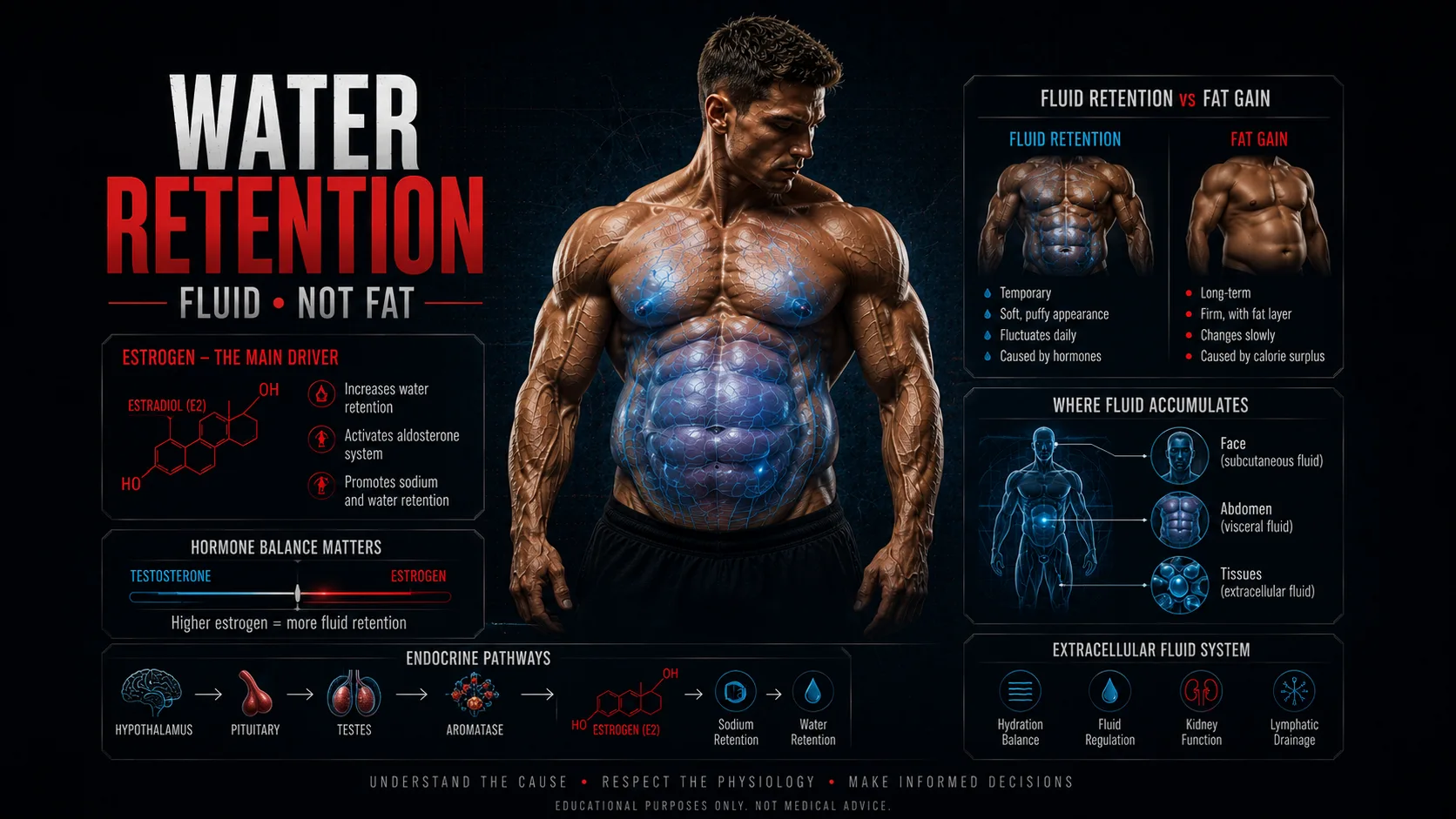
Steroid water retention is the most common side effect of a cycle. 56% of 100 men followed through one cycle reported fluid retention (PMID 33038020). Bloat on a cycle is mostly water moving between body compartments, not new fat.
This guide covers how often steroid water retention appears, what drives it, how to tell water from muscle, and the warning signs. More side effects are on the PED side effects hub.
Steroid water retention in three numbers
Three study figures show how common steroid water retention is and what comes with it.
Fluid retention
Reported through one cycle (PMID 33038020).
High sodium week
From 50 to 200 mmol of sodium a day (PMID 19282825).
Systolic pressure
On cycle, back to baseline within a year (PMID 35014715).
Study figures come from PubMed papers. Which compounds users find most watery is practice, not studied; where we describe it, we say so.
What this steroid water retention guide covers
How often fluid retention appears, where the water sits, and what the body composition studies measured (PMID 33038020, 14964432, 15076791).
Growth hormone, dietary sodium and the kidney as the three drivers with real data behind them (PMID 20439575, 19282825, 15827107).
How to separate water from muscle, read blood pressure, and spot the warning signs (PMID 11701431, 35014715, 39945139, 36304014, 35518797).
Not covered
Prednisone and corticosteroid moon face. A different drug class with a different mechanism.
Diuretic doses or any flushing protocol.
How common is steroid water retention?
Fluid retention is the most commonly reported side effect in the largest prospective look at steroid users. In the HAARLEM cohort, 100 men were followed through one cycle and 56% reported it (PMID 33038020). That is frequent enough to plan around rather than treat as a rare reaction.
The same follow up found that reported effects had returned to baseline at one year (PMID 33038020). That is decent news for a single cycle, and it says nothing about staying on year round. Both halves of that finding deserve the same space.
Water is not a fringe effect bolted on to the muscle effect. A 2003 review concluded that androgens affect every body compartment, body water included (PMID 14964432). Total body water, extracellular volume and plasma volume all move.
Water shifting between those compartments is why one cycle can change the scale, the blood pressure cuff and the blood test at the same time. That set of signals is what the rest of this article works through.
Why do steroids cause water retention?
The clearest mechanism paper on this came from Johannsson and colleagues. They gave testosterone enanthate to 12 men with hypopituitarism and measured their fluid compartments directly (PMID 15827107). Extracellular water rose, the first direct evidence that testosterone alone does this. The authors pointed at the kidney tubules as the likely site.
The same study found that growth hormone and testosterone were additive on extracellular water (PMID 15827107). Additive means the two together moved more water than either one alone. That matters because the two are often stacked.
Sodium is the second lever, and it is the one you control. Visser and colleagues moved healthy men from 50 to 200 mmol of sodium a day (PMID 19282825). Extracellular fluid rose by 1.2 L, with a larger rise in men with a higher BMI (PMID 19282825). Pull sodium down again and the compartment shrinks, which is why salt is the first lever anyone should try.
Most lifters describe a scale jump in the first week or two, before any muscle could plausibly be built. Training volume, carbohydrate and salt take most of the blame, and all three usually change on the same day a cycle starts.
Growth hormone and salt make steroid water retention worse
Growth hormone is the strongest single driver of extracellular water in this literature. In 96 recreational athletes, GH raised lean body mass mainly through extracellular water rather than new tissue (PMID 20439575). Sprint capacity rose 3.9%, a real performance change sitting on top of a fluid change (PMID 20439575).
Stack GH with testosterone and the effect grows. In the hypopituitary men, the two hormones were additive on extracellular water (PMID 15827107). Neither study offers a way to separate the water gain from the number on the scale.
Dietary sodium then multiplies whatever the hormones are already doing. The 1.2 L rise from a sodium switch was measured in healthy men taking no steroids at all (PMID 19282825). Men with a higher BMI saw a bigger rise than leaner men on the same intake.
Steroid water retention or muscle?
The nandrolone study answers the steroid water retention question most directly. Sixteen bodybuilders took nandrolone at 200 mg per week for 8 weeks (PMID 15076791). Body mass rose 2.2 kg, fat free mass rose 2.6 kg, and total body water rose 1.4 kg (PMID 15076791).
Here is the line that matters: the ratio of extracellular to intracellular water did not change (PMID 15076791). Water was distributed normally, not pooling outside the cells. The authors put the gains down to muscle, with water following the new tissue.
Testosterone does something similar, in a dose dependent way. In 61 men over 20 weeks, fat free mass rose 3.4 kg at 125 mg per week (PMID 11701431). It reached 5.2 kg at 300 mg and 7.9 kg at 600 mg, a clean dose response (PMID 11701431). More drug meant more lean tissue, not merely more water.
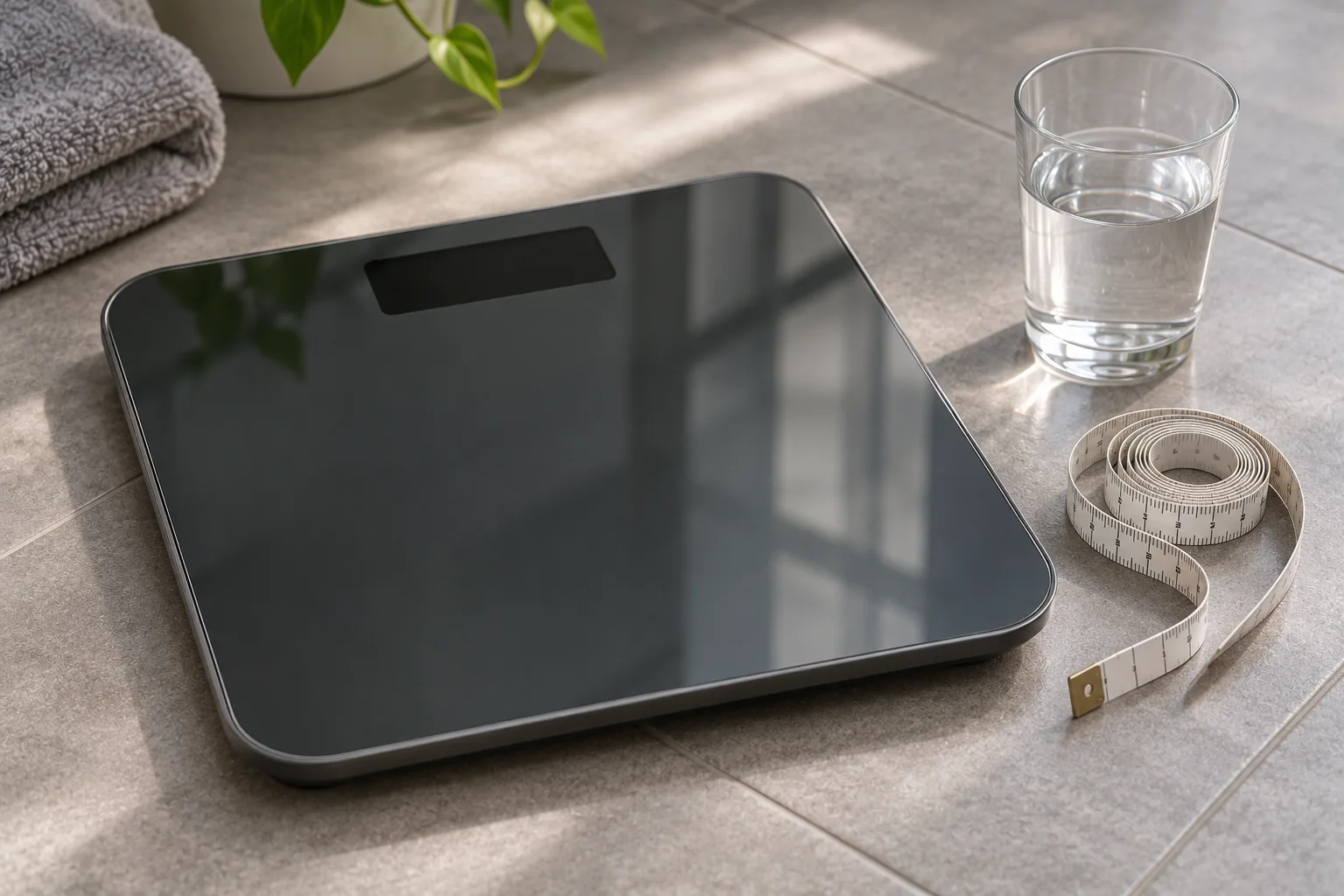
Weigh yourself first thing, after the bathroom, before food, then read the 7 day average. A waist tape at the navel and a tight ring in the evening tell you more about water than one bad morning does.
Which compounds cause the most steroid water retention?
Reports cluster with dose, with aromatizing compounds, and with short esters. Lifters describe water arriving within days on some drugs and barely at all on others, and no trial here compares them head to head.
What is studied is narrower and more useful. Testosterone enanthate alone raised extracellular water in hypopituitary men (PMID 15827107). Nandrolone over 8 weeks raised total body water by 1.4 kg but left the extracellular to intracellular ratio unchanged (PMID 15076791). Different drugs behave differently: the second moved water into tissue rather than around it.
Dose is the part with clean data. Fat free mass rose stepwise from 125 to 300 to 600 mg per week of testosterone enanthate (PMID 11701431). Whether water tracks the same curve is not settled by these studies, and it is a fair bet that it moves with dose too.
Steroid water retention and blood pressure
Blood pressure is where steroid water retention stops being cosmetic. During the HAARLEM cycle, systolic pressure rose 6.87 mmHg and diastolic 3.17 mmHg (PMID 35014715). Both were back to baseline one year after the start.
Wider population data point to a larger shift than any single cohort. Systolic pressure ran 12.43 mmHg higher and diastolic 8.09 mmHg higher in users (PMID 39945139). That is the range where a doctor starts talking about treatment.
The heart itself changes over a cycle. Echocardiography in 31 men found left ventricular mass up 28.3 g and ejection fraction down 4.9% after a median 16 week cycle (PMID 36304014). Both recovered after a median 8 months off (PMID 36304014). The recovery is the part worth holding on to, and it also sets the price of an unbroken run.
The worst case is rare and documented. A 30 year old bodybuilder presented with heart failure and pulmonary edema, and improved after stopping steroids plus 6 months of treatment (PMID 35518797). The Endocrine Society guideline lists uncontrolled heart failure as a contraindication and asks for hematocrit and adverse effect monitoring in the first year (PMID 29562364).
7 ways to reduce steroid water retention
1. Cut sodium before anything else. A switch from 50 to 200 mmol a day moved extracellular fluid by 1.2 L in healthy men (PMID 19282825). The same study found larger rises in men with a higher BMI.
2. Weigh yourself every morning. Practice, not studied: same time, after the bathroom, before food and drink. Read the 7 day average rather than one number, because daily swings are mostly salt and carbohydrate.
3. Measure your waist weekly. Practice, not studied: tape at the navel, same time of day, standing relaxed. Water at the waist moves before the mirror does.
4. Keep carbohydrate intake steady. Practice, not studied: big swings in carbohydrate shift scale weight along with the water bound to glycogen. Steady intake makes the scale readable again.
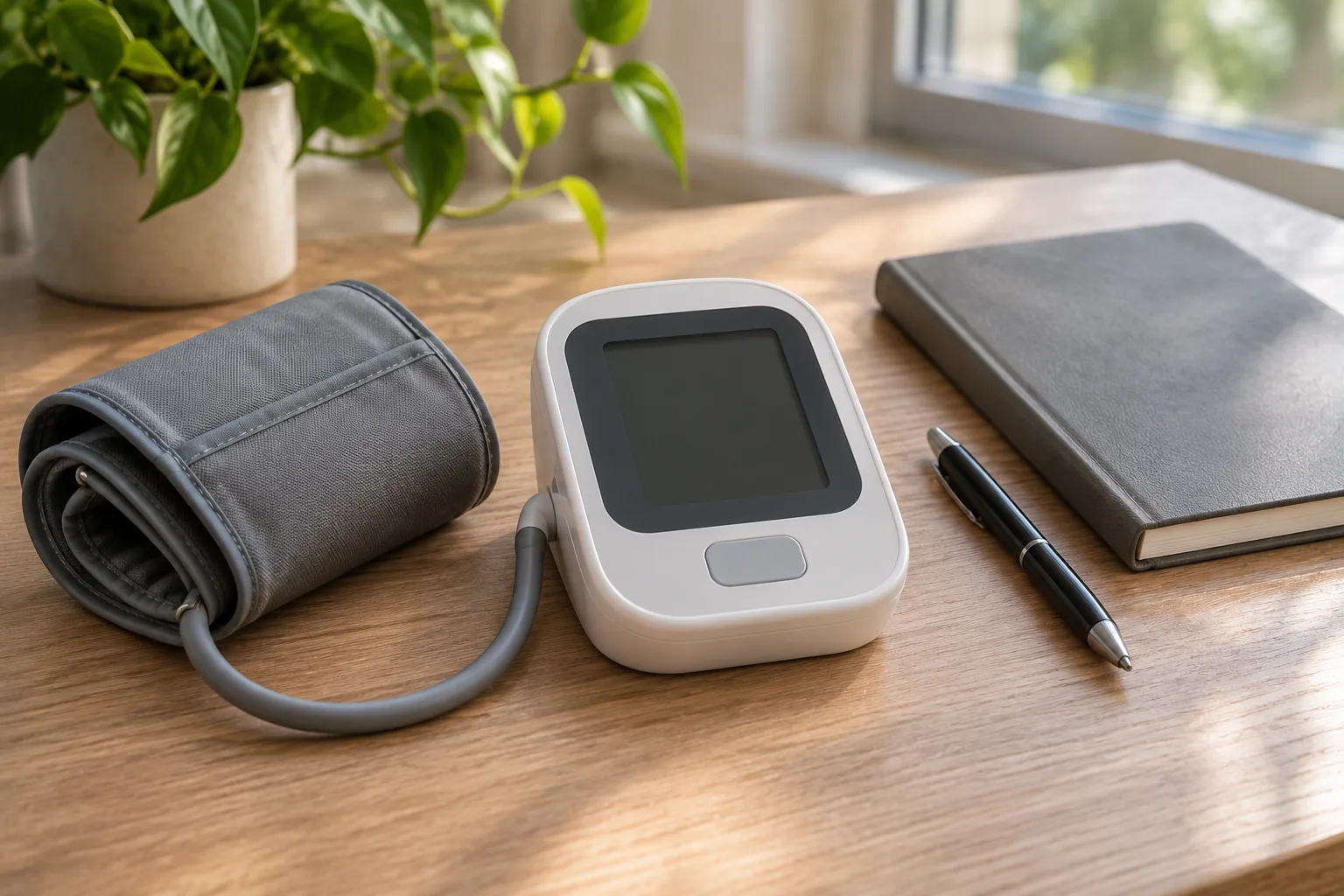
5. Check blood pressure at home. Sit quietly with the arm supported, then take two readings. Systolic rose 6.87 mmHg on cycle in the HAARLEM cohort (PMID 35014715).
6. Get hematocrit and bloods checked. The Endocrine Society guideline asks for hematocrit and adverse effect monitoring through the first year (PMID 29562364). Ask what your own baseline was before you started.
7. Plan for a slow reset. Reported effects were back to baseline at 1 year in the HAARLEM cohort (PMID 33038020). Plan in weeks and months, not days.
When steroid water retention is a warning sign
Breathlessness on light effort
A bodybuilder with heart failure and pulmonary edema recovered after stopping steroids and 6 months of treatment (PMID 35518797).
Blood pressure that stays high
In a meta-analysis of steroid users, systolic pressure ran 12.43 mmHg above non users (PMID 39945139).
Swelling in legs and ankles
Testosterone enanthate alone raised extracellular water in hypopituitary men, the first direct evidence of the effect (PMID 15827107).
Falling exercise tolerance
Ejection fraction fell 4.9% after a median 16 week cycle in 31 men (PMID 36304014).
Steroid water retention on TRT
Replacement level testosterone moves water too, just less of it. Testosterone enanthate raised extracellular water in hypogonadal men given replacement treatment (PMID 15827107). A review of androgen physiology found every body compartment affected, body water included (PMID 14964432).
Monitoring follows the same idea at a smaller scale, with hematocrit and adverse effects checked through the first year (PMID 29562364). None of those studies followed men for years at replacement doses, so the timing of any shift is the least certain part.
Verdict: 7 facts about steroid water retention
1. It is the most common effect. 56% of 100 men followed through one cycle reported fluid retention (PMID 33038020).
2. It reverses. All reported effects in that cohort were back to baseline at 1 year (PMID 33038020).
3. Androgens move body water. Every body compartment is affected, body water included (PMID 14964432).
4. Testosterone alone does it. It raised extracellular water in 12 hypopituitary men, the first direct evidence (PMID 15827107).
5. Salt adds litres. A sodium switch from 50 to 200 mmol a day raised extracellular fluid by 1.2 L (PMID 19282825).
6. Not every kilo is water. Nandrolone raised total body water by 1.4 kg while leaving the extracellular to intracellular ratio unchanged (PMID 15076791).
7. Pressure rises with it. Systolic pressure rose 6.87 mmHg on cycle and was back to baseline at 1 year (PMID 35014715).
Steroid water retention: frequently asked questions
Is steroid water retention water or fat?
Mostly water. In 16 bodybuilders on nandrolone, fat free mass rose 2.6 kg and total body water 1.4 kg, with a normal water ratio (PMID 15076791).
Does steroid water retention go away when I stop?
Reported effects were back to baseline at 1 year in the HAARLEM cohort (PMID 33038020).
Which compound bloats the most?
No head to head data here compares them. Practice, not studied: reports cluster with dose and with aromatizing compounds.
Does salt matter for steroid water retention?
Yes. Moving from 50 to 200 mmol a day raised extracellular fluid by 1.2 L in healthy men (PMID 19282825).
Is steroid water retention dangerous?
The water is mostly cosmetic; the blood pressure that comes with it is not (PMID 35014715, 39945139).
Will drinking less water help?
Practice, not studied: restricting fluid usually makes the body hold harder, and it does not touch the hormonal signal.
Can I drop it before a photo?
Practice, not studied: a week of lower salt and steady carbohydrate does more than any last minute trick.
When do I need a doctor?
Breathlessness, chest pain, leg swelling, or blood pressure that stays high off cycle (PMID 35518797, 29562364).
Sources and further reading
Every study figure on this page comes from one of the 12 papers below, checked against PubMed on 4 November 2026. Practice notes are marked as practice. Reference links are dofollow to support open science.
Verified
Verified
Verified
Verified
Verified
Verified
Verified
Verified
Verified
Verified
Verified
Verified
More from PED side effects
Four guides that sit closest to this one.
Final Educational Note
This article is educational and is not medical advice. MuscleScience does not prescribe, sell or supply steroids and does not give cycle protocols. Non medical steroid use is illegal in many countries.
Breathlessness, chest pain or swollen legs need a doctor. More guides sit on the PED side effects hub. Read more on the about page and in the full disclaimer.