Meal Timing Explained: When and How Often to Eat for Muscle and Performance
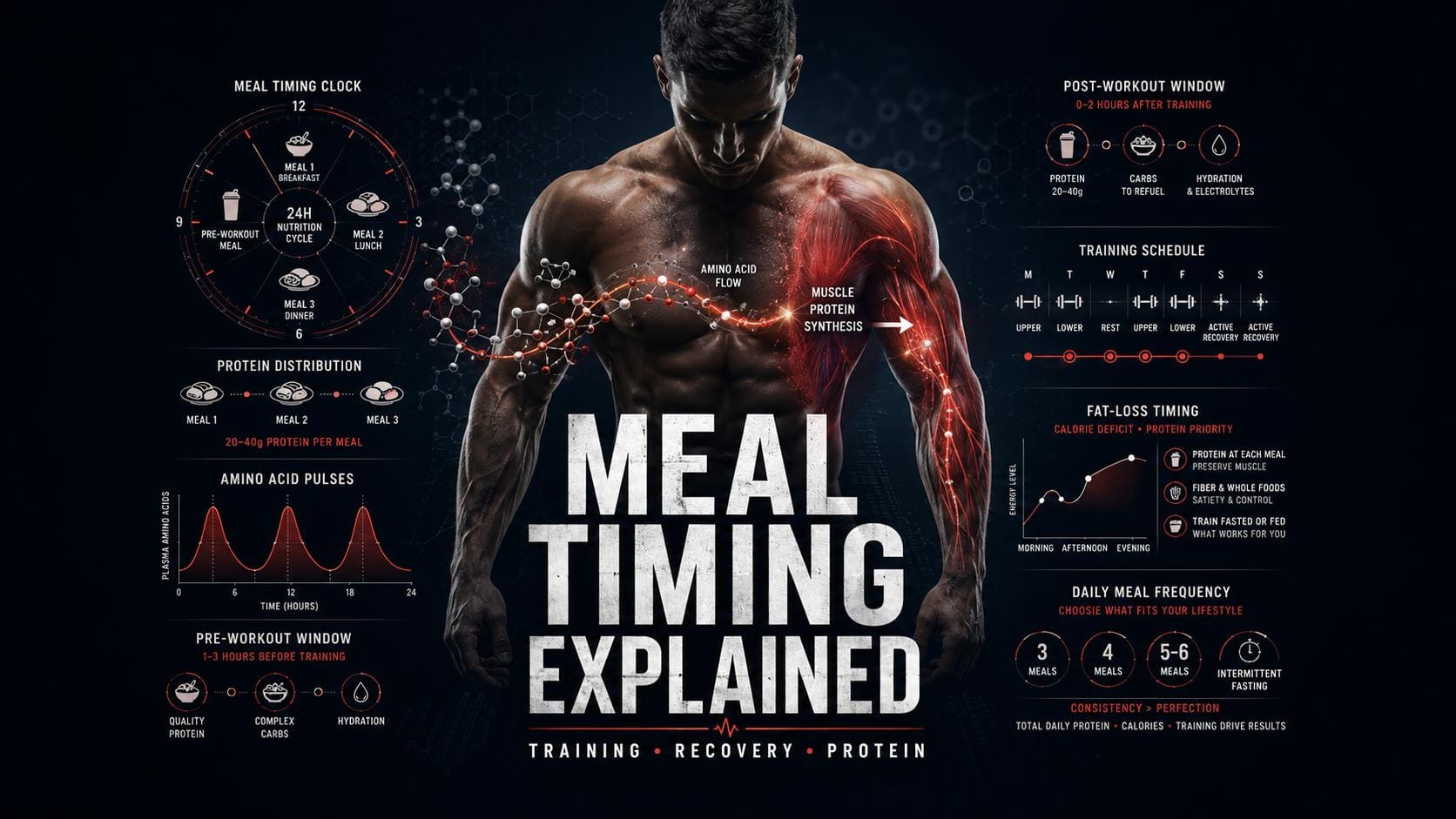
MEAL TIMING EXPLAINED: THE ANABOLIC WINDOW, PROTEIN SPACING AND MEAL FREQUENCY, TESTED
Meal timing matters less than lifters think, and more than zero. A meta-analysis of 23 studies found total protein, not timing, predicted muscle growth (PMID 24299050). Spreading protein every 3 hours and a dose before sleep still moved the needle (PMID 23459753, 25926415).
This guide covers the anabolic window, pre vs post workout protein, how to space protein, meal frequency, fasting windows and what to eat before sleep. More guides sit on the nutrition hub.
Meal timing in three numbers
Three study figures show where meal timing matters and where it does not.
23 studies
Total protein predicted growth, not timing (PMID 24299050).
20 g every 3 h
vs 10 g every 1.5 h or 40 g every 6 h (PMID 23459753).
Protein before sleep
vs 4.8 cm2 on placebo over 12 weeks (PMID 25926415).
Study figures come from PubMed papers. Doses are quoted as study facts, not as a plan. Practice notes are marked.
What this meal timing guide covers
The anabolic window: what the trials found when they tested it.
Protein spacing, meal frequency and fasting windows with lifting.
Protein before sleep and carbohydrate timing.
Not covered
How much to eat. That is energy balance and protein intake.
Endurance fuelling during events. Different rules, different page.
What meal timing controls, and what it does not
The ISSN position stand puts it in order. Meeting total daily protein, preferably spread about every 3 hours, is the primary emphasis (PMID 28919842).
Timing is second. Pre or post exercise protein may support strength and body composition. The size and timing of the pre workout meal changes how much post workout protein is needed (PMID 28919842).
The protein position stand says 1.4 to 2.0 g per kg a day is sufficient for most exercising people. Doses of 20 to 40 g spread across the day are ideal (PMID 28642676).
The anabolic window: what the evidence says
The anabolic window is the most famous meal timing claim: the idea that protein must arrive within about an hour of training. Aragon and Schoenfeld reviewed it in 2013 and found the evidence thin (PMID 23360586).
Their meta-analysis pooled 23 studies and 525 subjects for hypertrophy. Once total protein was controlled for, timing had no significant effect on strength or growth (PMID 24299050).
Total protein intake was the strongest predictor of muscle gain. The authors wrote that the results refute the belief that timing around training is critical (PMID 24299050).
The ISSN still notes that post exercise protein, immediately to 2 hours after, stimulates robust increases in muscle protein synthesis (PMID 28919842).
Meal timing around training: pre vs post workout protein
A 10 week trial tested the anabolic window head on. 21 trained men took 25 g protein either immediately before or immediately after lifting (PMID 28070459).
Pre and post groups gained the same strength, muscle and body composition on every measure (PMID 28070459).
The authors concluded the interval for protein intake may be several hours or more around a session. It depends on when the pre workout meal was eaten (PMID 28070459).
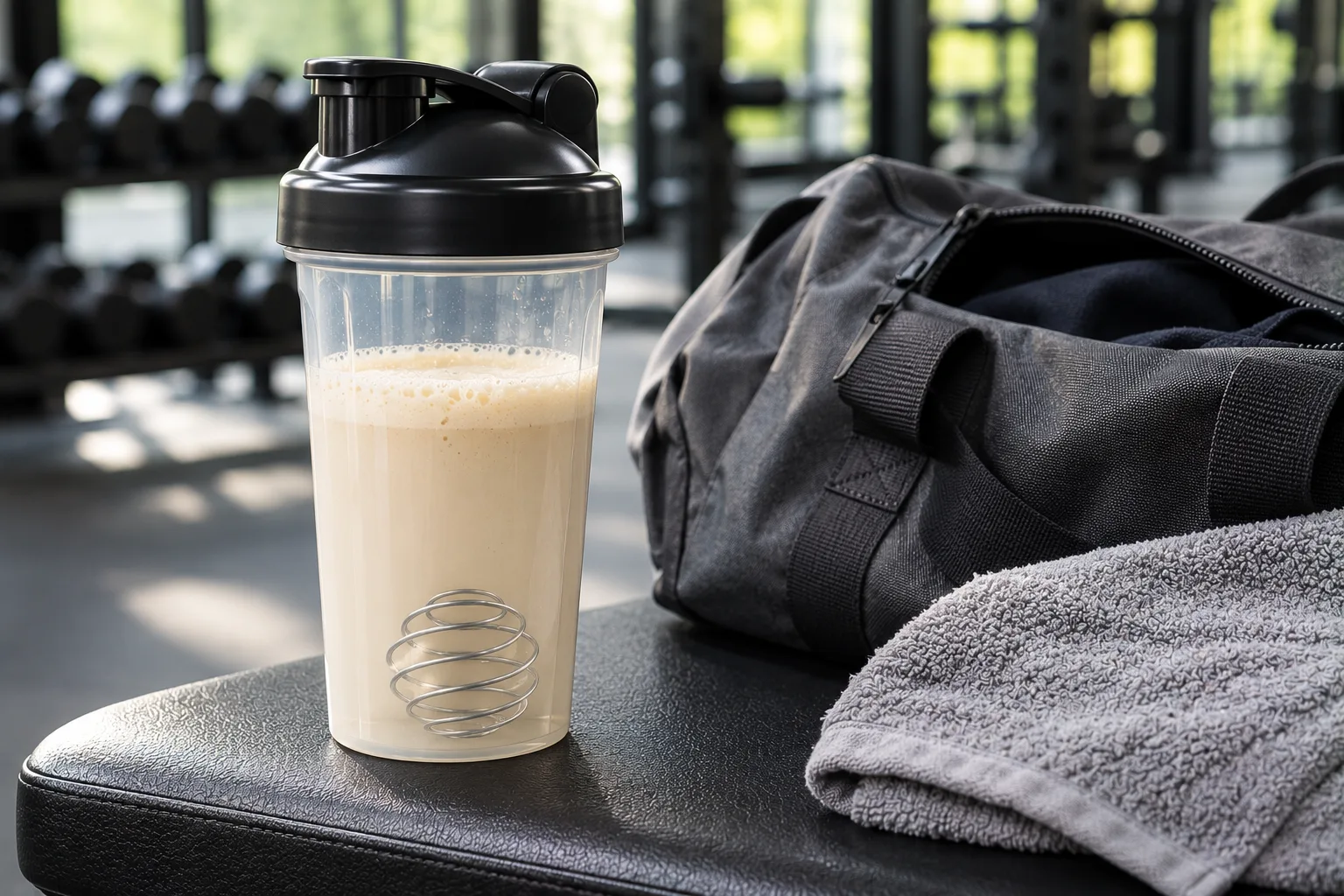
Protein timing across the day: spacing beats stacking
Areta and colleagues gave 24 trained men 80 g whey over 12 hours after lifting. The three patterns were 8 x 10 g, 4 x 20 g, or 2 x 40 g (PMID 23459753).
All three raised muscle protein synthesis 88 to 148% above rest. The 20 g every 3 hours pattern beat both others by 31 to 48% (PMID 23459753).
A 7 day crossover confirmed it with whole meals. Protein spread evenly across breakfast, lunch and dinner raised 24 hour synthesis 25% over the same protein skewed to dinner (PMID 24477298).
The ISSN sums it up. 20 to 40 g, or 0.25 to 0.40 g per kg, every 3 to 4 hours most favourably affects synthesis and body composition (PMID 28919842).
Meal timing and frequency: does it matter?
A meta-analysis of 15 studies first found more frequent meals linked to lower fat and higher fat free mass (PMID 26024494).
Then the sensitivity analysis removed one study, and the effect disappeared. The authors said the findings should be read with circumspection (PMID 26024494).
The ISSN agrees. In non exercising people, changing meal frequency has limited impact on weight or body composition. The stronger evidence is for appetite and satiety (PMID 28919842).
The natural bodybuilding review reached the same place. Changes in nutrient timing and frequency appear to have little effect on fat loss or lean mass retention (PMID 24864135).
Meal timing with fasting windows
16:8 in trained men. Over 8 weeks, an 8 hour eating window cut fat mass versus a normal diet. Fat free mass, arm and thigh muscle area and strength were maintained in both groups (PMID 27737674).
Testosterone and IGF 1 fell in the fasting group (PMID 27737674).
4 hour window, 4 days a week. In young men lifting 3 days a week, the fasting group ate about 650 kcal less on fasting days. Body composition did not differ over 8 weeks (PMID 27550719).
Effect sizes favoured the non fasting group for lean tissue, +2.3 kg, and the fasting group for strength (PMID 27550719).
| Trial | Protocol | Result |
|---|---|---|
| Moro 2016, trained men | 16:8, 8 weeks | Fat down, muscle and strength kept, testosterone down (PMID 27737674) |
| Tinsley 2017, young men | 4 h window, 4 days a week, 8 weeks | Body composition no different, lean gain favoured normal eating (PMID 27550719) |
Protein before sleep
In a 12 week trial, 44 young men lifted and took either 27.5 g protein before sleep or a placebo (PMID 25926415).
Strength rose 164 kg with protein against 130 kg with placebo. Quadriceps area rose 8.4 cm2 against 4.8 cm2 (PMID 25926415).
The ISSN notes 30 to 40 g casein before sleep raises overnight protein synthesis and metabolic rate without affecting fat breakdown (PMID 28919842).
The pre sleep dose works best when it adds protein rather than moving it. The trial added 27.5 g on top of the day; it did not test taking it from dinner.
Meal timing for carbohydrate
Glycogen stores are maximised by 8 to 12 g carbohydrate per kg a day, and high volume training depletes them most (PMID 28919842).
Fast refilling only matters with under 4 hours between sessions. Then the ISSN suggests aggressive refeeding (PMID 28919842).
Carbohydrate during resistance exercise, alone or with protein, keeps blood sugar steady, protects glycogen and supports training adaptations (PMID 28919842).
5 meal timing mistakes
Racing the anabolic window
Timing had no effect once total protein was controlled (PMID 24299050).
One huge protein dinner
Even spacing raised 24 hour synthesis 25% over a skewed pattern (PMID 24477298).
Six tiny meals to boost metabolism
The meal frequency effect vanished when one study was removed (PMID 26024494).
Fasting to build muscle
Lean gain favoured normal eating; fasting kept muscle while cutting (PMID 27550719, 27737674).
Skipping protein before bed
Protein before sleep nearly doubled quad growth over 12 weeks (PMID 25926415).
Verdict: 7 facts about meal timing
1. Total protein beats timing. Strongest predictor across 23 studies (PMID 24299050).
2. Pre or post makes no difference. Same gains over 10 weeks (PMID 28070459).
3. 20 g every 3 h wins. +31 to 48% synthesis over other patterns (PMID 23459753).
4. Even meals beat a skewed day. +25% over 24 hours (PMID 24477298).
5. Meal frequency barely matters. Effect rested on one study (PMID 26024494).
6. Fasting keeps, does not build. Muscle maintained, not added (PMID 27737674).
7. Protein before sleep works. 8.4 vs 4.8 cm2 quads (PMID 25926415).
Meal timing: frequently asked questions
Does meal timing matter for muscle growth?
A little. Total protein predicted growth, not timing (PMID 24299050). Spacing protein every 3 hours and a dose before sleep still helped (PMID 23459753, 25926415).
Is the anabolic window real?
As physiology, yes; as a 30 minute deadline, no. Pre and post workout protein gave the same gains over 10 weeks (PMID 28070459).
How long after a workout should I eat?
The ISSN says protein immediately to 2 hours after raises synthesis (PMID 28919842). The window may be several hours wide if you ate before training (PMID 28070459).
How often should I eat protein?
Every 3 to 4 hours in 20 to 40 g doses (PMID 28919842). 20 g every 3 hours beat 10 g every 1.5 h and 40 g every 6 h (PMID 23459753).
Does eating more often speed up metabolism?
No. The meal frequency effect on body composition disappeared when one study was removed (PMID 26024494).
Can I build muscle with intermittent fasting?
Trials show muscle kept, not gained. 16:8 cut fat and held muscle; lean gain favoured normal eating (PMID 27737674, 27550719).
Should I eat protein before bed?
27.5 g before sleep nearly doubled quad growth and added 34 kg more strength over 12 weeks (PMID 25926415).
When should I eat carbs around training?
Daily total matters most; timing matters when sessions are under 4 hours apart (PMID 28919842).
Sources and further reading
Every study figure on this page comes from one of the 12 papers below, checked against PubMed on 4 November 2026. Practice notes are marked as practice. Reference links are dofollow to support open science.
Verified
Verified
Verified
Verified
Verified
Verified
Verified
Verified
Verified
Verified
Verified
Verified
Keep reading
Four pages that finish the job: how much protein, how many calories, which carbs, and how to eat in each phase.
Final Educational Note
This article is educational and is not medical or dietary advice. It reports what trials, meta-analyses and position stands found about meal timing in people who lift weights. Doses are study facts, not a plan written for any individual.
More guides sit on the nutrition hub. Read more on the about page and in the full disclaimer.