Nutrition
A bodybuilding diet explained from the research: calories, protein, carbs, fats and timing, and how a muscle building diet changes between bulking and cutting.
Calories and protein do most of the work. Get those right before you worry about anything else.
Start With Your Question
Most lifters open this page with one diet question. Pick the line that fits and go straight to the right bodybuilding diet guide.
Calories, Macros and Food Quality
The foundation of any bodybuilding diet: energy balance, protein, carbs, fats, timing, and how nutrition changes between bulking and cutting.
Calories and Energy Balance
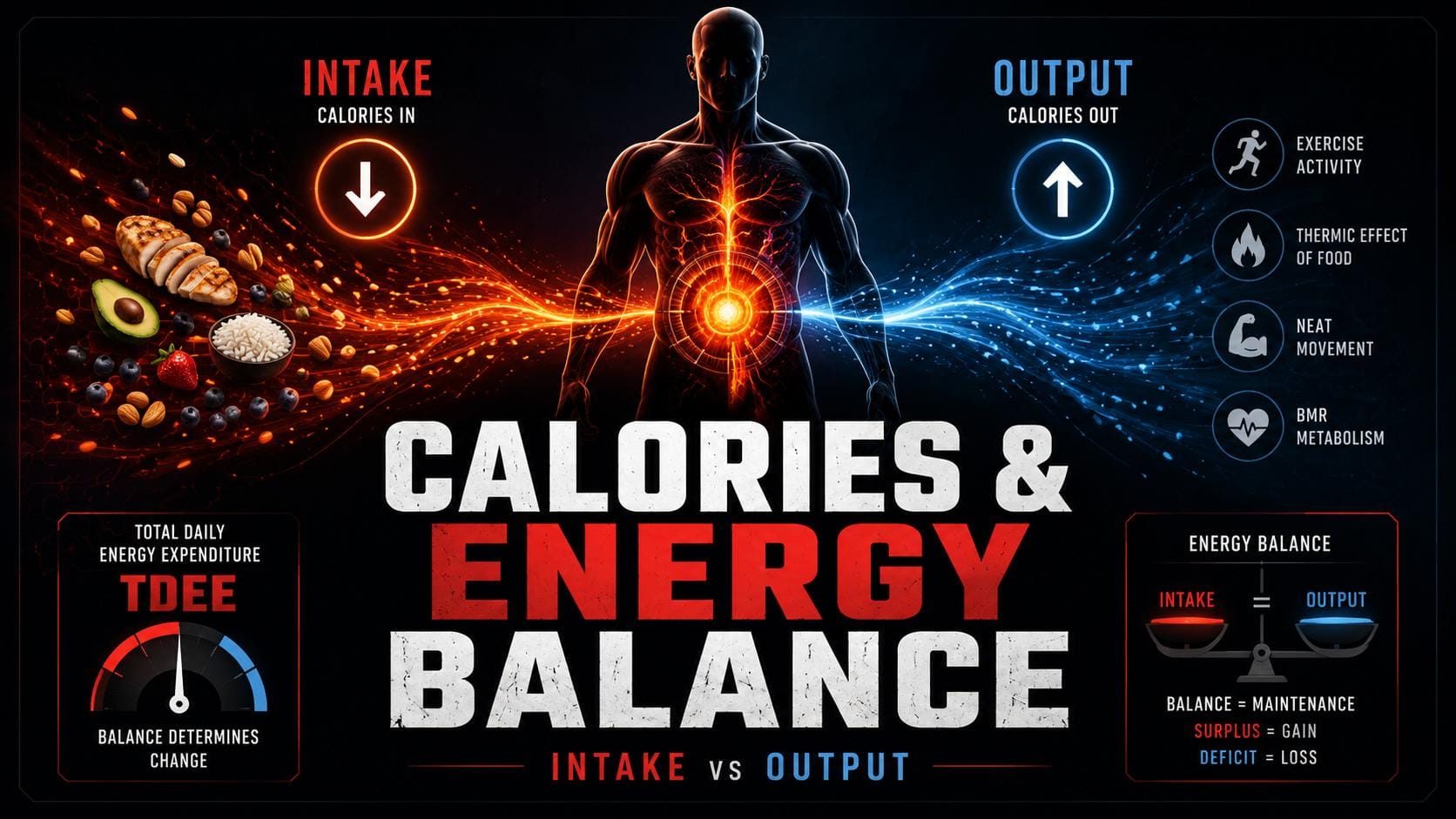
A 506 kcal surplus built 2.8% lean mass in athletes; a 500 kcal deficit stopped gains (PMID 21851204, 34623696). The equation, NEAT and adaptation explained.
Protein Intake Explained
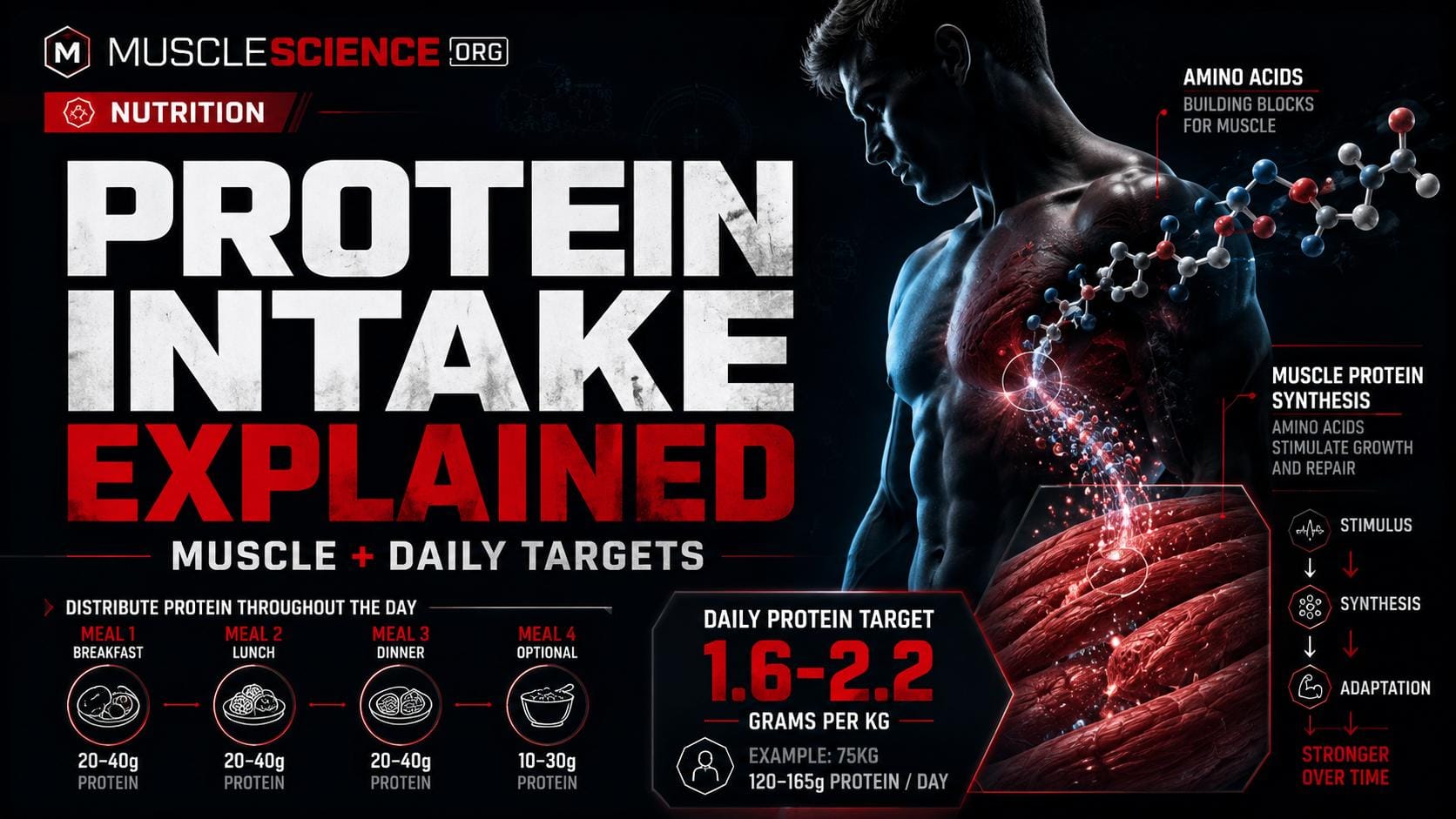
Across 49 trials and 1,863 people, extra protein stopped adding muscle above about 1.62 g per kg a day. How to hit it in meals.
Carbs for Training
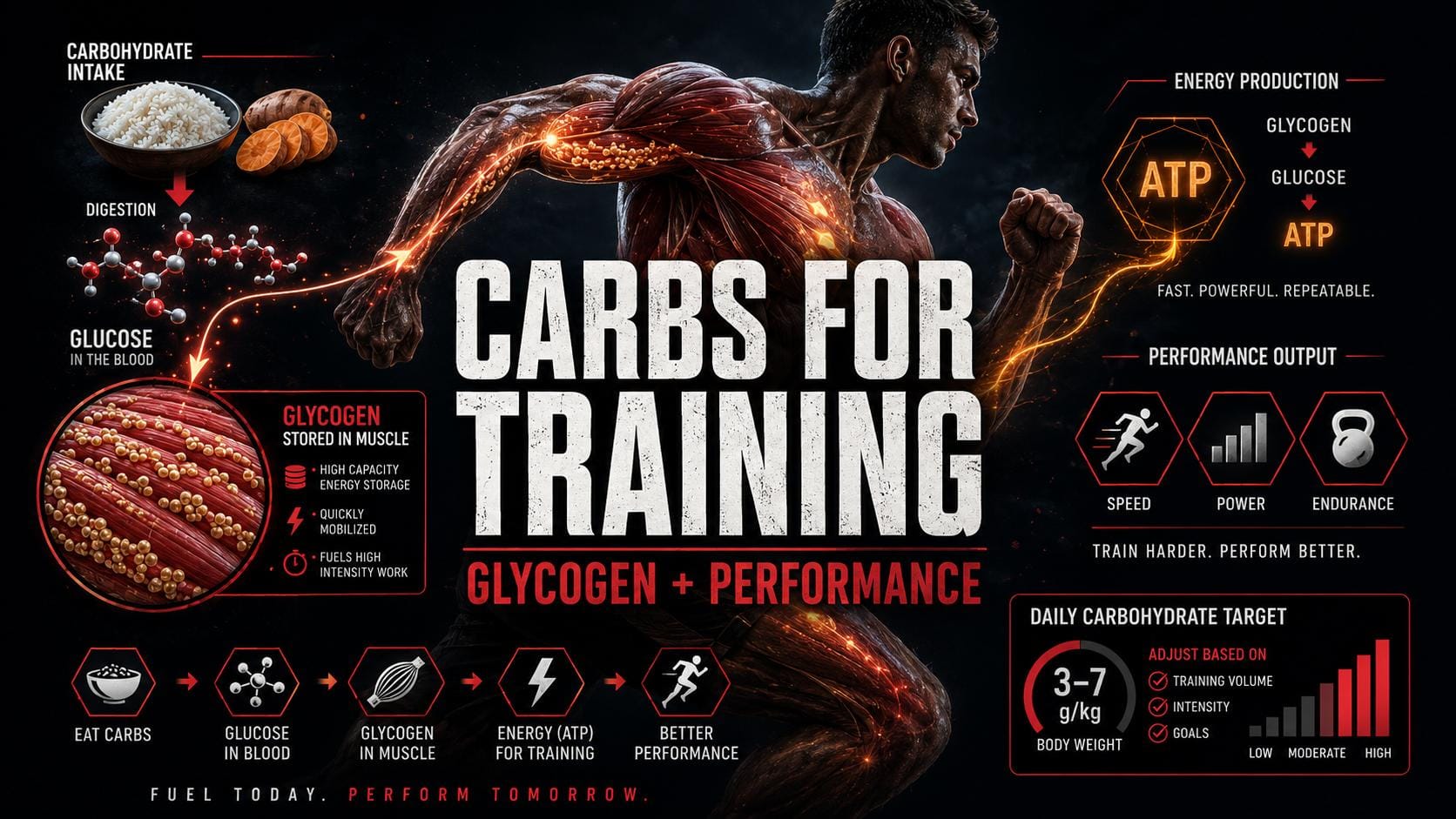
In 49 studies, extra carbs did not add strength in 13 of 19 fed trials. One leg session burned 27% of muscle glycogen. When carbs before, during and after help.
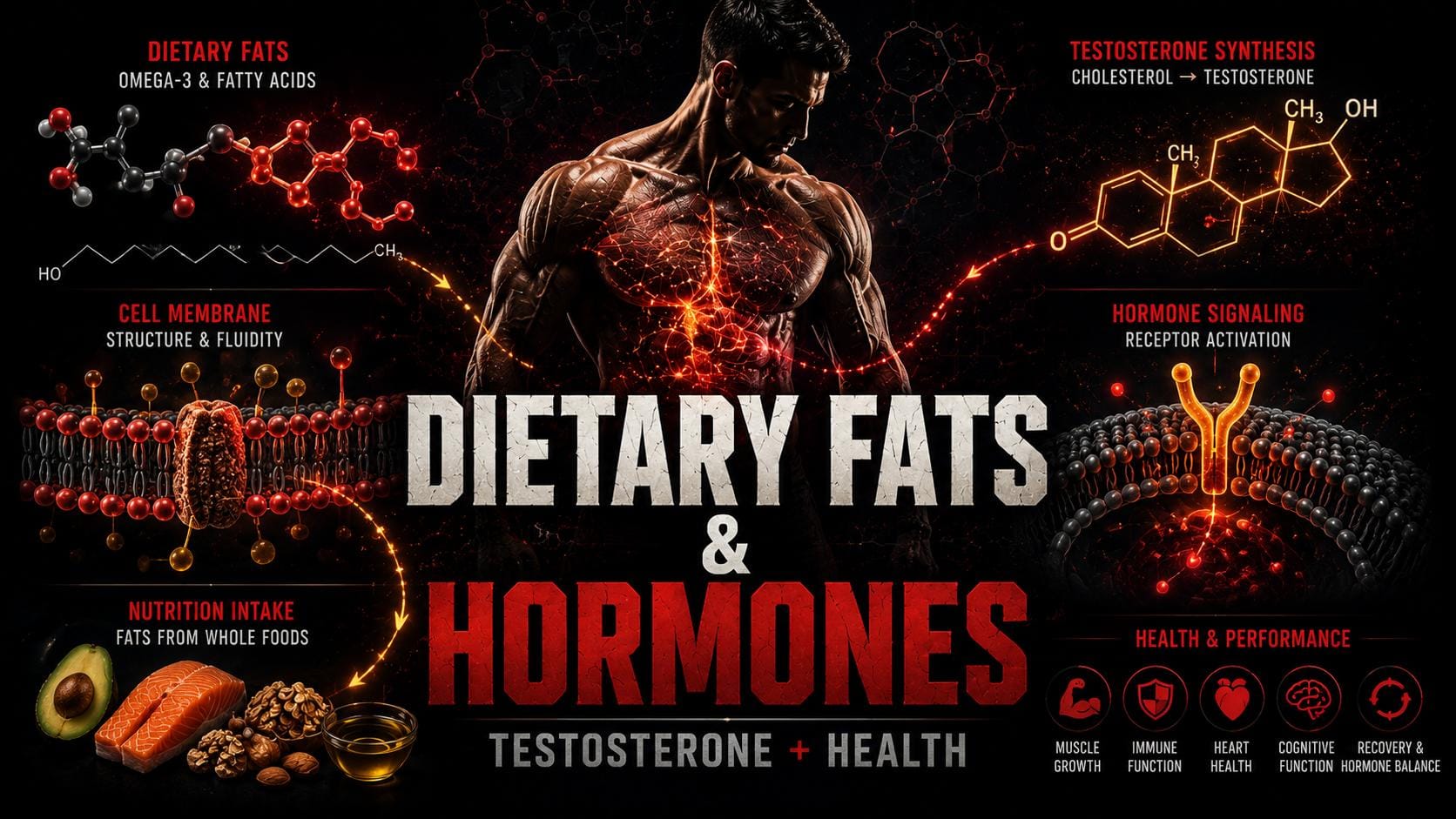
Dietary Fats and Hormones
Across 6 trials in 206 men, low fat diets lowered total and free testosterone compared with higher fat diets.

Meal Timing Explained
Total protein beat timing across 23 studies; 20 g every 3 h raised synthesis up to 48%; protein before sleep doubled quad growth (PMID 24299050, 23459753, 25926415).
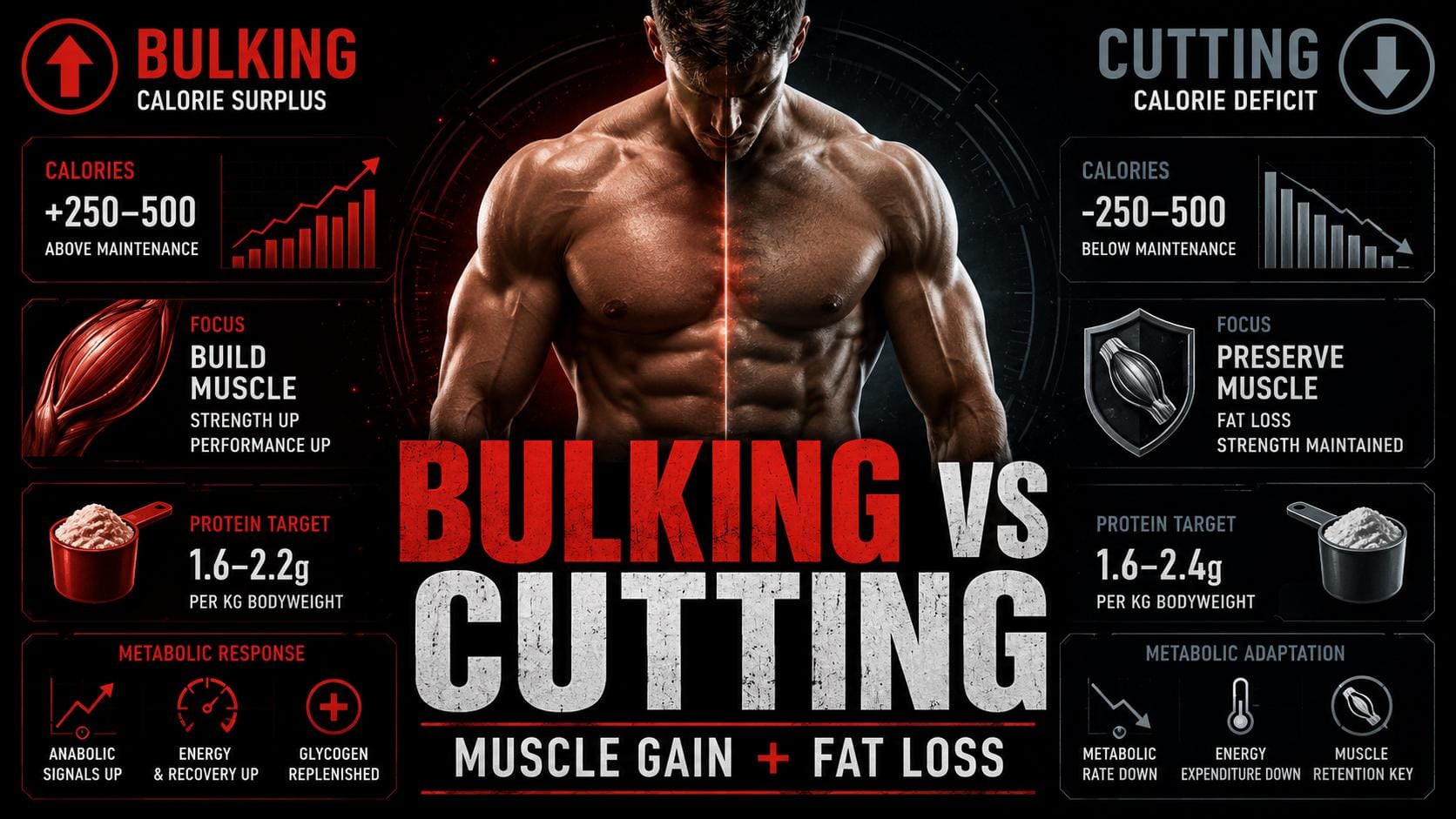
Bulking vs Cutting Nutrition
In a meta regression, lean mass gains stalled once the daily deficit passed about 500 kcal. How a bulking and cutting diet differ.
Build the Diet Before Chasing Details
A muscle building diet starts with calories and protein, then carbs and fats, then consistency. Phase specific details come after.
Control Energy Balance
Surplus, deficit and maintenance decide gain, loss or stability.
Set Protein and Carbs
Protein protects muscle; carbs fuel training and recovery.
Match the Goal
Bulking, cutting and contest prep need different diet structure.
Make It Repeatable
The best diet is the one you can keep for months.
Diet Phases and Meal Planning
How a bodybuilding diet is applied in real phases: lean bulking, cutting, high protein planning, refeeds, contest prep and recovery eating.
Lean Bulk Nutrition
Learn how to set a controlled surplus, manage protein and carbs, limit unnecessary fat gain, and support training performance.
Cutting Diet Setup
Understand calorie deficits, protein targets, hunger control, training performance, cardio integration, and muscle retention.
High-Protein Meal Planning
See how to structure protein across meals, improve satiety, support recovery, and make dieting more repeatable.
Refeed Days Explained
Learn how refeed days are discussed around glycogen, training performance, hunger, adherence, and diet fatigue.
Contest Prep Nutrition
Understand the basics of dieting for stage condition, food consistency, fatigue, fullness, water shifts, and peaking context.
Eating for Recovery
Learn how calories, protein, carbohydrates, micronutrients, hydration, and meal consistency support recovery between sessions.
Macros for Muscle Gain: What the Studies Show
Three findings set the numbers behind most muscle building diet plans: the protein ceiling, the deficit limit and the weekly gain rate.
There is a ceiling
Across 49 trials and 1,863 people, extra protein stopped adding fat free mass above about 1.62 g per kg of body weight a day.
Reviews for natural bodybuilders use 1.6 to 2.2 g per kg, spread over 3 to 6 meals.
Too big a deficit costs muscle
Training in an energy deficit impaired lean mass gains but not strength gains in a meta analysis.
In its meta regression, lean mass gains stalled once the deficit passed about 500 kcal a day.
Gain slowly on a bulk
A review for natural bodybuilders recommends a surplus of about 10 to 20% and a gain of 0.25 to 0.5% of body weight a week.
Advanced lifters should gain more slowly than that.
Macros for muscle gain are simple: enough protein, a modest surplus, and patience. Faster gain mostly adds fat.
Bulking Diet or Cutting Diet
The same bodybuilding diet changes direction between phases. These are the numbers that move.
Bulk
Surplus of about 10 to 20% above maintenance.
Gain 0.25 to 0.5% of body weight a week.
1.6 to 2.2 g per kg a day.
0.5 to 1.5 g per kg a day, rest from carbs.
Cut
Deficit; past about 500 kcal a day lean gains stall.
Lean mass gains were impaired in a deficit.
Strength gains were not impaired.
Very low fat diets lowered testosterone in trials.
Do not cut fat too low and do not cut calories too hard. Both cost you more than the scale shows.
6 Numbers From This Hub
These figures come up again and again across the bodybuilding diet guides. Each one is cited in the guide it comes from.
Grams of protein per kg a day, above which extra protein added no muscle.
Daily kcal deficit at which lean mass gains stalled.
Body weight to gain per week on a lean bulk.
Grams of protein per kg a day used for natural bodybuilders.
Effect of low fat diets on total testosterone across 6 trials.
Whey dose that beat 20 g after a whole body session.
A muscle building diet does not need perfect timing or exotic foods. It needs the right totals, every day.
Bodybuilding Diet: Frequently Asked Questions
Short answers to the questions lifters ask most about a muscle building diet and macros for muscle gain.
How much protein do you need to build muscle?
Across 49 trials and 1,863 people, extra protein stopped adding muscle above about 1.62 g per kg of body weight a day. Reviews for natural bodybuilders use 1.6 to 2.2 g per kg, split over 3 to 6 meals.
How big should a bulking surplus be?
A review for natural bodybuilders recommends about 10 to 20% above maintenance, aiming to gain 0.25 to 0.5% of body weight a week. Faster gain mostly adds fat.
Can you build muscle in a calorie deficit?
Less well. In a meta analysis, training in a deficit impaired lean mass gains but not strength, and lean gains stalled once the deficit passed about 500 kcal a day.
Does a low fat diet lower testosterone?
Somewhat. Across 6 trials in 206 men, low fat diets lowered total and free testosterone compared with higher fat diets. Reviews suggest 0.5 to 1.5 g of fat per kg a day.
How much protein per meal?
About 0.4 to 0.55 g per kg per meal reaches daily targets over 3 to 6 meals. After a whole body session, 40 g of whey stimulated more muscle building than 20 g.
What are good macros for muscle gain?
Protein at 1.6 to 2.2 g per kg, fat at 0.5 to 1.5 g per kg, and the rest of a modest surplus from carbs, at least 3 to 5 g per kg on training days.
Explore Other Hubs
Every topic on Muscle Science has its own hub. Move to the next one from here.
Testosterone therapy, labs and side effects.
Hub →Bloodwork & HealthHow to read every marker on your report.
Hub →PED Side EffectsWhat each compound does to the body.
Hub →SteroidsCompounds explained one by one.
Hub →Cycle DesignHow cycles are structured and why.
Hub →PCTRecovery after a cycle.
Hub →PeptidesResearch peptides and what is known.
Hub →SupplementsEvidence on popular supplements.
Hub →TrainingPrograms and lifting technique.
Diet, protein and calories for muscle.