Carbs for Training: How Carbohydrates Support Muscle Growth and Performance
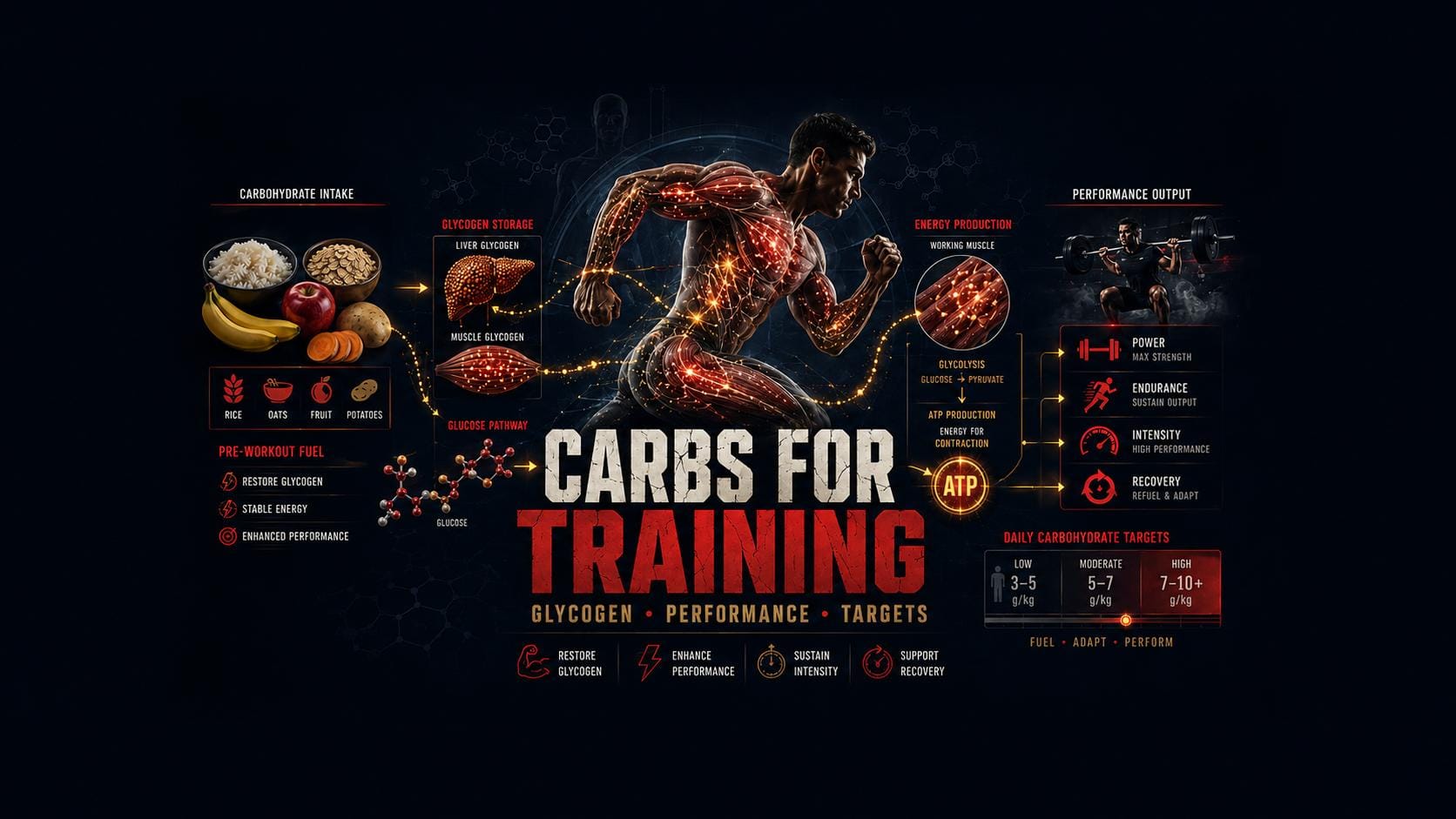
CARBS FOR TRAINING: WHAT 49 STRENGTH STUDIES AND TWO POSITION STANDS SAY
Carbs for training matter less for a normal lifting session than most people think, and more for long or high volume sessions. In a review of 49 studies, extra carbohydrate did not improve strength performance in 13 of 19 acute trials (PMID 35215506).
This guide covers carbs before workout, intra workout carbs, carbs after workout, daily amounts from the position stands, and carbs for muscle growth. More guides sit on the nutrition hub.
Carbs for training in three numbers
Three study figures frame the whole carbs for training question: when carbs help, when they do not, and how fast glycogen goes.
Extra carbs did not improve performance in a fed state (PMID 35215506).
121.4 to 88.3 mmol/kg on placebo in 8 lifters (PMID 10997956).
ISSN figure for high volume athletes, not a rule for everyone (PMID 28919842).
Study figures come from PubMed papers. Amounts are quoted as study facts, not as a plan. Practice notes are marked.
What this carbs for training guide covers
Carbs before workout, intra workout carbs and carbs after workout: what trials found for lifters.
Daily carbs for training as the ISSN and the ACSM position stands frame them.
Carbs for muscle growth, and why the post workout carb rule was dropped.
Not coveredA meal plan. Grams per kilogram are study figures; a dietitian turns them into food (PMID 26891166).
Endurance racing nutrition beyond what it teaches lifters.
Why carbs for training matter: glycogen is the fuel for hard sets
Muscle stores carbohydrate as glycogen, which is the reason carbs for training exist as a topic. Resistance exercise burns it, and heavy sessions can burn enough to hurt performance (PMID 12580676).
In 8 highly trained lifters, a 39 minute leg session dropped glycogen from 121.4 to 88.3 mmol/kg on placebo. With a carbohydrate drink before and during, it fell only to 109.7 (PMID 10997956).
Glycogen is more than fuel. It also regulates the signalling pathways behind training adaptation, and high carbohydrate availability is positively related to resistance training adaptations (PMID 31100798).
The ISSN notes that carbohydrate during resistance exercise keeps blood glucose stable, protects glycogen stores and reduces muscle damage (PMID 28919842).
Do carbs for training make you stronger in the session?
A 2022 systematic review pooled 49 studies on carbs for training strength and resistance performance (PMID 35215506).
Acutely, more carbohydrate did not improve performance in 13 studies and improved it in 6. The 6 mostly had fasted control groups or workouts over 10 sets per muscle group (PMID 35215506).
There was no dose response. None of the 7 short term studies found a benefit. Over the long term, 15 of 17 studies found no effect of carbohydrate intake on performance (PMID 35215506).
One trial compared a carbohydrate meal with water and with a sensory matched placebo breakfast. The meal beat water but not the placebo (PMID 35215506).
Carbs before workout: how many carbs before workout do lifters need?
The answer from the review above: for a normal session, carbs before workout matter only if you would otherwise train fasted (PMID 35215506). That is the first rule of carbs for training.
In the glycogen study, lifters drank 1.0 g/kg of carbohydrate before the session plus 0.5 g/kg every 10 minutes during it (PMID 10997956). That protected glycogen, not same day strength.
The ISSN says the size and timing of the pre exercise meal changes how much post exercise feeding is needed (PMID 28919842).
Carbohydrate availability is built in the hours and days before a session, not only in the last meal (PMID 21660838).
Most lifters settle on a mixed meal 1 to 3 hours before training. No trial has compared meal timings head to head for strength in fed lifters.
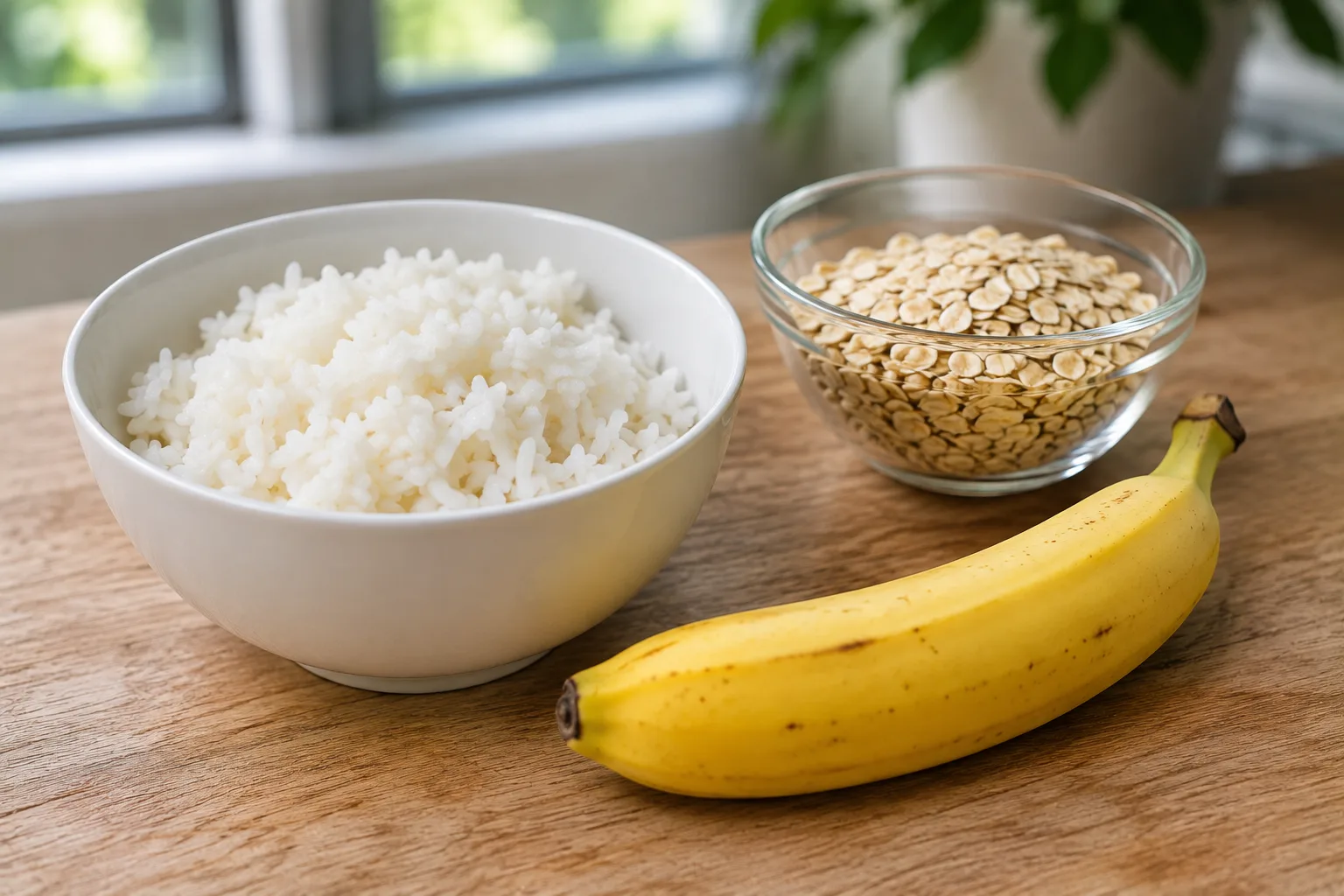
Intra workout carbs: when do they earn their place?
Intra workout carbs come from endurance science. For exercise lasting about an hour, small amounts or even a mouth rinse help through the central nervous system (PMID 21660838, 24791914).
For 2 to 3 hours, a single carbohydrate source is oxidized at up to about 60 g per hour. Beyond that, up to 90 g per hour needs multiple transportable carbohydrates, such as glucose plus fructose (PMID 24791914).
The ISSN gives 30 to 60 g per hour in a 6 to 8% solution. That applies to bouts over 60 minutes at over 70% of VO2max (PMID 28919842).
For lifting, intra workout carbs protected glycogen in the 39 minute study but did not raise strength (PMID 10997956). The ISSN says carbohydrate during resistance exercise supports glycogen, reduces muscle damage and supports adaptation (PMID 28919842).
| Session | What the evidence says | Source |
|---|---|---|
| Lifting, under 1 hour, fed | No strength benefit in most trials | Henselmans 2022 |
| Lifting, high volume or twice a day | Glycogen protected; benefit more likely | Haff 2000, Henselmans 2022 |
| Endurance, about 1 hour | Small amounts or mouth rinse help | Burke 2011 |
| Endurance, 2 to 3 hours | Up to 60 g per hour | Jeukendrup 2014 |
| Endurance, over 2.5 hours | Up to 90 g per hour, mixed sugars | Burke 2011, Jeukendrup 2014 |
Carbs after workout: refuelling, not the anabolic window
Carbs after workout do one thing well: they restore glycogen. Of all carbs for training questions, this one has the clearest answer. The ISSN gives 1.2 g/kg per hour of high glycemic index carbohydrate when the next session is under 4 hours away (PMID 28919842).
With more than 4 hours to spare, that urgency disappears. Combining 0.8 g/kg per hour of carbohydrate with 0.2 to 0.4 g/kg per hour of protein is listed as an alternative (PMID 28919842).
Carbs after workout do not build more muscle once protein is covered. In 10 men after resistance exercise, adding 0.15 or 0.6 g/kg per hour of carbohydrate to protein did not raise muscle protein synthesis (PMID 17609259).
The idea of a narrow post exercise anabolic window has been directly challenged, and its importance varies with the pre workout meal (PMID 23360586).

Daily carbs for training: what the position stands say
The ISSN states that glycogen stores are maximized by a high carbohydrate diet of 8 to 12 g/kg per day. High volume exercise depletes them most (PMID 28919842).
That figure is for athletes with heavy daily loads. The ACSM, the Academy of Nutrition and Dietetics and Dietitians of Canada set type, amount and timing by the training scenario. They refer athletes to a sports dietitian (PMID 26891166).
Burke frames it as carbohydrate availability: enough for the muscle and nervous system to do the planned session. It is judged by total daily intake and timing together (PMID 21660838).
In 18 strength trained CrossFit athletes eating under 6 g/kg, 9 raised intake to 6 to 8 g/kg for three days. Their reps rose 10.9% versus 4.2% in controls, a difference that was not statistically significant (PMID 27766133).
No universal carbohydrate recommendation fits every athlete; intake should be periodized to training load and goal (PMID 31100798).
Carbs for muscle growth: direct and indirect
Carbs for training and carbs for muscle growth are the same carbs, working indirectly. They do not raise muscle protein synthesis beyond what protein does (PMID 17609259).
They do support the training that drives growth. High carbohydrate availability is positively related to resistance training adaptations (PMID 31100798).
The ISSN lists carbohydrate with protein during resistance exercise as a way to support greater acute and chronic training adaptations (PMID 28919842).
Pre or post exercise carbohydrate plus protein, or protein alone, may support strength and body composition gains (PMID 28919842).
Low carb training: what happens to performance
The cleanest test is in elite race walkers. Three weeks on a ketogenic diet of under 50 g of carbohydrate a day raised fat burning. It also increased the oxygen cost of race pace (PMID 28012184).
High carbohydrate and periodized carbohydrate groups improved 10 km times by 6.6% and 5.3%. The low carb group did not improve, at minus 1.6% (PMID 28012184).
For lifters, low carbs for training cost less. Long term carbohydrate intake did not change strength performance in 15 of 17 studies (PMID 35215506).
Low carbohydrate availability does promote some endurance adaptations such as mitochondrial biogenesis, which is why athletes periodize rather than pick a side (PMID 31100798).
5 carbs for training mistakes the studies expose
Expecting a strength boost from a pre workout carb drink
In a fed state it did not add performance in 13 of 19 acute trials (PMID 35215506).
Chasing the post workout window with sugar
Carbohydrate did not raise muscle protein synthesis once protein was ample (PMID 17609259).
Copying endurance intra workout carbs for a 45 minute lift
The 30 to 60 g per hour figure is for bouts over 60 minutes at over 70% of VO2max (PMID 28919842).
Treating 8 to 12 g/kg as the rule for everyone
That is the ISSN figure for maximizing glycogen under high volume (PMID 28919842).
Judging carbs by the last meal only
Availability is built over hours and days before the session (PMID 21660838).
Verdict: carbs for training in 5 lines
Carbs for training, summed up from the sources above.
1. One leg session uses about 27% of muscle glycogen. A carb drink cut that loss (PMID 10997956).
2. Fed lifters do not get stronger from extra carbs. 13 of 19 acute trials (PMID 35215506).
3. High volume and two a day training are the exception. That is where benefit showed (PMID 35215506).
4. Carbs after workout refuel, they do not build. No extra protein synthesis (PMID 17609259).
5. Daily amount scales with load. 8 to 12 g/kg is the glycogen maximizing figure, not a floor (PMID 28919842).
Carbs for training: frequently asked questions
How many carbs before workout do I need?
Enough not to be fasted. In 49 carbs for training studies, extra carbs helped mainly fasted lifters or sessions over 10 sets per muscle (PMID 35215506).
Are carbs before workout better than after?
Before matters for performance in long sessions; after matters for refuelling. The ISSN says the pre workout meal changes how much post workout feeding is needed (PMID 28919842).
Do intra workout carbs help lifting?
They protected glycogen during a 39 minute leg session but did not improve strength on the test (PMID 10997956).
Do I need carbs after workout to build muscle?
No. Adding carbohydrate to ample protein did not raise muscle protein synthesis in 10 men (PMID 17609259).
How many carbs per day for training?
The ISSN gives 8 to 12 g/kg per day to maximize glycogen under high volume. Position stands scale it to the training load (PMID 28919842, 26891166).
Are carbs for muscle growth necessary?
Indirectly, through the sessions carbs for training allow. High carbohydrate availability is positively related to resistance training adaptations (PMID 31100798).
Does low carb hurt strength?
Long term carbohydrate intake did not change strength performance in 15 of 17 studies (PMID 35215506). Endurance at high intensity did suffer (PMID 28012184).
How fast does glycogen come back?
Carbs for training refuel fastest with high GI sources. With under 4 hours to the next session, the ISSN gives 1.2 g/kg per hour of high GI carbohydrate (PMID 28919842).
Sources and further reading
Every study figure on this page comes from one of the 12 papers below, checked against PubMed on 4 November 2026. Practice notes are marked as practice. Reference links are dofollow to support open science.
Keep reading
Four pages that finish the job: how much protein, how many calories, when to eat, and how to eat in each phase.
Final Educational Note
This article is educational and is not medical or dietary advice. It reports what trials, reviews and position stands found about carbohydrate and training. Amounts are study facts, not a plan written for any individual.
More guides sit on the nutrition hub. Read more on the about page and in the full disclaimer.