Halotestin (Fluoxymesterone): Androgenic Profile, CNS Mechanism, and Bloodwork Guide
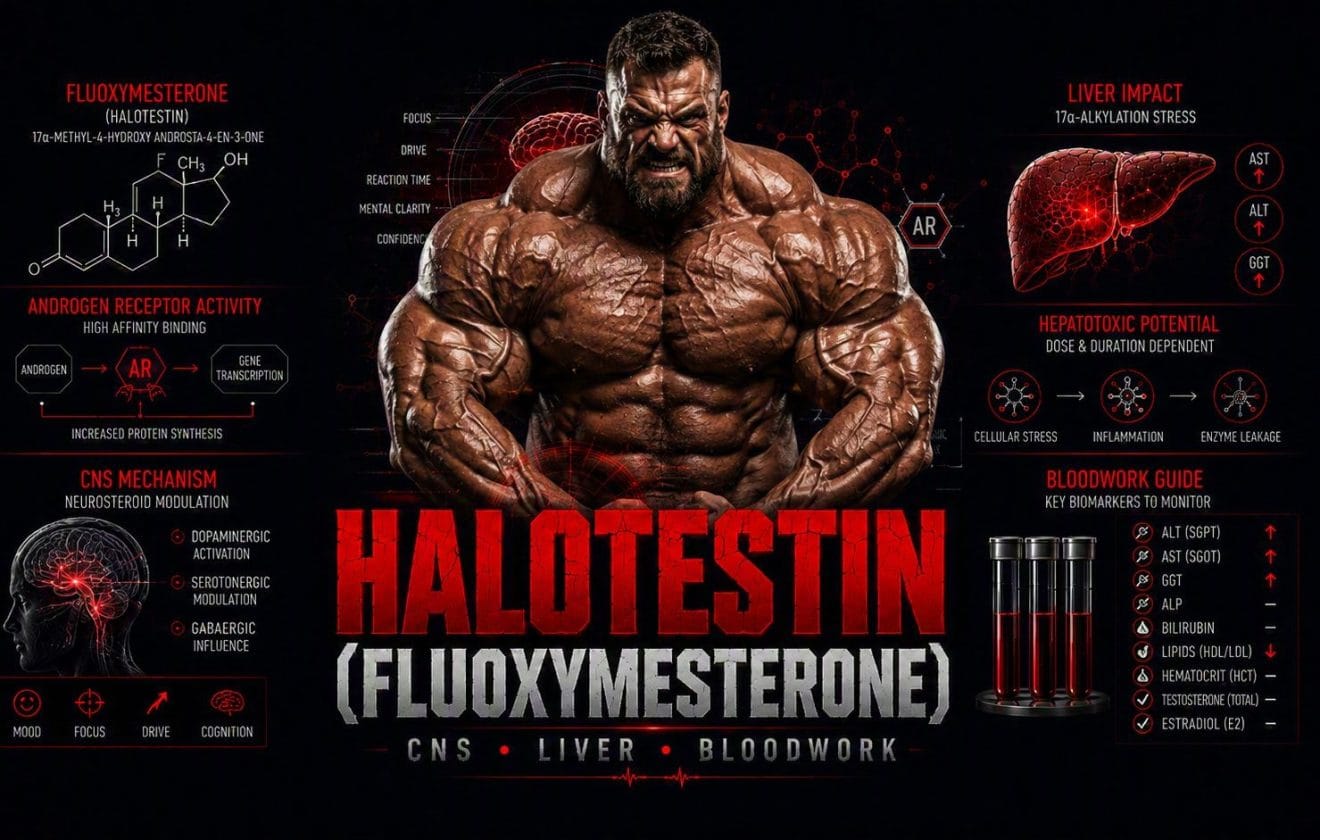
Androgenic power and its bloodwork cost
Halotestin - fluoxymesterone - carries the highest androgenic index of any oral steroid in common use: approximately 1900 on the androgenic scale versus testosterone's baseline of 100. It produces no meaningful anabolic effect in muscle by any measurable clinical metric. What it does produce is direct androgen receptor activation in the central nervous system, rapid aggression and force-output priming, and a hepatotoxicity burden that follows a cholestatic pattern distinct from other 17-alpha-alkylated orals. This guide covers the mechanism behind each of these properties - and why the standard description of "17x stronger than testosterone" obscures more than it clarifies.
Halotestin: Three Facts the Standard Description Misses
High Androgenic Index ≠ High Anabolic Effect
Fluoxymesterone's androgenic index of ~1900 reflects its androgen receptor binding affinity - a laboratory measurement of how tightly the molecule binds the receptor. Anabolic effect in muscle requires sustained receptor activation in muscle tissue over time. Halotestin's rapid metabolism and tissue distribution pattern produce strong CNS androgenic effects without producing the nitrogen retention and protein synthesis increases that define anabolic steroids. The androgenic and anabolic ratios diverge completely in this compound.
Aggression Is a Direct Pharmacological Effect - Not a Side Effect
Androgen receptors are expressed in the amygdala, anterior hypothalamus, and anterior cingulate cortex. Fluoxymesterone, with its exceptionally high receptor binding affinity, activates limbic androgen receptors directly and potently. The behavioural changes - aggression, competitive drive, reduced fear response - are direct receptor-mediated neurobehavioral effects. They do not require hormonal imbalance or estrogenic changes to occur. This mechanism is why Halotestin is pharmacologically specific to pre-competition use, not general cycle inclusion.
Hepatotoxicity Follows a Cholestatic Pattern - Not Just Elevated AST/ALT
Most 17-alpha-alkylated oral steroids produce primarily cytotoxic hepatotoxicity - direct hepatocyte stress measurable through AST and ALT elevation. Fluoxymesterone produces predominantly cholestatic hepatotoxicity - bile flow impairment - which elevates GGT and alkaline phosphatase, and in more advanced cases raises direct bilirubin, before AST and ALT spike significantly. Monitoring only AST/ALT on a Halotestin cycle can miss the earliest and most specific hepatic signal the compound produces.
What This Guide Covers
Covered in This Guide
- What Halotestin is and why its C9-fluoro + C11-hydroxy structure creates an extreme androgenic profile
- The structural reason fluoxymesterone cannot aromatize - enzyme-substrate incompatibility explained
- Why the "17x more androgenic" figure measures receptor binding, not anabolic effect or HPTA suppression
- Direct CNS androgen receptor activation in the limbic system - the aggression mechanism
- Two distinct use-case timelines: powerlifting CNS priming vs bodybuilding pre-contest hardening
- Cholestatic vs cytotoxic hepatotoxicity - why GGT and bilirubin matter before AST/ALT
- 7 bloodwork markers with Halotestin-specific interpretation
- 5 critical errors in how this compound is understood and applied
Not Covered Here
- Dosing recommendations or cycle length guidelines
- Stacking protocols or compound combinations
- Drug sourcing or acquisition
- Personal medical advice
- Comparison with SARMs or selective modulators
DHT-derivative class context: Halotestin is structurally derived from testosterone with fluorine and hydroxyl additions that dramatically alter its pharmacological profile. For the broader DHT-derivative class overview, see DHT Steroids. For comparison with other high-androgenic oral compounds, see Anadrol (Oxymetholone) and Winstrol (Stanozolol).
Why Halotestin Has an Androgenic Index of ~1900 - and Why That Number Misleads
Halotestin is 9-alpha-fluoro-11-beta-hydroxy-17-alpha-methyltestosterone. Three structural modifications to the testosterone backbone define its pharmacology entirely. The 17-alpha-methyl group provides oral bioavailability through C17-alkylation - the same mechanism as Dianabol, Anadrol, and other oral anabolics, and the direct cause of hepatotoxicity. The 9-alpha-fluoro group - a fluorine atom at the C9 position - dramatically increases androgen receptor binding affinity. Fluorination at C9 is the same modification used in corticosteroids like dexamethasone and fludrocortisone to amplify glucocorticoid receptor binding; applied to a testosterone backbone, it performs the same function at the androgen receptor. The 11-beta-hydroxy group - a hydroxyl at C11 - further modifies receptor interaction and, combined with the C9-fluoro, produces the compound's characteristic inability to aromatize.
The androgenic index of ~1900 (versus testosterone = 100) is a receptor binding assay value - it measures how tightly fluoxymesterone binds the androgen receptor relative to testosterone in vitro. It does not measure the magnitude of anabolic response, the degree of HPTA suppression, or any clinical outcome. A compound can bind the androgen receptor with extreme affinity and still fail to produce meaningful anabolic effect if its tissue distribution, metabolic stability, or downstream signalling profile does not sustain the receptor activation required for protein synthesis upregulation. Halotestin's clinical history confirms this: despite its extraordinary receptor affinity, controlled studies have not demonstrated it to be a superior anabolic agent relative to testosterone in muscle-building outcomes.
Androgenic Index - Common Oral Steroids (Testosterone = 100)
Androgenic index = in vitro androgen receptor binding affinity relative to testosterone. Does not predict anabolic clinical outcome, HPTA suppression magnitude, or real-world strength increase. Halotestin's index of ~1900 reflects the C9-fluoro amplification of receptor binding - not 19x greater anabolic effect.
Why Fluoxymesterone Cannot Aromatize - The Structural Explanation
Aromatization requires the enzyme aromatase (CYP19A1) to bind testosterone's A-ring, oxidize the C19 methyl group, and catalyze the three-step hydroxylation sequence that produces estradiol. This reaction depends on the enzyme making precise contact with the C1, C2, and C10 positions of the steroid A-ring. The 11-beta-hydroxy group at C11 and the 9-alpha-fluoro group at C9 in fluoxymesterone's structure create steric and electronic interference that prevents aromatase from correctly orientating the substrate for A-ring attack. The fluorine atom at C9 is particularly impactful: fluorine's high electronegativity alters the electron density of the adjacent C10-C11 bond, disrupting the electronic environment that aromatase requires to initiate the oxidation cascade. The result is absolute: Halotestin produces zero estradiol through its own metabolism. This is not a partial reduction in aromatization rate - it is structural incompatibility with the aromatase active site.
9-Alpha-Fluoro: Extreme Receptor Binding
Fluorination at C9 amplifies androgen receptor binding affinity to approximately 19x that of testosterone - the same structural principle used in potent corticosteroids. The C9-fluoro also creates the electronic disruption that prevents aromatase from initiating the A-ring oxidation reaction, making aromatization structurally impossible regardless of dose or duration.
11-Beta-Hydroxy: Potency Amplifier and Aromatase Block
The hydroxyl group at C11 further increases receptor binding and contributes to steric blocking of aromatase access to the substrate. Combined with C9-fluoro, it creates the structural configuration responsible for the compound's extreme androgenic potency. No other commonly used anabolic steroid carries both C9-fluoro and C11-hydroxy simultaneously.
17-Alpha-Methyl: Oral Bioavailability and Hepatotoxicity
C17-alkylation enables oral absorption by resisting first-pass hepatic metabolism - the same mechanism as all other oral anabolic steroids. It is also the direct source of hepatotoxicity. Combined with the compound's specific metabolism pattern (cholestatic tendency), the C17-methyl group makes Halotestin's liver burden among the highest of any oral androgen in common use.
Halotestin and the Central Nervous System: Why Aggression Is Pharmacology, Not Personality
The neurological effects of Halotestin are not behavioural overflow from elevated androgens - they are direct receptor-mediated events. Androgen receptors are expressed throughout the central nervous system, with the highest concentrations in the amygdala, anterior hypothalamus, and bed nucleus of the stria terminalis. These limbic structures regulate threat response, social dominance behaviour, fear conditioning, and competitive drive. Fluoxymesterone, by virtue of its extreme androgen receptor binding affinity, activates these limbic receptors more potently than testosterone at any comparable dose. The downstream effects - heightened aggression, reduced fear response, increased pain tolerance, enhanced competitive arousal - are direct pharmacological consequences of androgen receptor activation in these CNS structures. They do not require changes in estradiol, prolactin, or other secondary hormones to occur. This mechanistic distinction is why the behavioural effects of fluoxymesterone appear faster than any anabolic effect could emerge, and why they persist for as long as the compound is active at CNS androgen receptors.
Two Use-Case Timelines - Different Pharmacological Targets
Fluoxymesterone is applied in two distinct performance contexts with different pharmacological logic behind each. Understanding the difference reveals why it is appropriate for one application and counterproductive for another.
| Parameter | Powerlifting / Strength (24-72h) | Bodybuilding Pre-Contest (2-4 weeks) |
|---|---|---|
| Primary target tissue | CNS - limbic androgen receptors | Subcutaneous tissue - skin androgen receptors |
| Pharmacological goal | Acute aggression priming, CNS drive, reduced inhibition to maximal effort | Androgenic hardening - reduced subcutaneous water, increased skin thinness and vascularity |
| Mechanism | Direct limbic AR activation; onset within hours of administration | Skin/sebaceous gland AR activation reducing subcutaneous fluid; onset over days to weeks |
| Anabolic contribution | Zero - timeline too short for any anabolic effect | Minimal - androgenic recomposition effect only, not mass or strength gain |
| Hepatotoxic exposure | Low - single to few doses, very short duration | Significant - 2-4 weeks of daily 17-aa oral use |
| Risk:benefit ratio | Narrow but pharmacologically defensible for the specific goal | High hepatotoxic burden for modest cosmetic outcome; high individual variation in response |
| HPTA suppression concern | Minimal - insufficient duration for meaningful suppression | Complete suppression expected after 2+ weeks |
| Why not extended cycles | N/A - not used this way | Hepatotoxicity becomes prohibitive beyond 4 weeks; anabolic return is near-zero |
Timeline and mechanism distinctions reflect the pharmacological basis for each use pattern. This is not an endorsement of either application. Both carry risks. The powerlifting acute use pattern and bodybuilding pre-contest use represent fundamentally different pharmacological applications of the same compound targeting different tissue types.
The bodybuilding hardening effect operates through a different receptor population than the CNS aggression effect. Androgen receptors in skin and subcutaneous tissue, when activated by a high-affinity androgen like Halotestin, produce the same androgenic effects seen with DHT - reduced sebum water content, thinning of subcutaneous tissue, increased skin tightness over muscle bellies. These effects require sustained receptor activation over days to weeks - hence the multi-week pre-contest timeline. The CNS aggression effect, operating on limbic receptors with faster signal transduction, appears and dissipates much more rapidly, explaining why the acute 24-72 hour powerlifting application is pharmacologically coherent even though it is too brief for any tissue-level androgenic remodelling.
The Cholestatic Pattern: Why Halotestin Liver Damage Shows Up in GGT and Bilirubin First
All 17-alpha-alkylated oral steroids carry hepatotoxic risk through the same base mechanism: the C17-methyl group resists first-pass metabolism, forcing the liver to process a compound it cannot efficiently conjugate for excretion. What distinguishes fluoxymesterone from other 17-aa orals is not the presence of liver stress - it is the pattern of that stress. Most 17-aa androgens produce primarily cytotoxic hepatotoxicity: direct hepatocyte membrane damage measurable through AST and ALT elevation. Halotestin produces predominantly cholestatic hepatotoxicity - impairment of bile flow from hepatocytes into the bile canaliculi - with cytotoxic damage appearing as a secondary consequence once cholestasis is established.
The clinical significance of this distinction is in bloodwork interpretation. In cholestatic injury, the earliest and most sensitive markers are GGT (gamma-glutamyl transferase) and Alkaline Phosphatase (ALP), not AST and ALT. GGT is particularly sensitive to cholestatic insult - it can rise two to three times above baseline within the first one to two weeks of fluoxymesterone use before ALT shows any movement. In more advanced cholestasis, direct bilirubin elevation follows as unconjugated bile acids accumulate in hepatocyte tissue. By the time AST and ALT are clearly elevated in a Halotestin user, the cholestatic process is typically well established - monitoring only transaminases misses the earliest window for intervention.
Halotestin Hepatotoxicity - Relative Onset by Marker (Approximate Timeline)
Approximate relative onset sequence based on the cholestatic hepatotoxicity pattern associated with fluoxymesterone. Timeline reflects approximate sequence, not precise clinical thresholds. Individual variation is significant. Welder et al., J Pharmacol Toxicol Methods 1995 (PMID 8527826) documented differential AAS hepatotoxic profiles in primary hepatic cell cultures.
Why Fluoxymesterone Produces Cholestasis More Than Other 17-AA Orals
The cholestatic tendency of Halotestin is related to its structural configuration at the C11 position. The 11-beta-hydroxy group appears to interfere specifically with hepatic bile acid transport proteins - the canalicular multispecific organic anion transporter (cMOAT) family - in a way that the structurally simpler 17-aa androgens like Dianabol or Anavar do not. The result is reduced canalicular bile secretion even at doses that produce only modest transaminase elevation. This makes fluoxymesterone's hepatic risk profile distinct from Anadrol (which produces primarily cytotoxic stress at its typical doses) and Dianabol (which produces a mixed pattern). It also means the recovery trajectory after stopping fluoxymesterone tends to be slower than AST/ALT normalisation alone would suggest - bile transport function requires additional time to recover after cholestatic injury, even once transaminases return to reference range.
The Androgenic Index Paradox: Why 17x Binding Does Not Mean 17x HPTA Suppression
The androgenic index figure of approximately 1900 for Halotestin generates an intuitive but incorrect conclusion: that fluoxymesterone suppresses the HPTA 17-19 times more severely than testosterone. This does not hold because the androgenic index measures androgen receptor binding affinity in vitro, while HPTA suppression is mediated through a dual feedback mechanism that depends heavily on estrogen, not on androgen binding alone.
The hypothalamic-pituitary axis reduces LH and FSH secretion in response to two primary signals: direct androgen receptor activation on GnRH-secreting neurons in the hypothalamus, and estrogen receptor activation on those same neurons from estradiol produced by peripheral aromatization of testosterone. The second pathway - estrogenic negative feedback - is absent with fluoxymesterone, because it produces no estradiol. The first pathway - direct androgen suppression of GnRH - operates, and at any practical dose of Halotestin it is sufficient to produce complete suppression of LH and FSH. But the magnitude of suppression is not multiplicatively greater than testosterone's; it simply follows the direct androgen pathway only, rather than the compounded androgen-plus-estrogen pathway that testosterone uses.
Dual HPTA Suppression
Direct androgen receptor activation on GnRH neurons (androgen pathway) plus estradiol-mediated estrogen receptor activation (estrogenic pathway). Both pathways active simultaneously. Complete LH/FSH suppression at moderate doses.
Single-Pathway Suppression
Only the direct androgen pathway operates - no estradiol is produced, so estrogenic negative feedback is absent. Despite the extreme androgen receptor binding affinity, this single-pathway suppression is complete at practical doses but is not additive with an estrogenic component. LH and FSH still go to near-zero.
Suppression Complete, Not 17x Worse
The binary outcome of HPTA suppression - suppressed vs. not suppressed - is the same for Halotestin as for any other anabolic androgen at practical doses. The pathway difference matters more for recovery timing than for in-cycle suppression depth. PCT timing and approach should follow standard post-cycle protocols.
When fluoxymesterone is stacked with exogenous testosterone - which most users do to avoid the consequences of complete androgen withdrawal in tissues that require testosterone for baseline function - the estrogenic negative feedback is restored by the testosterone's aromatization. Monitoring LH, FSH, and estradiol in this context applies to the testosterone component, not to fluoxymesterone's direct contribution to suppression. Estradiol management remains necessary in a stack not because Halotestin produces estrogen, but because the exogenous testosterone does.
Halotestin Bloodwork: 7 Markers and What Each Measures in This Specific Context
A standard pre-cycle bloodwork panel covers the main risk categories. For fluoxymesterone specifically, the order of priority differs from other oral androgens due to the cholestatic hepatotoxicity pattern and the absence of estrogenic activity.
| Marker | Normal Reference | Halotestin-Specific Significance | Action Threshold |
|---|---|---|---|
| GGT | 10-71 U/L (male) | The earliest and most sensitive hepatic marker for cholestatic injury. Rises before ALP and well before ALT in fluoxymesterone use. Halotestin's first warning signal. | Any elevation above ULN warrants monitoring frequency increase. 2x ULN: reconsider continuation. |
| Alkaline Phosphatase (ALP) | 44-147 U/L | Second cholestatic marker to rise. Elevated ALP alongside GGT is the characteristic early Halotestin hepatotoxicity signature. Elevated ALP with normal ALT/AST = cholestatic pattern confirmed. | ALP above ULN with rising GGT = cholestatic process established. Assess continuation risk. |
| Direct Bilirubin | 0-0.3 mg/dL | Specific to cholestasis severity. Direct (conjugated) bilirubin elevation above 0.5 mg/dL indicates impaired bile secretion at the canalicular level. Unique monitoring requirement for Halotestin not emphasized for most other oral steroids. | Direct bilirubin above 0.5 mg/dL = significant cholestasis. Stop compound. |
| ALT (SGPT) | 7-56 U/L | The standard hepatocyte damage marker. With fluoxymesterone this rises later than GGT and ALP. Its elevation confirms that cholestatic injury has progressed to secondary hepatocyte damage. Monitoring only ALT can provide false reassurance in early Halotestin use. | 3x ULN = stop compound regardless of GGT status. |
| Estradiol (E2) | 10-40 pg/mL (male) | Fluoxymesterone itself produces zero estradiol. Monitoring estradiol on Halotestin is relevant only when it is used alongside aromatizing compounds (testosterone, boldenone). In that context, estradiol management applies to the stacked compound, not to Halotestin. Isolated Halotestin use: E2 expected to fall to or below baseline. | Monitor the aromatizing stack compound. Halotestin does not drive E2 independently. |
| LH / FSH | LH: 1.5-9.3 IU/L; FSH: 1.6-8.0 IU/L | Both go to near-zero with any sustained fluoxymesterone use above minimal doses. The suppression confirmation is useful for establishing PCT timing. In short-duration pre-competition use (24-72h), suppression may be incomplete - check at cycle end to inform recovery planning. | At cycle end: LH/FSH near-zero confirms full suppression and guides PCT initiation timing per standard protocol. |
| LDL / HDL Cholesterol | LDL <130 mg/dL; HDL >40 mg/dL | Oral 17-aa androgens suppress HDL via liver lipase upregulation. Fluoxymesterone has a significant negative lipid impact - HDL suppression of 40-50% relative to baseline is clinically documented with oral androgen use. The absence of aromatization removes the partial cardioprotective effect that estradiol provides in testosterone cycles. | HDL below 30 mg/dL or LDL above 160 mg/dL during use: reassess cardiovascular risk burden. |
Full pre-cycle panel guidance: Blood Tests Before Steroids. Liver marker interpretation: Liver Markers (AST, ALT, GGT). Lipid panel context: Lipid Panel Guide.
5 Ways Halotestin Is Consistently Misunderstood
- Error 01
Treating the Androgenic Index as a Measure of Anabolic Potency
The figure of ~1900 on the androgenic scale describes androgen receptor binding affinity measured in a competitive binding assay - nothing more. Anabolic effect in muscle tissue requires sustained receptor activation that translates to downstream gene transcription, nitrogen retention, and protein synthesis upregulation. Fluoxymesterone's metabolic profile and tissue distribution do not produce these outcomes at any dose that has been clinically studied. Expecting Halotestin to build muscle proportionally to its androgenic index is a category error: the index measures binding, not biological outcome. Kono et al. (PMID 27663436) confirmed its androgen receptor activation in clinical tissue - but breast cancer tissue response to AR activation is mechanistically different from skeletal muscle anabolism.
- Error 02
Monitoring Only AST and ALT for Liver Safety
Because the cholestatic injury pattern precedes the cytotoxic pattern in fluoxymesterone use, a bloodwork panel that checks only ALT and AST can return near-normal values while GGT and ALP are already significantly elevated and direct bilirubin is beginning to rise. This gives a false picture of liver safety during the most critical early window. The complete hepatic panel for any Halotestin user must include GGT, ALP, and direct bilirubin as primary markers - not as secondary additions to the standard transaminase check.
- Error 03
Running Halotestin for More Than 4 Weeks Expecting Anabolic Returns
The hepatotoxic burden accumulates with duration. A compound that does not produce meaningful muscle anabolism but does produce significant hepatic stress has an unfavourable risk-to-return ratio at any duration - and that ratio deteriorates rapidly past the 3-4 week mark. Extended use does not convert the compound's androgenic effects into anabolic ones; it simply accumulates liver burden without a corresponding return in tissue adaptation. The bodybuilding pre-contest use case has a maximum rational duration; the powerlifting CNS-priming use case operates in hours, not weeks. There is no pharmacological justification for extended fluoxymesterone cycles.
- Error 04
Assuming No Aromatization Means No Estrogen Management Required
Fluoxymesterone is almost never used in isolation. When stacked with exogenous testosterone - the standard practice to maintain baseline androgen function - the testosterone component aromatizes normally and drives estradiol. Estrogen management applies to the testosterone in the stack, not to the fluoxymesterone. Neglecting this because "Halotestin doesn't aromatize" ignores the other compound's contribution. Estradiol monitoring and management remain necessary in any stack that includes an aromatizing androgen alongside fluoxymesterone. Westlye et al. (PMID 27942448) documented neurological alterations in AAS users - effects that are influenced by estradiol balance regardless of which compound drives it.
- Error 05
Confusing the CNS Aggression Effect with General Hormonal Mood Elevation
Aggression and mood elevation on testosterone or Dianabol cycles is a diffuse effect partly mediated through estrogenic activity, dopaminergic changes, and gradual hormonal shifts. The behavioural effects of fluoxymesterone are more specific: direct limbic androgen receptor activation producing acute increases in competitive aggression, reduced fear response, and heightened pain tolerance - without the estrogenic mood uplift or dopaminergic warmth that characterises testosterone cycles. Users who expect the latter and receive the former are often unprepared for the quality of the behavioural change Halotestin produces. Vaskinn et al. (PMID 32623552) documented theory-of-mind deficits in AAS users - with high-androgenic, low-estrogenic compounds like fluoxymesterone representing the most direct androgen-mediated CNS impact in the AAS class.
Sources
- Kono M, et al. Impact of androgen receptor expression in fluoxymesterone-treated estrogen receptor-positive metastatic breast cancer. Breast Cancer Research and Treatment. 2016;160(2):337-344. PMID 27663436
- Pozo OJ, et al. Elucidation of urinary metabolites of fluoxymesterone by liquid chromatography-tandem mass spectrometry and gas chromatography-mass spectrometry. Journal of Mass Spectrometry. 2008;43(3):308-320. PMID 18035854
- Welder AA, et al. Toxic effects of anabolic-androgenic steroids in primary rat hepatic cell cultures. Journal of Pharmacological and Toxicological Methods. 1995;33(4):187-195. PMID 8527826
- Westlye LT, et al. Brain connectivity aberrations in anabolic-androgenic steroid users. NeuroImage: Clinical. 2017;13:62-69. PMID 27942448
- Vaskinn A, et al. Theory of mind in users of anabolic androgenic steroids. Psychopharmacology (Berlin). 2020;237(10):3037-3045. PMID 32623552
- Kicman AT. Pharmacology of anabolic steroids. British Journal of Pharmacology. 2008;154(3):502-521. PMID 18500378
What This Guide Established About Halotestin
Halotestin (fluoxymesterone) is pharmacologically specific in a way most descriptions fail to capture. Its androgenic index of ~1900 is a receptor binding measurement, not a clinical outcome figure - it produces no meaningful anabolic effect in muscle by any standard of evidence. What it does produce is well-defined and mechanistically grounded: direct limbic androgen receptor activation driving acute CNS aggression effects, and a hepatotoxicity pattern that follows the cholestatic pathway rather than the cytotoxic pathway typical of other oral androgens. These properties define its two coherent use-case windows - short-duration CNS priming and pre-contest androgenic hardening - and they define the bloodwork monitoring approach, which must prioritise GGT, ALP, and direct bilirubin ahead of the standard ALT/AST check. The compound's inability to aromatize is structural and absolute; its HPTA suppression is complete at practical doses through the direct androgen pathway, without the estrogenic amplification component that testosterone provides. Managing estradiol in any Halotestin context means managing the aromatizing compound in the stack, not fluoxymesterone itself.
For bloodwork context: Liver Markers (AST, ALT, GGT) · Blood Tests Before Steroids · Lipid Panel Guide. For compound class context: DHT Steroids · Injectable vs Oral Steroids. For suppression and recovery: Why Steroids Cause Testosterone Suppression · Post-Cycle Therapy.
MuscleScience.org is an educational publication. This content does not constitute medical advice. All information is provided for harm-reduction and educational purposes only. The authors are pseudonymous; full disclosure on the About page and Disclaimer.