Blood Tests Before Steroids: 7 Markers to Check
The markers to check first
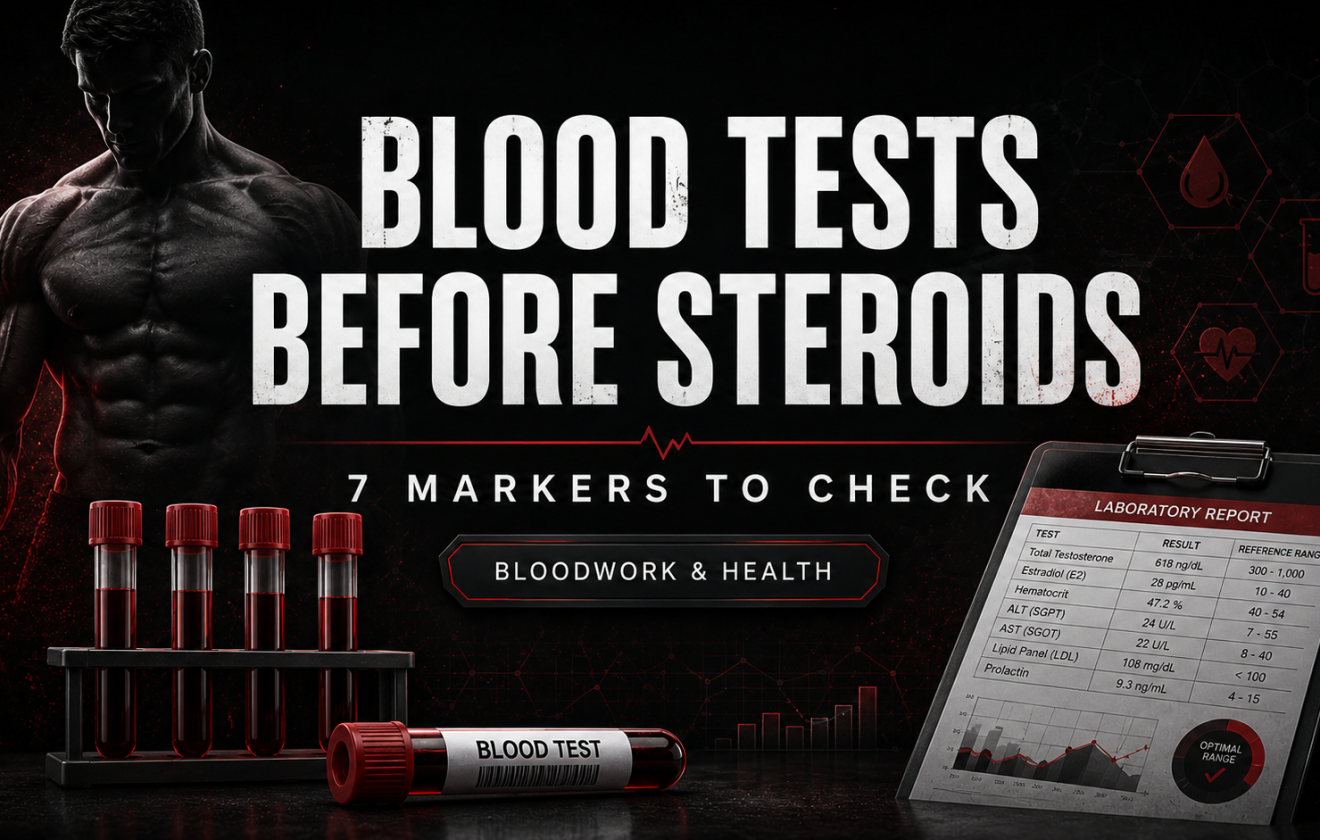
Getting blood tests before steroids is a baseline step, not a scare tactic. Before someone thinks about compounds, cycles, or performance enhancement, the first real move is understanding their starting markers. Bloodwork does not make steroid use safe — but it shows where the body is starting from, what deserves attention, and what questions to bring to a qualified professional before decisions become more serious.
The Main Idea in Plain Language
Blood tests are not just something to think about after side effects appear. A baseline panel gives a clearer picture of cardiovascular risk, liver and kidney function, blood cell status, hormones, glucose control, and blood pressure — before someone makes decisions that may affect all of those systems.
The point is not to create anxiety. The point is to remove guesswork. If a person does not know their starting hematocrit, HDL, LDL, liver enzymes, kidney markers, testosterone, estradiol, and metabolic baseline, they are making decisions with missing information. Labs do not replace clinical judgment — but they give something concrete to work with and reference later.
This matters especially in the PED context because many markers that AAS use can affect — lipids, red blood cell production, liver enzymes, blood pressure — may already be abnormal or suboptimal before any compounds are introduced. Knowing baseline values changes the conversation entirely.
Labs give a starting point before any serious PED-related decision is made.
CBC, lipids, liver, kidney, hormones, glucose, and blood pressure all belong in the baseline.
Labs help readers ask better questions instead of relying only on gym talk or forum advice.
Contents
What This Article Covers
This article explains which blood tests before steroids are most useful for building a real baseline before anabolic steroids are researched more seriously. It covers 7 core marker categories, what each group is generally used for, and why each one may matter in the context of hormones, performance, recovery, and long-term health.
This is not a replacement for clinical care. A lab result can look normal, abnormal, or borderline for many reasons. Training stress, dehydration, illness, sleep, diet, medications, alcohol, supplements, and timing of the test can all affect how results are interpreted. One number rarely tells the complete story.
- Covered: CBC, lipids, liver markers, kidney markers, hormones, glucose and metabolic markers, blood pressure.
- Not covered: steroid cycle design, dosing, treatment plans, diagnosis, or personal medical decisions.
- Best use: read this as a foundation before deeper articles on hormones, side effects, TRT, and PED risk management.
The 7 Baseline Markers
Tap any marker to see what it flags and a typical reference range, then open the full deep-dive. Ranges below are illustrative only — reference ranges vary by lab, sex, and age, and a single value is not a diagnosis.
01Complete Blood Count (CBC)Hematocrit · hemoglobin · platelets
Flags the blood-thickening (raised hematocrit/hemoglobin) that androgens can drive, which raises clotting and cardiovascular risk.
02Fasting Lipid PanelHDL · LDL · triglycerides
Establishes your cholesterol baseline before androgens suppress HDL and raise LDL — one of the most consistent effects of oral compounds.
03Liver MarkersALT · AST · GGT
Baseline liver enzymes matter most before oral (17-alpha-alkylated) compounds, which can elevate them. Interpret alongside training, since lifting alone raises AST/ALT.
04Kidney MarkersCreatinine · eGFR · BUN
Baseline kidney function, read in context: high muscle mass and creatine use raise creatinine without meaning kidney damage, so a starting value matters.
05Hormone PanelTestosterone · SHBG · estradiol · LH/FSH
Your natural hormonal starting point — essential for judging suppression later and for planning recovery. Free testosterone depends on SHBG, and estradiol drives several side effects.
06Glucose & MetabolicFasting glucose · HbA1c
Baseline metabolic health, since some compounds and weight changes affect insulin sensitivity. HbA1c reflects roughly the last three months of blood sugar.
07Blood PressureSystolic / diastolic, multiple readings
Not a blood draw, but the single most trackable cardiovascular marker. Androgens and water retention can push it up, so record several resting readings before you start.
Blood Tests Before Steroids: The Core Baseline Panel
Blood tests before steroids should cover more than a single testosterone number. Many people focus only on total testosterone when they start researching PEDs, but that misses most of what matters. Cardiovascular markers, blood cell status, liver function, kidney health, metabolic baseline, and blood pressure can each be affected by anabolic steroid use — and each deserves a starting reference point.
The exact panel should be discussed with a qualified healthcare professional, especially if there are symptoms, existing medical conditions, family history, current medications, or previously abnormal labs. The 7 categories below represent the core of what is commonly worth understanding before any outside variable is introduced.
Marker 1 — Complete Blood Count (CBC)
A complete blood count gives information about red blood cells, hemoglobin, hematocrit, white blood cells, and platelets. In the PED context, hematocrit and hemoglobin are particularly relevant because androgens can stimulate erythropoiesis — the production of red blood cells — which can push hematocrit above safe thresholds over time.
Understanding where hematocrit sits before any steroid use provides a meaningful reference point. Someone who starts with hematocrit already in the high-normal range faces a different risk profile than someone starting from a lower value. Neither is automatically problematic without clinical context, but the baseline makes informed discussion and monitoring possible.
Hydration status, altitude, smoking, sleep apnea, illness, and training conditions can all affect CBC values. For a full breakdown of what hematocrit and hemoglobin numbers mean in practice, read the dedicated guide on Hematocrit and Hemoglobin CBC Markers.
Marker 2 — Fasting Lipid Panel
A fasting lipid panel includes total cholesterol, LDL, HDL, and triglycerides. This is one of the most important baseline categories because AAS use — particularly oral androgens and some injectable compounds — is consistently associated with unfavorable lipid shifts, especially suppression of HDL cholesterol.
HDL tends to drop significantly with many anabolic steroids. If a person’s HDL is already low at baseline, the cardiovascular risk conversation changes substantially. LDL increases are also common with AAS, and elevated LDL at baseline adds additional context. Triglycerides are often overlooked but contribute meaningfully to overall cardiovascular risk when elevated.
A fasting lipid panel captured before steroid use allows the reader to understand whether their cardiovascular starting point is favorable or already compromised before additional variables are layered on top. For a deeper explanation of each number, read HDL, LDL, and Triglycerides Explained.
Marker 3 — Liver Markers
Liver-related testing commonly includes ALT, AST, GGT, bilirubin, alkaline phosphatase, and albumin. These markers reflect liver function, bile flow, inflammation, and protein synthesis capacity. Liver baseline is especially relevant in the PED context because certain anabolic steroids — particularly 17-alpha alkylated oral compounds — are consistently linked to elevated liver enzymes and hepatotoxic stress.
One important nuance: heavy resistance training can elevate AST and ALT even without any PED involvement. These enzymes are found in skeletal muscle as well as liver tissue. A trained person may show values that look alarming but actually reflect muscle damage from hard training. Context, timing relative to training, and clinical interpretation are essential.
A liver baseline before steroid use helps distinguish pre-existing elevations from training-related changes and from compound-related effects when follow-up labs are drawn. For a full breakdown, read Liver Markers: AST, ALT & GGT Explained.
Marker 4 — Kidney Markers
Kidney-related testing typically includes creatinine, estimated glomerular filtration rate (eGFR), BUN, and electrolytes. Creatinine can run higher in muscular individuals because creatine metabolism produces creatinine as a byproduct. Someone with significant muscle mass may show elevated creatinine that reflects body composition rather than kidney dysfunction.
That said, kidney markers should not be dismissed solely on the assumption that muscle mass explains everything. Blood pressure, hydration, certain medications, supplement use, intense training, and underlying conditions can all affect kidney-related labs.
Without a pre-use starting point, it is impossible to know whether a post-cycle creatinine change reflects a meaningful shift or simply pre-existing physiology. For a full explanation of each kidney marker and how to interpret them in context, read Kidney Markers: Creatinine, eGFR & BUN.
Marker 5 — Hormone Panel
Hormone testing is more useful when it is not treated as a single-number competition. Total testosterone can matter, but it should be understood alongside related markers that explain the broader endocrine picture — binding proteins, signaling hormones, estrogen, and reproductive axis function.
A practical hormone baseline may include total testosterone, free testosterone, SHBG, LH, FSH, estradiol, prolactin, and sometimes thyroid markers depending on symptoms and clinical context. The goal is not to self-diagnose from a chart. The goal is to understand where the endocrine system appears to be before outside hormone manipulation is introduced.
- Total testosterone: gives a general value but does not explain the full picture alone.
- Free testosterone and SHBG: help show how much testosterone may be biologically available and how binding proteins influence that.
- LH and FSH: provide context about hypothalamic-pituitary signaling to the testes — critical for understanding natural axis function before suppression occurs.
- Estradiol: matters for libido, mood, joints, water retention, bone density, and broader hormone balance.
- Prolactin: relevant for libido, sexual function, mood, and endocrine context — especially with compounds that interact with prolactin pathways.
Understanding why total and free testosterone often tell different stories requires knowing how SHBG works. Read Total vs Free Testosterone and SHBG Explained for that context before drawing conclusions from a single number.
Estradiol at baseline also matters — not just on TRT or during a cycle, but before anything begins. For the full estrogen context, read Estradiol Before Steroids.
LH and FSH are particularly valuable at baseline because anabolic steroid use suppresses endogenous hormone production. Without a pre-use value, it is harder to evaluate how suppressed the axis has become or how it recovers in the post-cycle period.
Markers 6 and 7 — Glucose and Blood Pressure
Performance enhancement discussions often focus on muscle, strength, and hormones — but metabolic health and cardiovascular function matter just as much. Two markers that are frequently treated as secondary deserve front-row attention in any baseline panel.
Marker 6 — Fasting Glucose and HbA1c
Fasting glucose, HbA1c, and sometimes fasting insulin help show how the body is handling blood sugar and energy metabolism at baseline. These markers are not only for people who already suspect a problem. They help build a broader health picture, especially for readers with higher body fat, family history of diabetes, poor sleep, chronic stress, or previous issues with blood pressure and lipids.
Some anabolic compounds can influence insulin sensitivity and glucose handling, making a pre-use metabolic baseline genuinely relevant. HbA1c reflects average blood glucose over approximately three months — it is a more stable marker than a single fasting glucose reading and harder to influence by a single good day before the test.
Marker 7 — Blood Pressure
Blood pressure is not technically a blood test, but it belongs in the same baseline conversation and should be treated as a mandatory marker. It is simple to measure, easy to dismiss, and extremely important for long-term cardiovascular health. In the PED context, blood pressure elevation is one of the most consistently discussed side effects of anabolic steroid use, particularly with higher doses, water-retaining compounds, and longer cycles.
A single reading in a clinic or at home does not always reflect true resting blood pressure. White coat hypertension, anxiety, caffeine intake, dehydration, and posture can all affect a single reading. Multiple readings under consistent conditions — ideally across different times of day and over several days — are more useful for establishing a real baseline.
If blood pressure is already elevated before any PED decision, that is a significant clinical signal that should be taken seriously and discussed with a qualified professional before proceeding. For the full breakdown of what baseline blood pressure data means in this context, read Blood Pressure Before Steroids.
Tests That May Matter for Some People
Not every person needs every possible lab. The right panel depends on age, symptoms, family history, medical history, current medications, and what a clinician considers appropriate. Beyond the 7 core markers, some additional tests can add useful context in specific situations.
- PSA: may be discussed in older men or those with prostate-related concerns, family history, or clinician-directed screening needs.
- Thyroid panel: relevant when symptoms of thyroid dysfunction are present — fatigue, temperature sensitivity, unexplained body composition changes, or metabolic concerns.
- Urinalysis: can add kidney and hydration context beyond blood markers alone, particularly when kidney markers are borderline.
- hs-CRP: may provide inflammatory or cardiovascular risk context, though it is a non-specific marker that requires interpretation alongside other data.
- Creatine kinase (CK): can rise significantly after intense resistance training — results should be interpreted carefully with exercise timing in mind.
More testing is not always better if results are interpreted without context. The goal is to build a useful, interpretable baseline that can be reviewed with a qualified professional and referenced meaningfully against follow-up labs.
Where People Usually Get This Wrong
The most common mistake is waiting until something feels wrong before running labs. By that point, the reader may not know whether a marker was already abnormal before any decision was made, whether it changed recently, or whether it reflects something unrelated to the compound being used.
Another frequent mistake is focusing only on testosterone and treating everything else as secondary. In practice, lipids, blood pressure, hematocrit, kidney markers, and liver function can matter just as much as hormone numbers — sometimes more for long-term risk. The same pattern is covered in the full TRT Bloodwork guide, which explains why monitoring goes well beyond a single testosterone result.
- Only checking testosterone: hormone numbers matter, but they do not replace CBC, lipids, liver, kidney, glucose, and blood pressure baseline data.
- Testing immediately after heavy training: hard training can transiently elevate AST, ALT, CK, and creatinine — making interpretation more difficult without timing context.
- Ignoring symptoms between labs: labs are useful but symptoms, sleep quality, mood, libido, and recovery patterns are also data points that deserve attention.
- Self-interpreting borderline results: abnormal or borderline values should be reviewed with qualified medical context before conclusions are drawn.
- Testing during rather than before: baseline means before any use. Post-cycle labs cannot serve as a baseline.
Build Your Test List
Tick the markers you plan to request so you have a clear list for your doctor or lab. The core panel is pre-selected; add-ons are situational. This organizes what to ask for — it is not medical advice.
Your Test List
Blood Tests Before Steroids: All 7 Markers in One Place
- 1. CBC — hematocrit, hemoglobin, platelets: androgens stimulate red blood cell production; your starting hematocrit determines your risk baseline before any elevation occurs.
- 2. Fasting lipid panel — HDL, LDL, triglycerides: AAS use commonly suppresses HDL; a low baseline changes the cardiovascular risk profile significantly before a single dose is taken.
- 3. Liver markers — ALT, AST, GGT, bilirubin, albumin: especially relevant with oral compounds; establishing your normal range makes post-use changes interpretable.
- 4. Kidney markers — creatinine, eGFR, BUN, electrolytes: muscular individuals often run higher creatinine; a baseline removes the guesswork from follow-up comparisons.
- 5. Hormone panel — total T, free T, SHBG, LH, FSH, estradiol, prolactin: understanding the endocrine starting point is essential before axis suppression is introduced by exogenous hormones.
- 6. Glucose and metabolic markers — fasting glucose, HbA1c: some compounds affect insulin sensitivity; a metabolic baseline adds context that testosterone numbers alone cannot provide.
- 7. Blood pressure — multiple readings, consistent conditions: elevated baseline blood pressure is a serious cardiovascular signal that should be addressed with a professional before any PED decision proceeds.
The better the baseline, the better the questions — and the better the ability to interpret what changes, what does not, and what requires professional attention. A baseline drawn before any use is the only one that can serve as a true reference point for everything that follows.
Frequently Asked Questions
Do I really need blood tests before starting?
Which tests are the essential baseline?
When should I get baseline bloodwork done?
Do I need a doctor to order these tests?
How often should I retest?
What if a marker comes back out of range?
How to Use Blood Tests Before Steroids Without Guesswork
Blood tests before steroids are the difference between starting blind and starting with real information. The 7 markers covered here — CBC, lipids, liver, kidney, hormones, glucose, and blood pressure — each tell part of a story that no single testosterone number can tell alone.
A strong baseline does not make steroid decisions risk-free. But it gives a reader something concrete: a starting point, a comparison for what follows, and better questions to bring to a qualified professional.
Continue with the Bloodwork & Health hub for deeper reading on every individual marker. Review the full TRT Bloodwork guide to understand how monitoring continues beyond the baseline. Explore the TRT & Hormones section for hormone-specific context, and use the Start Here page to find the right reading path.
Medical Resources and Bloodwork References
The following medical and educational resources provide additional background on baseline bloodwork, lipid monitoring, AAS-related lab interpretation, and general health marker context.
Explore the Bloodwork Cluster
Each marker above has a full breakdown, and the wider hormone, cycle, and recovery topics connect directly to what your baseline is measuring.
The 7 Markers
Hormones & TRT
During & After a Cycle
Final Educational Note
Muscle Science is an educational resource. This article is for general information only and does not replace medical advice, diagnosis, treatment, or care from a qualified healthcare professional.