Rusfertide: The Hepcidin Peptide, Explained
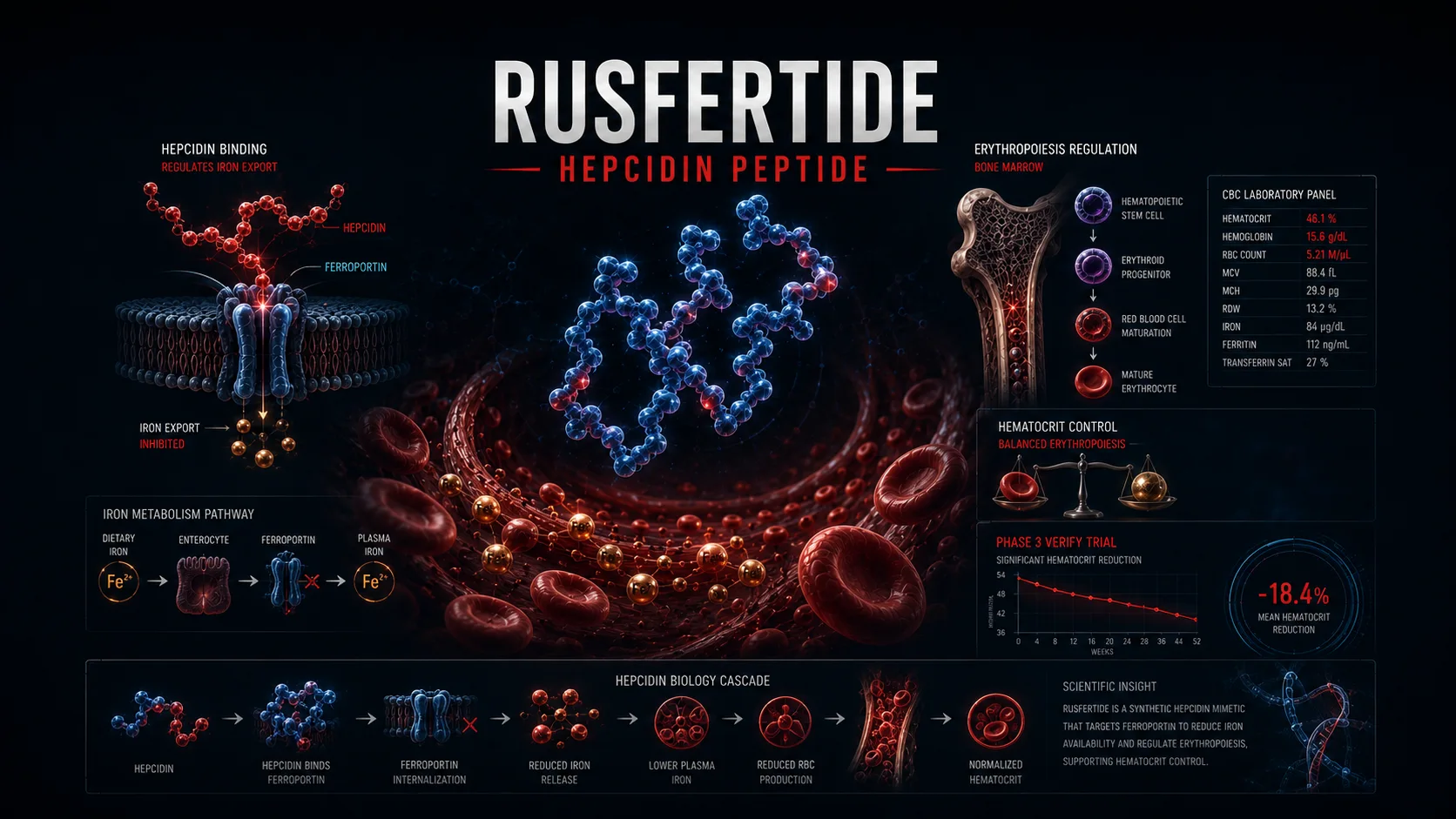
RUSFERTIDE (MIMRYLO): 7 PROVEN FACTS, FDA APPROVAL, EFFECTS
Rusfertide is the first hepcidin mimetic peptide to reach the market. On 28 August 2026 the FDA approved it under the brand name MIMRYLO for erythrocytosis in adults with polycythemia vera, on the strength of a 293-patient phase 3 trial in which 76.9 percent of patients on rusfertide no longer qualified for a phlebotomy against 32.9 percent on placebo (MIMRYLO prescribing information). It works on iron, not on the bone marrow: by copying the hormone hepcidin the peptide closes the ferroportin doorway and starves red cell production of its raw material.
This page reads the whole rusfertide record: what the peptide is, what the label now says about dose, titration and warnings, what the two randomised trials measured, which rusfertide side effects appear against placebo, and why a drug for a blood cancer keeps coming up on a testosterone site. Testosterone suppresses hepcidin (PMID 20660052), rusfertide is hepcidin, and the rest of that connection is mechanism, not evidence. It has never been tested in anyone on testosterone with a rising hematocrit.
Rusfertide in brief
Three numbers frame the drug: how many patients it took off phlebotomy in the pivotal trial, how few phlebotomies were left, and the date the FDA turned an investigational peptide into a prescription drug.
In the phase 3 VERIFY trial, 293 adults with polycythemia vera were randomised to weekly injections or placebo on top of their usual care. Response, defined as absence of phlebotomy eligibility, was reached by 113 of 147 on rusfertide and 48 of 146 on placebo, a difference of 43.8 percentage points (MIMRYLO prescribing information).
The same trial cut the mean number of phlebotomies to 0.53 from 1.82 on placebo, and 62.6 percent of treated patients held their hematocrit below 45 percent against 14.4 percent (MIMRYLO prescribing information). In the earlier phase 2 REVIVE trial the phlebotomy rate fell from 8.7 a year to 0.6 (PMID 38381675).
Approval followed breakthrough therapy designation in August 2025, a new drug application in January 2026 and priority review from March 2026. It is the first approved medicine that works by mimicking hepcidin, and it is approved for one disease only. Nothing on its label mentions testosterone.
Every figure on this page is taken from a PubMed abstract, from the MIMRYLO prescribing information, or from the FDA approval announcement, all listed at the end. Rusfertide doses are quoted only where the label or a trial states them; nothing here is a protocol for anyone outside the approved indication.
What this rusfertide profile covers
What rusfertide is: the hepcidin and ferroportin mechanism, the codes PTG-300 and TAK-121, and what MIMRYLO is approved for.
The rusfertide FDA approval and the label: starting dose, titration, the five vial strengths, and the three warnings the FDA put on the box.
The trials: VERIFY, REVIVE, the open-label study in patients with a hematocrit above 48 percent, the three pharmacology studies in healthy volunteers, the thorough QT study and the hemochromatosis trial.
Rusfertide side effects against placebo, and what a hepcidin mimetic does to iron, platelets and hemoglobin.
The testosterone connection: what Bachman and Guo measured about testosterone and hepcidin, and why that is not the same as a treatment.
Not coveredAny use of rusfertide outside polycythemia vera. It has not been studied in testosterone users, in athletes, or in anyone with secondary erythrocytosis; there is no dose, schedule or protocol for that use and this page offers none.
Polycythemia vera as a disease. Diagnosis and cytoreductive therapy belong to a hematologist. The one number from that field this page uses is the hematocrit target of 45 percent, and it explains where it came from (PMID 23216616).
The general playbook for a rising hematocrit on testosterone. That sits on high hematocrit on TRT and do steroids cause high hematocrit; this page only explains what rusfertide adds and does not add to it.
What is rusfertide? A synthetic hepcidin, and what hepcidin does
Rusfertide is an injectable peptide engineered to mimic hepcidin, the liver hormone that is the central negative regulator of iron trafficking (PMID 41100735). Hepcidin binds ferroportin, the only known iron exporter on gut cells and macrophages, and pulls it out of the membrane; with ferroportin gone, iron stays inside the cells that store it, serum iron falls, and the bone marrow, which needs a steady supply of iron to build hemoglobin, slows its output of red cells. The peptide binds ferroportin the same way and decreases iron delivery to the marrow, reducing red blood cell production (PMID 41175501). Natural hepcidin is cleared within hours; rusfertide was built to last long enough for a once-weekly subcutaneous injection.
The drug was discovered by Protagonist Therapeutics as PTG-300, later carried the Takeda code TAK-121, and reached the market on 28 August 2026 as MIMRYLO, approved for the treatment of erythrocytosis in adults with polycythemia vera. Polycythemia vera is a myeloproliferative neoplasm in which a JAK2 mutation drives red cell production regardless of iron or oxygen; the hematocrit rises, the blood thickens, and the standard defence is therapeutic phlebotomy to keep the hematocrit below 45 percent, a target that a randomised trial of 365 patients showed cut cardiovascular death and major thrombosis from 9.8 to 2.7 percent (PMID 23216616).
The point that matters most for readers of this site: polycythemia vera patients make too many red cells despite being iron deficient, because the JAK2 clone ignores the normal brakes, and hepcidin levels in the disease are relatively low (PMID 41100735). The mimetic restores the brake from outside. It is not a steroid, not an anabolic, not a growth hormone secretagogue and not a performance peptide of any kind; it reduces a physiological output rather than raising one, which is why it sits among the peptides on this site as an explanation and not as a product. How peptides are classified is on types of peptides.
What is measured on rusfertide, and in whom
The drug has an unusually complete record for a new peptide: two randomised placebo-controlled trials in the disease, an open-label study in poorly controlled patients, three pharmacology studies in healthy volunteers, a cardiac safety study, a trial in hemochromatosis, and a prescribing label with adverse event rates against placebo. What it does not have is a single study in anyone taking testosterone. The table keeps the two apart.
| Finding | Design | Weight |
|---|---|---|
| VERIFY: response 76.9 vs 32.9 percent; phlebotomies 0.53 vs 1.82; hematocrit below 45 percent held by 62.6 vs 14.4 percent; fatigue improved (MIMRYLO prescribing information) | 293 patients with polycythemia vera, 32 weeks | Randomised, phase 3 |
| REVIVE: phlebotomies 8.7 a year before to 0.6 on rusfertide; maximum hematocrit 50.0 to 44.5 percent; response 60 vs 17 percent in the randomised withdrawal (PMID 38381675) | 70 patients, 28 weeks plus 12-week withdrawal | Randomised, phase 2 |
| Hematocrit above 48 percent at baseline: 85 percent below 45 percent by week 8; median 4.9 weeks; no phlebotomies; red cell count 5.98 to 4.79 (PMID 41175501) | 20 patients, open label, 52 weeks | Uncontrolled, phase 2 |
| Healthy subjects, five weekly doses: serum iron, transferrin saturation, hemoglobin and hematocrit all fell; no difference between abdomen, arm and thigh (PMID 39888264) | 18 healthy volunteers | Pharmacology, healthy |
| Dose-ranging in healthy volunteers: terminal half-life 19.6 to 57.1 hours; dose-related falls in serum iron and transferrin saturation; injection site erythema and pruritus in 10 percent or more (PMID 39546273) | Healthy adults, crossover | Pharmacology, healthy |
| First-in-human: single and repeated doses well tolerated; no serious adverse events; dose-dependent fall in iron and transferrin saturation (PMID 38785334) | Healthy men, placebo-controlled | Phase 1, placebo |
| Thorough QT study: no effect on heart rate, conduction or QTc; placebo-corrected change between minus 2.0 and plus 1.8 ms; all adverse events mild (PMID 41033871) | 60 healthy adults, crossover | Cardiac safety |
| Hemochromatosis: phlebotomies 2.31 to 0.06 over 24 weeks; 15 of 16 patients phlebotomy-free; liver iron 1.4 to 1.1 not significant (PMID 37863080) | 16 patients, open label | Phase 2, other disease |
| Label warnings: platelet count up 31 percent on average within 4 weeks, above 600 in 36 percent and above 1,000 in 6 percent; injection site reactions in 135 of 287 patients; fetal harm in animals (MIMRYLO prescribing information) | Pooled trial population | Regulatory label |
| Adverse reactions vs placebo: injection site reactions 56 vs 33 percent; anemia 16 vs 4.1; thrombocytosis 8 vs 0.7; dyspnea 8 vs 1.4 (MIMRYLO prescribing information) | 145 vs 146 patients, weeks 0 to 32 | Regulatory label |
| Pharmacokinetics on the label: half-life 28.6 hours; time to peak 24 hours; more than 99 percent protein bound; steady state after about three weekly doses (MIMRYLO prescribing information) | Label | Regulatory label |
| Hepcidin is relatively low in polycythemia vera; hepcidin agonists rusfertide, divesiran and sapablursen restrict iron for erythropoiesis (PMID 41100735) | Review, Blood 2026 | Mechanism |
| Evidence for iron-directed therapy rests on surrogate hematologic endpoints; effect on thrombosis and disease course undefined (PMID 42660705) | Review, Blood Reviews 2026 | Limit of evidence |
| Repeated phlebotomy worsens the iron deficiency already present in polycythemia vera, with fatigue and impaired concentration (PMID 39528901) | Review | Context |
| Testosterone suppressed serum hepcidin within one week, dose-dependently and more in older men; hepcidin at weeks 4 and 8 predicted the hematocrit rise (PMID 20660052) | 109 men, five doses, 20 weeks | Randomised, testosterone |
| Testosterone gel for six months: hemoglobin plus 7 percent, hematocrit plus 10 percent; erythropoietin up, hepcidin and ferritin down at months 1 and 3, a new set point by month 6 (PMID 24158761) | Older men, placebo-controlled | Randomised, testosterone |
| Mice: testosterone lowered hepcidin transcription and raised erythropoietin; mice over-expressing hepcidin did not raise hemoglobin on testosterone (PMID 23399021) | Mouse | Animal |
| Mice lacking hepcidin still raised hematocrit on testosterone: hepcidin is not essential for the effect (PMID 31001931) | Knockout mouse | Animal |
| Rusfertide in testosterone users, athletes or secondary erythrocytosis | No study exists | Not measured |
Read the weight column first. Every green row on rusfertide itself is in polycythemia vera patients or healthy volunteers, and the two green testosterone rows measured hepcidin, not rusfertide. The rows meet only at the mechanism. That is the evidence base, and the rest of this page stays inside it.
Rusfertide FDA approval: what the MIMRYLO label says
The rusfertide FDA approval came on 28 August 2026, when the agency approved MIMRYLO for the treatment of erythrocytosis in adults with polycythemia vera. The path was quick by the standards of a first-in-class drug: breakthrough therapy designation on 25 August 2025, a new drug application submitted on 5 January 2026, acceptance with priority review on 2 March 2026 and approval inside the third-quarter goal date. Protagonist Therapeutics discovered the peptide and Takeda, which licensed it worldwide in January 2024, commercialises it.
The label is where the drug stops being a research story and becomes a set of numbers. The recommended starting dose is 19 mg injected subcutaneously once a week, with the dose adjusted between 9.5 mg and 108 mg weekly to bring the hematocrit below 45 percent and keep it there; an increase is allowed only after at least two weeks at the current dose, with at least two weeks between increases, and the dose is reduced for anemia of grade 2 or worse or for any grade 3 drug-related toxicity (MIMRYLO prescribing information). It is supplied as single-dose vials of 9.5, 19, 28, 41 and 54 mg of lyophilised powder with a prefilled diluent syringe (MIMRYLO prescribing information).
| Warning | What the label reports | Read as |
|---|---|---|
| New or worsening thrombocytosis | Platelet counts rose 31 percent on average within four weeks of starting; 36 percent of patients exceeded 600 and 6 percent exceeded 1,000 times ten to the ninth per litre; a complete blood count is recommended every two to four weeks (MIMRYLO prescribing information) | Class effect of iron restriction |
| Injection site reactions | 135 of 287 patients, 47 percent, in the pooled population; erythema, pruritus, pain and swelling; grade 3 reactions occurred; managed with ice, topical corticosteroids, antihistamines or analgesics (MIMRYLO prescribing information) | Most common event |
| Embryo-fetal toxicity | Animal studies showed structural anomalies and embryo-fetal lethality at exposures below the maximum recommended human dose; effective contraception during treatment and for 30 days after the last dose (MIMRYLO prescribing information) | Animal finding, human precaution |
| Lactation | Breastfeeding not recommended during treatment and for 30 days after the final dose; the peptide is more than 99 percent protein bound and likely digested in the infant gut, so milk transfer is expected to be low (PMID 42766707) | Precaution |
Two things the rusfertide FDA approval label does not contain deserve saying. There is no boxed warning, and there is no malignancy warning. The programme carries a history on that point: on 17 September 2021 the FDA placed a clinical hold after a 26-week study in rasH2 mice, a strain bred to be sensitive to carcinogens, produced benign and malignant tumours under the skin; the hold was lifted on 11 October 2021 after review of the human safety database found no matching signal, and the trials resumed with closer monitoring. Those dates come from company announcements, not from a PubMed abstract.
The approved label five years later lists thrombocytosis, injection site reactions and fetal harm as the warnings, nothing about cancer.
The rusfertide trials: VERIFY, REVIVE and the open-label study
VERIFY is the trial behind the approval. It randomised 293 adults with polycythemia vera, 145 to rusfertide and 146 to placebo in the analysed population, each on top of their existing standard care, for a 32-week controlled period followed by open-label treatment to week 52 and an extension to week 156. The primary endpoint was response, defined as absence of phlebotomy eligibility during weeks 20 to 32: 113 of 147 patients on rusfertide reached it against 48 of 146 on placebo, 76.9 against 32.9 percent, a difference of 43.8 points with a p value below 0.0001 (MIMRYLO prescribing information).

The secondary endpoints moved the same way. The mean number of phlebotomies from baseline to week 32 was 0.53 on rusfertide and 1.82 on placebo; 92 of 147 patients on rusfertide, 62.6 percent, kept their hematocrit below 45 percent throughout, against 21 of 146, or 14.4 percent, on placebo; and the PROMIS fatigue score fell by 1.79 points on rusfertide while rising 0.19 on placebo, p equal to 0.0252 (MIMRYLO prescribing information). The topline data were presented at ASCO and ASH in 2025 and as of 30 September 2026 the full trial has not yet appeared as a PubMed-indexed paper, which is why this page cites the label for its numbers.
REVIVE, the phase 2 trial published in the New England Journal of Medicine, is the one with a peer-reviewed abstract. Seventy patients entered a 28-week dose-finding period; the estimated phlebotomy rate fell from 8.7 a year in the 28 weeks before rusfertide to 0.6 during treatment, and the mean maximum hematocrit fell from 50.0 to 44.5 percent.
Fifty-nine patients were then randomised to continue or switch to placebo for 12 weeks: 60 percent of those who stayed on the drug kept their response against 17 percent on placebo, p equal to 0.002. Grade 3 adverse events occurred in 13 percent of patients and there were no grade 4 or 5 events; injection site reactions of grade 1 or 2 were common (PMID 38381675).
The open-label study is worth a paragraph because it answers the question a reader with a high hematocrit actually has: how fast does it move. Patients with suboptimally controlled disease received 40 mg subcutaneously twice weekly until their hematocrit reached below 45 percent and weekly thereafter (PMID 41175501). The mean hematocrit was below 45 percent by week 4 and stayed there for the whole 52 weeks; red cell count fell from 5.98 to 4.79 times ten to the twelfth per litre, ferritin and mean corpuscular volume improved, 85 percent of patients had a treatment-emergent adverse event and most were grade 1 or 2 (PMID 41175501). Seven of the 20 discontinued, which is the number to hold beside the 85 percent.
What the trials measured is hematocrit, phlebotomy count and symptoms. What they have not measured is thrombosis or disease course: a 2026 review in Blood Reviews puts it plainly that the evidence for iron-directed therapy rests on surrogate hematologic endpoints and that whether it reduces thrombotic risk remains undefined (PMID 42660705). The hematocrit target itself is borrowed from the CYTO-PV trial, where keeping polycythemia vera patients below 45 percent rather than at 45 to 50 cut cardiovascular death and major thrombosis from 9.8 to 2.7 percent, a hazard ratio of 3.91 for the higher target (PMID 23216616).
Rusfertide in people without polycythemia vera: the healthy-volunteer studies
The most relevant rusfertide data for a testosterone user are not in the disease trials at all; they are in the three pharmacology studies in healthy adults, because healthy adults have a normal marrow and a normal JAK2 gene, which is closer to a man on testosterone than a polycythemia vera patient is.
In the multiple-dose study, 18 healthy subjects received 60 mg once weekly for five weeks, randomised to injection in the abdomen, upper arm or thigh (PMID 39888264). Serum iron, transferrin saturation, hemoglobin and hematocrit all fell as a mechanism-based effect, with no difference between injection sites, no serious adverse events, and injection site reactions, fatigue and headache as the events seen in two or more subjects (PMID 39888264).
The dose-ranging study of the lyophilised formulation, the one now sold, gave the peptide at 10 to 60 mg in a crossover design (PMID 39546273). Time to peak was 24 hours at 10 to 30 mg and 2 to 4 hours at 45 and 60 mg, the terminal half-life ranged from 19.6 to 57.1 hours, exposure rose less than proportionally with dose, serum iron and transferrin saturation fell in a dose-related way, and the treatment-related events in 10 percent or more of subjects were injection site erythema and pruritus (PMID 39546273).
The first-in-human study, single doses of 1 to 80 mg of an aqueous formulation in healthy men, found no serious or severe events and dose-dependent falls in iron and transferrin saturation (PMID 38785334).
The label consolidates the kinetics: a mean half-life of 28.6 hours with a standard deviation of 11.3, a median time to peak of 24 hours with a range of 4 to 48, protein binding above 99 percent, and steady state after about three weekly doses (MIMRYLO prescribing information). The cardiac question was closed separately: in a thorough QT study of 60 healthy adults given 90 mg, the placebo-corrected change in QTc varied between minus 2.0 and plus 1.8 milliseconds, the concentration-QTc slope was not significant, and an effect above 10 milliseconds could be excluded up to plasma concentrations of about 2,130 nanograms per millilitre (PMID 41033871).
One more disease has been tested, and it is the mirror image of polycythemia vera. In HFE-related hemochromatosis, where hepcidin is genetically insufficient and iron overloads the organs, 16 patients on maintenance phlebotomy received rusfertide starting at 10 mg once weekly for 24 weeks; the mean number of phlebotomies fell from 2.31 in the 24 weeks before to 0.06 during treatment, 15 of 16 were phlebotomy-free, and liver iron concentration moved from 1.4 to 1.1 milligrams per gram without reaching significance (PMID 37863080). A 2026 review still lists rusfertide as investigational in that disease (PMID 42764193). The approval is for polycythemia vera only.
Rusfertide side effects by the evidence
Rusfertide side effects are the side effects of switching hepcidin on: less iron reaches the marrow, so hemoglobin can fall too far, and platelets, which the iron restriction does not throttle, tend to rise. On top of that sits the one problem every subcutaneous peptide has, the injection site. The table gives each with the strongest source that exists and the placebo rate where the label provides one.
Adverse reactions in VERIFY, weeks 0 to 32, percent of patients: rusfertide n=145 against placebo n=146, from the MIMRYLO prescribing information.
Bars are scaled to 60 percent. The placebo arm also injected, which is why a third of placebo patients had injection site reactions; the excess attributable to rusfertide is 23 points.
| Effect | Strongest evidence | Read as |
|---|---|---|
| Injection site reactions | 56 vs 33 percent in VERIFY; 47 percent in the pooled label population, grade 3 reactions recorded (MIMRYLO prescribing information); grade 1 to 2 common in REVIVE (PMID 38381675); erythema and pruritus in 10 percent or more of healthy volunteers (PMID 39546273) | Most common, mostly mild |
| Anemia | 16 vs 4.1 percent (MIMRYLO prescribing information); hemoglobin and hematocrit fell in healthy volunteers (PMID 39888264); the label reduces the dose at grade 2 (MIMRYLO prescribing information) | The mechanism overshooting |
| Thrombocytosis | 8 vs 0.7 percent as an adverse reaction; platelets up 31 percent on average within four weeks, above 600 in 36 percent, above 1,000 in 6 percent, plateau by week 8 (MIMRYLO prescribing information) | Label warning |
| Dyspnea | 8 vs 1.4 percent (MIMRYLO prescribing information) | Label, mechanism not stated |
| Grade 3 events | 13 percent of patients in REVIVE; no grade 4 or 5 (PMID 38381675); 85 percent had any treatment-emergent event in the open-label study, most grade 1 or 2 (PMID 41175501) | Trials |
| Cardiac rhythm | No clinically relevant effect on heart rate, conduction or QTc at 90 mg (PMID 41033871) | Excluded |
| Fetal harm | Structural anomalies and embryo-fetal lethality in animals below the human dose; contraception for 30 days after the last dose (MIMRYLO prescribing information) | Animal, label warning |
| Cancer | Subcutaneous tumours in the carcinogen-sensitive rasH2 mouse led to a clinical hold in 2021, lifted within a month; no malignancy warning on the 2026 label; no PubMed abstract reports a human signal | Animal, not confirmed in humans |
| Iron deficiency symptoms | Ferritin and mean corpuscular volume improved on rusfertide in patients who had been phlebotomised (PMID 41175501); iron stores repleted in phase 2 (PMID 36728649) | The opposite of phlebotomy |
| Effects in testosterone users | No study | Not measured |
The honest summary of rusfertide side effects is that they are predictable from the mechanism and mostly mild, that the label carries three formal warnings and no boxed warning, and that the two events a reader should remember are the platelet rise, because it is monitored with blood counts every two to four weeks, and anemia, because it is what happens when a drug built to lower hematocrit is not adjusted. The general page on peptide side effects explains why injection site reactions dominate this whole drug class.
Testosterone, hepcidin and hematocrit: why rusfertide keeps coming up on TRT forums
Here is why a polycythemia vera drug is on a testosterone site. One of the best documented reasons testosterone raises hematocrit is that testosterone suppresses hepcidin. In 109 healthy younger and older men whose own production was switched off and who received weekly testosterone enanthate at 25, 50, 125, 300 or 600 mg for 20 weeks, the high doses markedly suppressed serum hepcidin within one week; the suppression was dose-dependent in the older men and more pronounced than in the young, which matched their greater rise in hemoglobin, and hepcidin at weeks 4 and 8 predicted the change in hematocrit from baseline to peak (PMID 20660052).
The follow-up trial showed testosterone pulls from both ends. In older men randomised to testosterone gel or placebo for six months, hemoglobin rose 7 percent and hematocrit 10 percent, erythropoietin rose while ferritin and hepcidin fell at months 1 and 3, and by month 6 erythropoietin and hepcidin had drifted back toward baseline while the hematocrit stayed high, which the authors read as a new erythropoietin-to-hemoglobin set point (PMID 24158761). In mice the same group showed testosterone inhibits hepcidin transcription in the liver and raises renal erythropoietin, and that mice engineered to over-express hepcidin failed to raise hemoglobin on testosterone (PMID 23399021).
That knockout result is the asterisk on every forum post that says rusfertide is the perfect answer to testosterone-driven erythrocytosis. A hepcidin mimetic would put the brake back, and the healthy-volunteer study shows a hepcidin mimetic does lower hemoglobin and hematocrit in a normal marrow (PMID 39888264). But testosterone also raises erythropoietin (PMID 24158761), stimulates erythroid progenitors directly, as a review of the hypoxia, testosterone and erythropoietin axis describes (PMID 41118472), and drove erythropoiesis in mice with the hepcidin route deleted (PMID 31001931). How much of a testosterone-driven hematocrit a hepcidin mimetic could hold, at what dose, and at what cost in platelets and iron, has not been measured in a single human being.
A third mouse study adds a warning of its own: in iron-deficient mice, testosterone reduced the red cell count and produced ineffective erythropoiesis, so restricting iron under androgen pressure is not a neutral act (PMID 32667087).
The scale of the problem such a drug would be aimed at is real. Reviews of testosterone therapy list erythrocytosis as its most frequent adverse event, highest with short-acting injectables, with hepcidin suppression, iron turnover, erythropoietin and marrow stimulation as the proposed mechanisms (PMID 28526632, PMID 34987178).
A blood centre that reviewed three years of requests found therapeutic phlebotomy orders for testosterone patients rose 71 percent between 2014 and 2016, and after it stopped the service, 32 percent of those patients kept coming as volunteer donors (PMID 32134468). Among 519 transgender adults on testosterone with paired counts, 20 percent developed a hematocrit above 50 percent and 4.8 percent underwent phlebotomy, while thromboembolic events occurred in 0.9 percent (PMID 34592628). The testosterone cypionate profile has the dose-response and route data behind that hematocrit rise.
What rusfertide means if your hematocrit is climbing on testosterone
Nothing that you can act on, and the reasons are worth stating precisely rather than as a warning. MIMRYLO is approved for erythrocytosis in adults with polycythemia vera, a JAK2-driven blood cancer; secondary erythrocytosis on testosterone is a different diagnosis with a different management, in which the 2026 update on JAK2-unmutated erythrocytosis lists testosterone among the drug causes, advises against cytoreductive therapy, and reserves phlebotomy for symptom control (PMID 41123216). No trial of the peptide has enrolled anyone on testosterone. The label warnings, thrombocytosis above all, have been characterised only in patients whose platelets were already being watched by a hematologist.
The second reason is that even the standard tool is less settled than the forums assume. A 2024 review asked directly whether phlebotomy can be justified for testosterone-induced erythrocytosis and found the evidence for its efficacy or safety lacking, noting that phlebotomy lowers tissue oxygen tension and depletes iron, which triggers pathways that might raise thrombotic risk; it recommended shared decision-making rather than a reflex (PMID 39212549). A review of testosterone therapy and secondary erythrocytosis reached a similar place: the hematocrit cut-offs in guidelines appear arbitrarily chosen and the evidence that secondary polycythemia causes harm during testosterone therapy is scarce (PMID 34987178). Adding an unstudied hepcidin mimetic on top of an unsettled intervention is not a shortcut.
The third reason is practical. MIMRYLO is a lyophilised peptide in single-dose vials priced for a rare disease, titrated in steps no closer than two weeks apart against blood counts every two to four weeks. A vial of something labelled rusfertide from a research-chemical vendor carries none of that: no assay, no dose, no platelet count, and a drug whose entire safety record was built under hematology supervision. What does have evidence for a rising hematocrit on testosterone is on high hematocrit on TRT: dose and injection frequency, route, hydration and draw timing, and phlebotomy when a physician judges it needed. Where your own number sits is on the hematocrit calculator.
Where the drug is interesting for this audience is as a proof of concept. It is the first drug to show, in a randomised trial, that red cell overproduction can be controlled by iron restriction alone, without removing blood, and that the patients felt less fatigued rather than more. A trial of a hepcidin mimetic in testosterone-induced erythrocytosis is the study that would turn the forum idea into evidence. As of 30 September 2026 that study does not exist, and this page will be updated when it does.
Rusfertide bloodwork: what the label monitors, and what the trials moved
The label monitoring is short because the mechanism is single: iron. The markers below are the ones the prescribing information asks for or the trials moved, in the order a hematologist would read them; for a testosterone user they are also the markers that describe the problem the drug is not approved to treat.
| Marker | What the data show | Priority |
|---|---|---|
| Hematocrit | The titration target: dose adjusted to bring and keep it below 45 percent (MIMRYLO prescribing information); 62.6 percent of VERIFY patients held it there (MIMRYLO prescribing information); median 4.9 weeks to get there from above 48 (PMID 41175501). Guide: do steroids cause high hematocrit | First |
| Platelet count | Complete blood count every two to four weeks; platelets up 31 percent within four weeks, above 600 in 36 percent (MIMRYLO prescribing information) | First |
| Hemoglobin | Anemia 16 vs 4.1 percent; dose reduced at grade 2 (MIMRYLO prescribing information); fell in healthy volunteers (PMID 39888264) | First |
| Serum iron and transferrin saturation | Dose-related falls in every healthy-volunteer study (PMID 38785334, PMID 39546273, PMID 39888264); transferrin saturation from 45.3 to 21.8 percent 24 hours after the first dose in hemochromatosis (PMID 37863080) | Mechanism readout |
| Ferritin and MCV | Improved on rusfertide in phlebotomised patients (PMID 41175501); iron stores repleted in phase 2 (PMID 36728649) | Second |
| Red cell count | 5.98 to 4.79 times ten to the twelfth per litre over 52 weeks (PMID 41175501) | Second |
| Hepcidin | Relatively low in polycythemia vera (PMID 41100735); suppressed within a week by high-dose testosterone and predictive of the hematocrit rise (PMID 20660052); not a routine clinical test | Context |
| Erythropoietin | Rises on testosterone and resets rather than suppresses (PMID 24158761); used to classify erythrocytosis (PMID 41123216) | Context |
The trial numbers say the effect is measurable within four weeks (PMID 41175501) and the label asks for blood counts on the same schedule. For anyone on testosterone the relevant panel is the standard one: hematocrit, hemoglobin, ferritin and a full count at baseline and at the trough, on TRT bloodwork and blood tests before steroids.
Five mistakes people make about rusfertide
Each of these comes from reading the mechanism as if it were a trial, or the approval as if it were broader than it is.
1. Saying rusfertide is still investigational. It was, until 28 August 2026. It is now MIMRYLO, approved for erythrocytosis in adults with polycythemia vera, with a label, five vial strengths and three warnings. The rusfertide FDA approval covers that disease and nothing else.
2. Treating testosterone erythrocytosis as a hepcidin problem only. Testosterone suppresses hepcidin (PMID 20660052), but mice without hepcidin still raised their hematocrit on testosterone (PMID 31001931) and erythropoietin rises as well (PMID 24158761). A hepcidin mimetic addresses one lever.
3. Expecting it to be gentle because it is a peptide. Platelets rose 31 percent within four weeks and exceeded 600 in 36 percent of patients on the label; anemia hit 16 percent against 4.1 on placebo; injection site reactions 56 percent. The label asks for blood counts every two to four weeks for a reason.
4. Quoting the 2021 mouse tumours as a human cancer finding. The hold came from a carcinogen-sensitive mouse strain and was lifted within a month; the approved label carries no malignancy warning and no PubMed abstract reports a human signal. Equally, nobody should quote the absence as proof of long-term safety in a drug approved weeks ago.
5. Buying a vial of rusfertide from a research vendor. MIMRYLO is a lyophilised peptide dosed by titration against blood counts, priced for a rare cancer, and never tested in anyone on testosterone. A grey-market vial has none of the assay, monitoring or evidence that made the approval possible.
Verdict: a real drug for a specific disease, and a mechanism for everything else
Rusfertide, after the label and the papers rather than the forums, is a hepcidin mimetic that controls polycythemia vera erythrocytosis by restricting iron: 76.9 percent of patients needed no phlebotomy against 32.9 on placebo, phlebotomies fell to 0.53 from 1.82, and 62.6 percent held a hematocrit below 45 percent (MIMRYLO prescribing information), on top of a phase 2 trial that took the phlebotomy rate from 8.7 a year to 0.6 (PMID 38381675). Its costs are anemia, a platelet rise and a sore injection site, and its unknowns are thrombosis and disease course (PMID 42660705).
For readers here, the drug is the first proof that iron restriction alone can hold a hematocrit down without removing blood, and a signpost to a trial that has not been run. Until it is, the evidence for a rising hematocrit on testosterone stays where it was: on high hematocrit on TRT, with the mechanism on do steroids cause high hematocrit and the wider drug class on peptide research vs human use.
Rusfertide: frequently asked questions
Is rusfertide FDA approved?
Yes. The FDA approved rusfertide on 28 August 2026 under the brand name MIMRYLO for the treatment of erythrocytosis in adults with polycythemia vera. It had breakthrough therapy designation from August 2025, a new drug application filed in January 2026 and priority review from March 2026. It is not approved for any other condition, including testosterone-induced erythrocytosis.
What is rusfertide and how does it work?
Rusfertide is a synthetic peptide that mimics hepcidin, the liver hormone that controls iron. It binds ferroportin, the iron exporter on gut cells and macrophages, and decreases iron delivery to the bone marrow, which reduces red blood cell production (PMID 41175501). In polycythemia vera, where hepcidin is relatively low and the marrow overproduces red cells, it acts as a chemical phlebotomy (PMID 36728649, PMID 41100735).
What are the rusfertide side effects?
On the label, against placebo over 32 weeks: injection site reactions 56 versus 33 percent, anemia 16 versus 4.1, thrombocytosis 8 versus 0.7 and dyspnea 8 versus 1.4. The three formal warnings are new or worsening thrombocytosis, with platelets up 31 percent on average within four weeks, injection site reactions, and embryo-fetal toxicity from animal studies. In the phase 2 trial grade 3 events occurred in 13 percent and there were no grade 4 or 5 events (PMID 38381675).
What dose of rusfertide is used?
The MIMRYLO label starts at 19 mg subcutaneously once weekly and adjusts between 9.5 mg and 108 mg weekly, no more often than every two weeks, to keep the hematocrit below 45 percent; it is supplied in vials of 9.5, 19, 28, 41 and 54 mg. In the open-label study of poorly controlled patients, 40 mg twice weekly was used until the hematocrit fell below 45 percent, then weekly (PMID 41175501). These are the label and trial figures for polycythemia vera, not a dose for anyone else.
Can rusfertide lower a testosterone-driven hematocrit?
No. It has never been studied or approved for testosterone-induced erythrocytosis. Testosterone does suppress hepcidin (PMID 20660052), and rusfertide lowered hemoglobin and hematocrit in healthy volunteers (PMID 39888264), but mice without hepcidin still raised their hematocrit on testosterone (PMID 31001931), so the mechanism is only partly shared. Management of a rising hematocrit on testosterone remains dose, route, timing and, where a physician judges it needed, phlebotomy.
Is rusfertide a steroid or an anabolic?
No. Rusfertide is a hepcidin mimetic peptide that acts on iron metabolism. It does not bind the androgen receptor, does not raise testosterone or growth hormone, and does not build muscle; it lowers red cell production rather than raising anything.
Does rusfertide cause cancer?
No human signal has been reported. In September 2021 the FDA placed a clinical hold after subcutaneous tumours appeared in a 26-week study in rasH2 mice, a strain bred to be sensitive to carcinogens; the hold was lifted in October 2021 after review of the human data, and the 2026 label carries no malignancy warning. Long-term data beyond the trial extensions do not yet exist.
How fast does rusfertide lower hematocrit?
In 20 patients starting above 48 percent, the mean hematocrit was below 45 percent by week 4, the median time to a value below 45 was 4.9 weeks, and 85 percent were below 45 by week 8 with no phlebotomies (PMID 41175501). Steady state on the label is reached after about three weekly doses, and the half-life is about 28.6 hours.
Sources and further reading
Every figure on this page comes from one of the 30 sources below: 26 papers checked against their PubMed abstracts on 30 September 2026, the approved MIMRYLO prescribing information, the FDA approval announcement and one industry price report, marked as such. Animal studies are cited as such and never as human results. Reference links are dofollow to support open science.
Keep reading
Four pages around rusfertide: the problem it is not approved for, the mechanism behind that problem, the ester with the best hematocrit data, and how to read peptide research without overreaching.
Final Educational Note
This article is educational and is not medical advice. It reports what randomised trials, pharmacology studies, animal experiments and the approved prescribing information say about rusfertide, a prescription medicine for polycythemia vera with real hematologic risks, and what has been measured about testosterone and hepcidin. Doses appear only as the label or a trial states them; the page gives no schedule, cycle or protocol, does not recommend the drug for any use outside its approved indication, and is not an encouragement to use anabolic steroids, which carry serious health and legal risks. More guides sit on the PED side effects hub.
A rising hematocrit, chest pain, breathlessness, a swollen or painful limb, sudden headache or visual change during or after androgen exposure are clinical findings that a physician should assess at once. Read more about how this site works on the about page and in the full disclaimer.