Training
Hypertrophy training explained from the research: what drives muscle growth, how much volume and rest you need, which workout splits fit your week, and how to train around pain.
Principles first, programs second. Once the principles are clear, any split becomes easier to judge.
Start With Your Question
Most lifters open this page with one problem. Pick the line that fits and go straight to the right hypertrophy training guide.
Principles Before Programs
Seven guides on the fundamentals of hypertrophy training: growth, overload, volume, recovery, phases, peak week and rest, before any specific split.

What Builds Muscle
One hard session raised muscle protein synthesis 112% at 3 hours and still 34% at 48 hours. What actually drives muscle growth.

Progressive Overload Explained
The ACSM rule: once you beat the planned reps by one or two, raise the load by 2 to 10%. Load, reps, sets and technique.

Training Volume Explained
Each extra weekly set added about 0.37% muscle growth across 34 training groups. How much volume you can actually use.

Recovery and Fatigue
One night without sleep cut muscle protein synthesis 18% in 13 young adults. Soreness, sleep, stress and volume tolerance.

Cutting vs Bulking Training
How training priorities shift during calorie surplus, deficit, muscle gain phases, fat-loss phases, and muscle-retention periods.
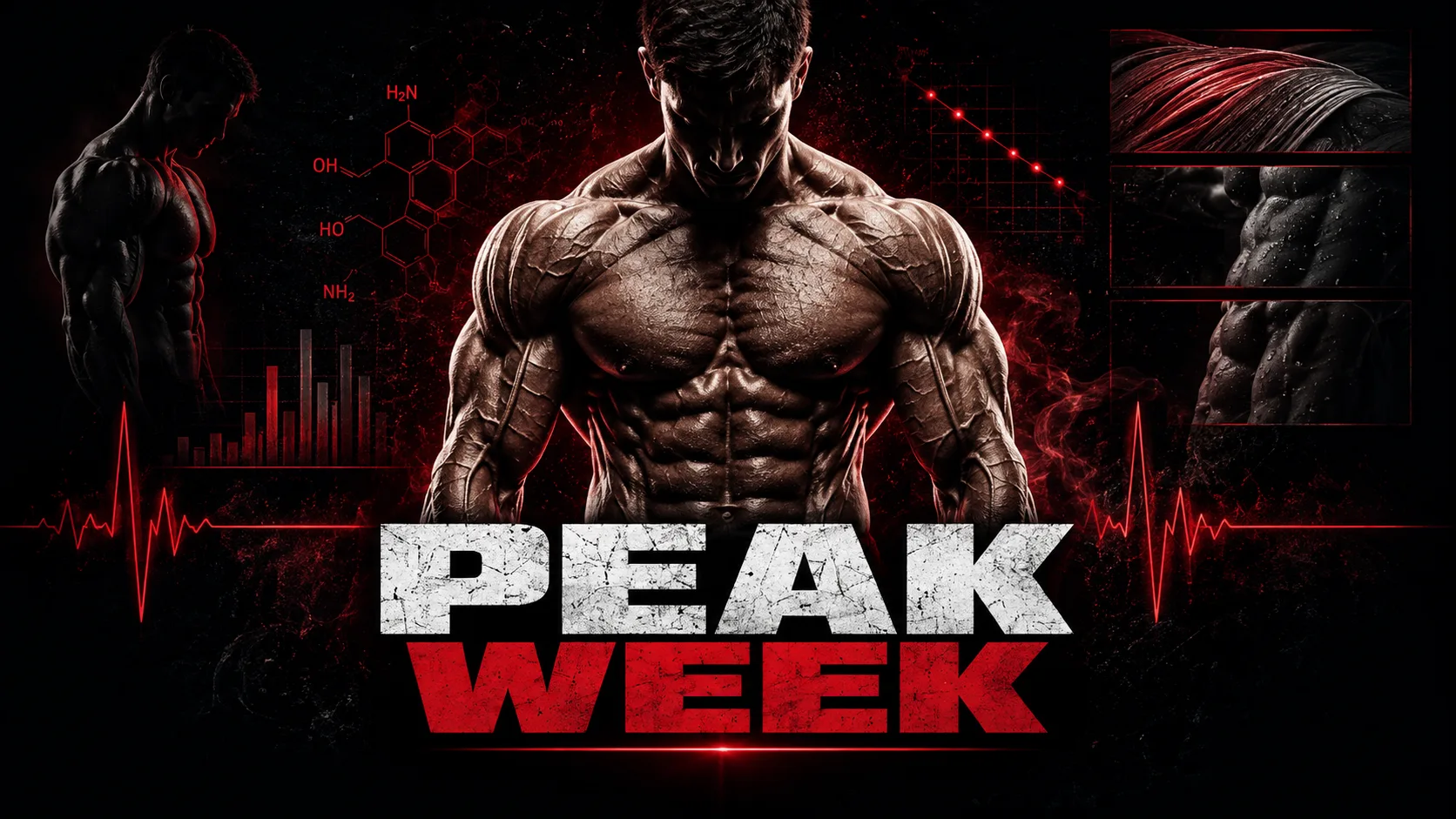
Peak Week in Bodybuilding
What competitors change in the final seven days, what the published evidence actually supports, and where water and electrolyte manipulation turns dangerous.

How Long to Rest Between Sets
With 5 minutes of rest instead of 1, trained men did 70% more bench reps at the same weight. Rest for size and for strength.
Learn Principles Before Choosing a Split
Hypertrophy training should be understood through stimulus, progression, fatigue and goals before choosing a routine. Then workout splits become easy to compare.
Understand the Stimulus
Tension, effort and progression, with enough recovery to adapt.
Track What Improves
Load, reps and technique matter more than new exercises.
Match the Goal
Bulking, cutting and contest prep change how training is managed.
Then Choose a Split
Workout splits only work when the principles are respected.
Splits, Programs and Exercise Guides
Workout splits for every schedule, from 3 to 5 days a week, plus a dumbbell only program and muscle group sessions for back and arms.

3-Day Workout Split
Three sessions matched six for squat, bench and lean mass at equal volume (PMID 29324578). Three complete programs, 9 to 15 sets per muscle, and an 8 week progression.

4-Day Gym Split Program
A structured 4-day gym split with upper/lower or push/pull options, exercise list, loading guidelines, and progression logic for intermediate lifters.

5-Day Workout Split
Three 5 day programs to copy. Training each muscle twice a week grew more than once, effect size 0.49 vs 0.30 (PMID 27102172).

Full Body Dumbbell Workout
A 3 day plan with only dumbbells. Light and heavy loads grew muscle similarly across 21 studies when sets went to failure (PMID 28834797).

Upper Back Workouts
Six upper back exercises with activation data: wide grip was 3 kg weaker with the same lat EMG, a pronated pull-up hit the mid traps at 60.1 percent (PMID 24662157, 28011412). Two full workouts.

Arm Day Workout
Biceps and triceps in three pairs. Overhead extensions grew the triceps 19.9% vs 13.9% for pushdowns in 12 weeks (PMID 35819335).
Tendons, Joints and Muscles Under Load
What the pain pattern means, how load management rebuilds tolerance, and when a symptom needs a clinician rather than a program change.
These guides explain what trials and consensus statements say about tendon and joint pain in resistance training. Every guide lists the red flags that need a physician or physiotherapist.

Tendonitis vs Tendinosis
Heavy slow loading cut tendon swelling 12% and abnormal vessels 45% in 12 weeks. Why rest alone does not fix tendon pain.

Knee Pain When Squatting
Kneecap pain affects 22.7% of the general population in a year. Pain patterns by squat depth and the signs that need a clinician.

Shoulder Pain Bench Press
Front, AC joint, rotator cuff and pec tear patterns, grip width and scapula loads, what the cuff and surgery trials measured, weightlifter shoulder, and the signs that need a clinician.
Lower Back Pain After Deadlift
Muscle strain against disc and joint pain, why most episodes settle in days, how to keep training, and the red flags that need a doctor.
Wrist Pain Bench Press
Wrist extension, bar position and grip as the usual causes, wraps and grip changes that help, and the tendon and ligament patterns that do not.
Hypertrophy Training: What the Studies Show
Three numbers explain most of what matters in a muscle building workout: the signal one session sends, the volume you add, and the rest you take.
One session lasts two days
A hard session raised muscle protein synthesis 112% at 3 hours, 65% at 24 hours and still 34% at 48 hours.
That is why most hypertrophy training hits each muscle about twice a week.
More sets, more growth
Each extra weekly set added about 0.37% muscle growth across 15 studies and 34 groups.
Higher volume groups grew 3.9% more than lower volume groups in the same studies.
Longer rest, more reps
With 5 minutes of rest, trained men did 12.9 bench reps over 5 sets; with 1 minute, 7.6.
Muscle building after leg training rose 152% with 5 minute rests and 76% with 1 minute rests.
A good muscle building workout is hard, repeated about twice a week per muscle, and not rushed between sets.
Training for Size or for Strength
The same levers move size and strength differently. Knowing which goal you train for changes how you set up workout splits.
Size
Keeps rising with more sets, with slower returns.
Multiple sets gave 40% larger growth effects than one.
Past 90 seconds, extra rest showed no clear benefit for size.
Short sessions held strength; size favored more volume.
Strength
Returns flatten much sooner than for size.
More sets still meant more strength across 9 studies.
Longer rest kept more reps on heavy sets.
Three 13 minute sessions a week matched strength gains.
If size is the goal, add sets before you add exercises. If strength is the goal, protect rest and bar speed.
6 Numbers From This Hub
These figures come up again and again across the hypertrophy training guides. Each one is cited in the guide it comes from.
Muscle protein synthesis 3 hours after one hard session.
Still above resting 48 hours after the same session.
Extra muscle growth per extra weekly set.
More bench reps with 5 minutes of rest instead of 1.
Muscle protein synthesis after one night without sleep.
Yearly prevalence of kneecap pain in the general population.
Hypertrophy training is simple on paper: enough hard sets, enough rest, enough sleep. Most plateaus come from missing one of the three.
Hypertrophy Training: Frequently Asked Questions
Short answers to the questions lifters ask most about hypertrophy training and workout splits.
What is the best training for muscle growth?
Hypertrophy training built on hard sets close to failure, enough weekly volume and gradual overload. Each extra weekly set added about 0.37% growth across 34 training groups, with slower returns at high volumes.
How many times a week should you train a muscle?
One hard session keeps muscle protein synthesis elevated for about 48 hours, so most programs hit each muscle about twice a week. Our workout splits show how to fit that into 3, 4 or 5 days.
How long should you rest between sets?
Longer than most people think. Trained men did 70% more bench reps with 5 minutes of rest than with 1. For size, extra rest past about 90 seconds showed no clear benefit in a review.
Which workout split is best?
The one you can repeat. A 3, 4 or 5 day split all work if weekly volume per muscle is similar and you keep progressing. Our split guides compare structure, volume and recovery.
Does sleep affect muscle growth?
Yes. One night without sleep lowered muscle protein synthesis 18% and testosterone 24% in 13 young adults. Recovery is part of the program, not a break from it.
Should I rest a sore tendon completely?
Usually not. Heavy slow loading cut tendon swelling 12% and abnormal blood vessels 45% in 12 weeks. Our tendon guide explains load management and the red flags that need a clinician.
Explore Other Hubs
Every topic on Muscle Science has its own hub. Move to the next one from here.
Testosterone therapy, labs and side effects.
Hub →Bloodwork & HealthHow to read every marker on your report.
Hub →PED Side EffectsWhat each compound does to the body.
Hub →SteroidsCompounds explained one by one.
Hub →Cycle DesignHow cycles are structured and why.
Hub →PCTRecovery after a cycle.
Hub →PeptidesResearch peptides and what is known.
Hub →SupplementsEvidence on popular supplements.
Programs and lifting technique.
Diet, protein and calories for muscle.