Steroids
Clear educational guidance on anabolic steroids, compound categories, hormone effects, side-effect awareness, bloodwork, and risk context. This section is built for structured learning, not hype or casual use.
Learn Steroids by Systems
Steroid education should not start with “best compounds.” It should start with mechanisms, side effects, bloodwork, hormone changes, cardiovascular strain, and recovery planning.
Understand the Category
Learn whether a compound is testosterone-based, DHT-derived, 19-nor, oral, or injectable.
Connect Labs Early
Hormones, CBC, lipids, liver markers, kidney context, and blood pressure must stay part of the discussion.
Know the Main Risks
Estrogen shifts, acne, hair loss, fertility suppression, mood changes, and cardiovascular markers matter.
Think Past the Cycle
Suppression, fertility, PCT, and follow-up bloodwork should be understood before deeper cycle content.
Start With the Main Categories
These future guides will explain steroids by category, mechanism, risk profile, bloodwork context, and practical harm-reduction education.

What Are Anabolic Steroids?
Understand what anabolic-androgenic steroids are, how they affect androgen receptors, muscle growth, hormones, and health markers.

Injectable vs Oral Steroids
Learn how injectable and oral steroids differ in duration, liver stress, monitoring needs, and common risk patterns.

Testosterone Steroids
Explore testosterone esters, aromatization, estradiol context, bloodwork, and why testosterone is often the reference point.

DHT-Derived Steroids
Understand DHT-derived compounds, androgenic effects, hair-loss risk, skin changes, strength effects, and estrogen context.

Nandrolone and 19-Nor Steroids
Nandrolone, NPP, trenbolone class — progestogenic activity, prolactin risk, libido effects, and the 19-nor structural difference from testosterone.

Bulking vs Cutting Steroids
Which compounds suit mass phases versus cutting phases — retention profiles, estrogen behavior, and how to read the difference in bloodwork.
The Most Discussed Steroid Compounds
These guides explain the most commonly discussed anabolic steroids, including how compounds differ in structure, effects, duration, estrogen activity, androgenicity, and monitoring context.

Testosterone Enanthate
How testosterone enanthate works, why esters matter, aromatization, HPTA suppression, and bloodwork monitoring across a full cycle.

Dianabol (Methandrostenolone)
Understand why Dianabol became one of the most recognized oral steroids, including water retention, strength increases, liver strain, and estrogen-related effects.

Anavar (Oxandrolone)
How oxandrolone works, why it does not aromatize, its real bloodwork impact on HDL and liver enzymes, and five critical errors in how the compound is interpreted.

Trenbolone
The most androgenic compound in common use. Pharmacology, ester differences, progestogenic activity, cardiovascular strain, and eight bloodwork markers explained.

Deca-Durabolin
Partial aromatization, progestogenic activity, the mechanism behind deca dick, joint reputation explained, and seven bloodwork markers — the complete pharmacological picture.

Winstrol
DHT-derived, 17-alkylated in both forms, severe HDL suppression, joint dryness mechanism, and SHBG binding explained — the complete bloodwork and pharmacology guide.

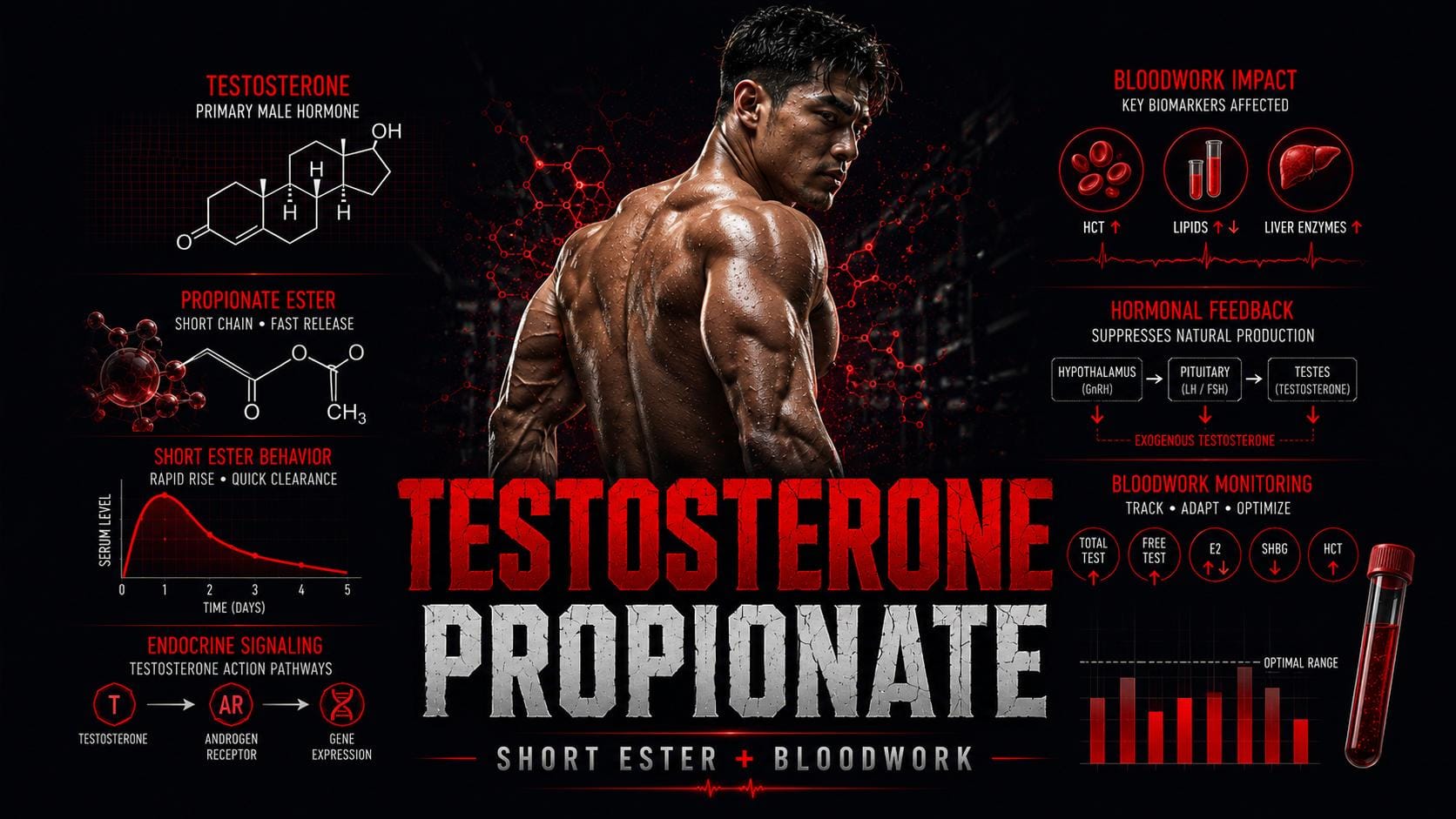
Testosterone Propionate
Short-ester testosterone, faster peak and clearance, injection frequency differences, aromatization pattern, and bloodwork monitoring compared to long esters.

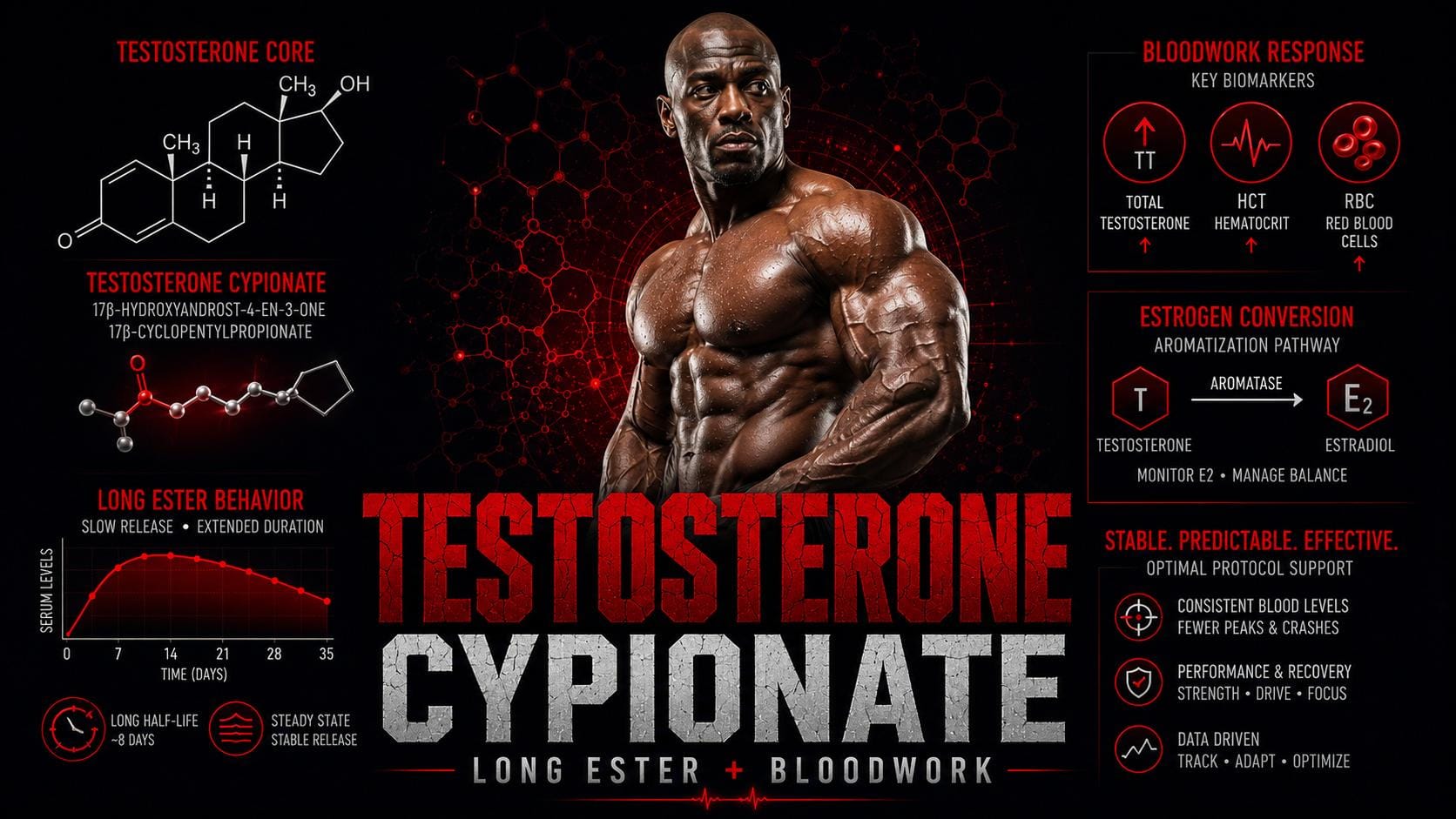
Testosterone Cypionate
How cypionate compares to enanthate, half-life differences, injection scheduling, estrogen behavior, and why it remains the dominant TRT and cycle base in the US.

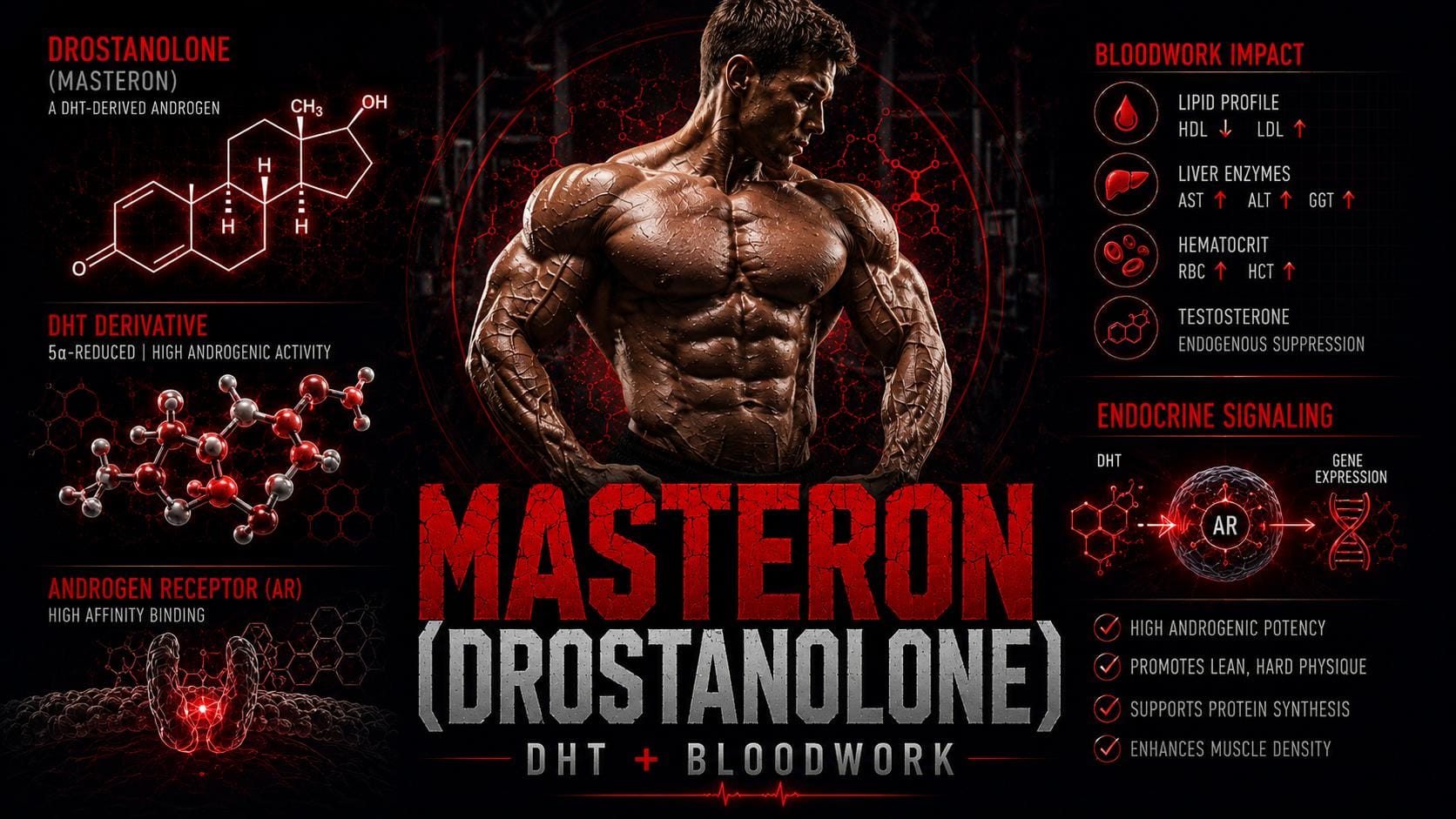
Masteron (Drostanolone)
DHT-derived, non-aromatizing, SHBG binding, androgenic effects on skin and hair, estrogen displacement mechanism, and bloodwork context during cutting phases.

Primobolan (Methenolone)
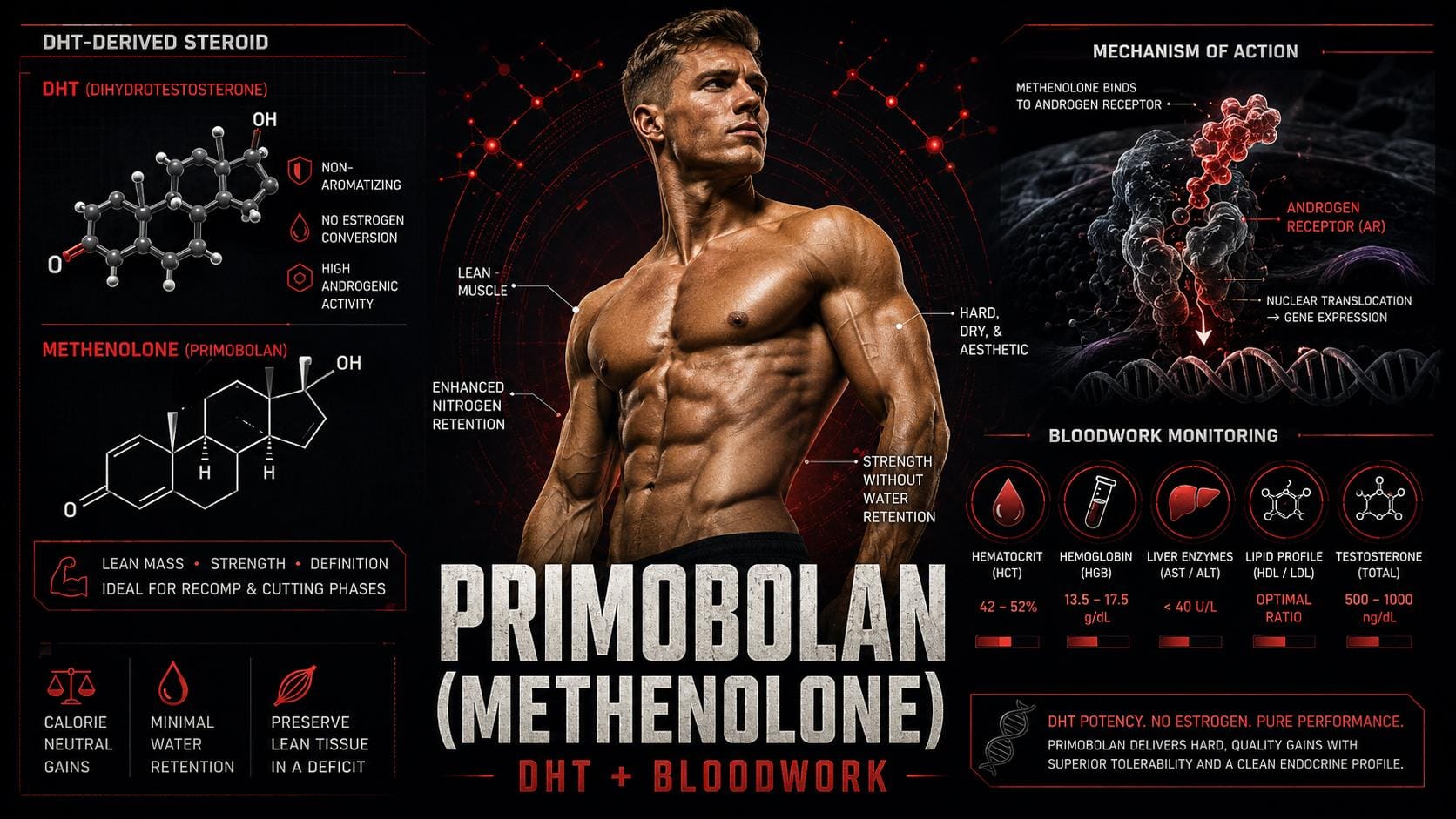
Low androgenicity, minimal aromatization, nitrogen retention profile, oral vs injectable form differences, HDL impact, and why its reputation often exceeds its actual effect size.

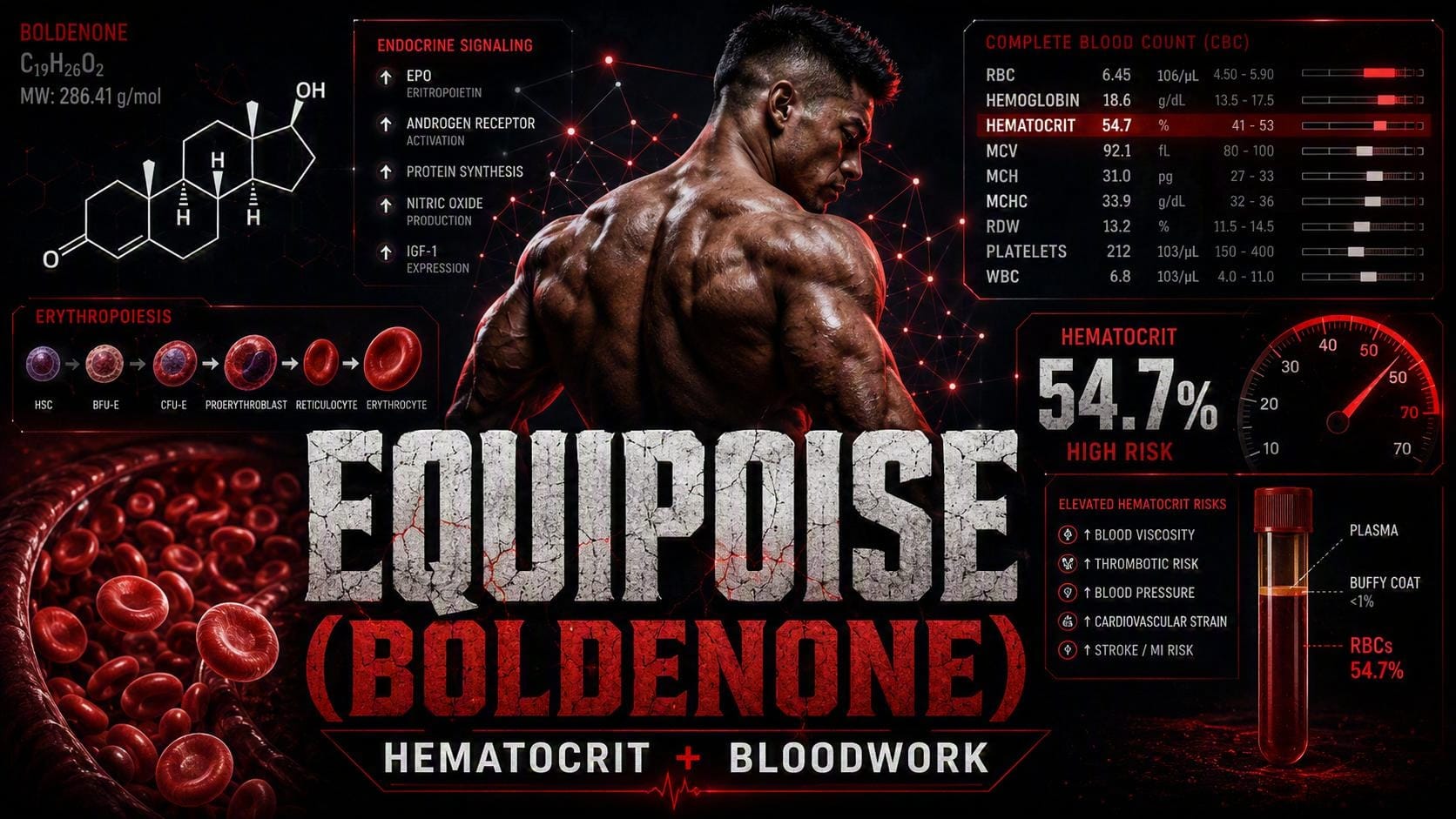
Equipoise (Boldenone)
Slow-release injectable, partial aromatization, elevated RBC and hematocrit risk, appetite stimulation, and how boldenone differs from testosterone in androgenic profile.

Anadrol (Oxymetholone)
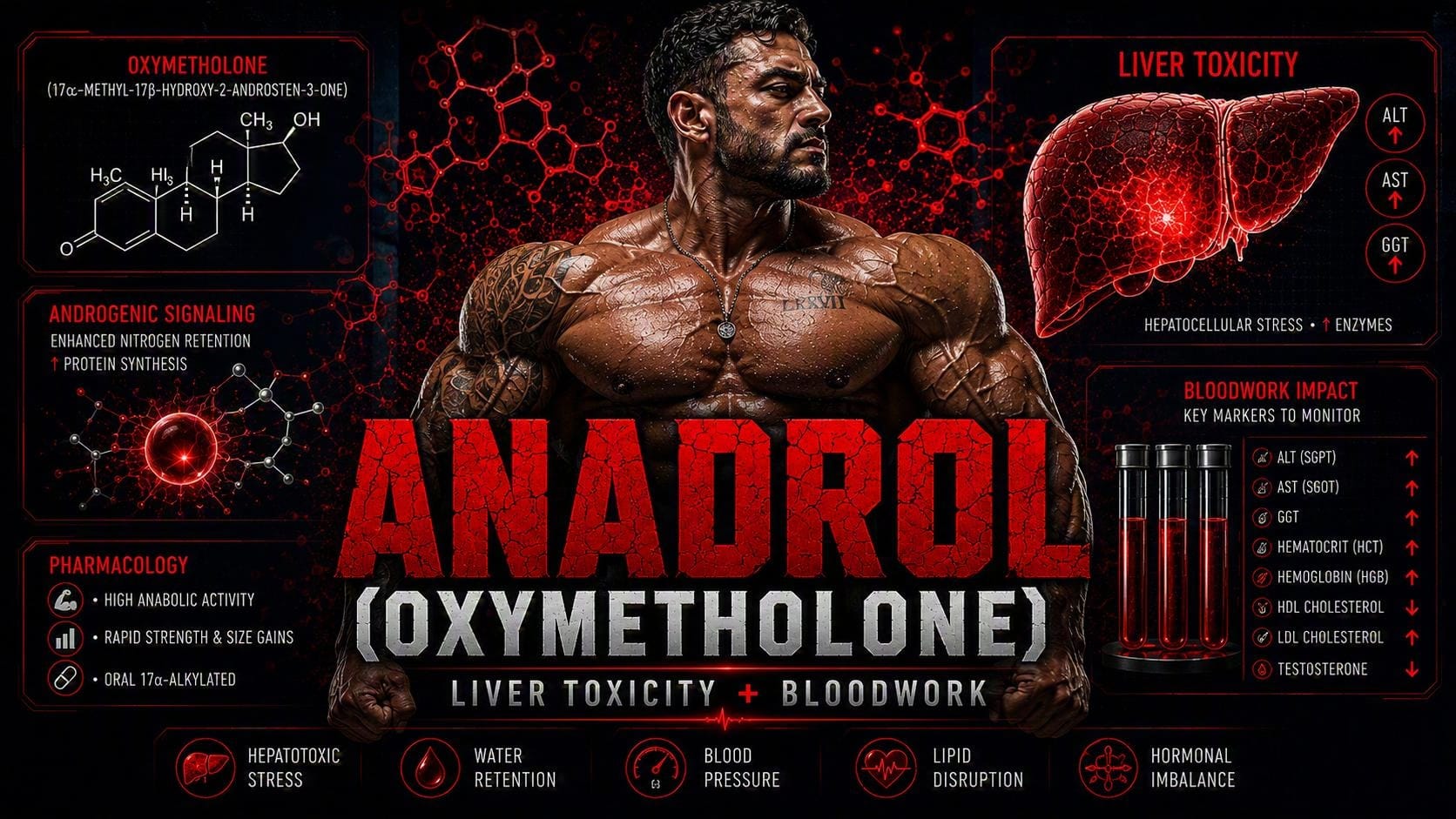
The most potent oral mass compound — rapid weight gain mechanism, paradoxical estrogen behavior, severe liver strain, cardiovascular impact, and bloodwork monitoring priorities.

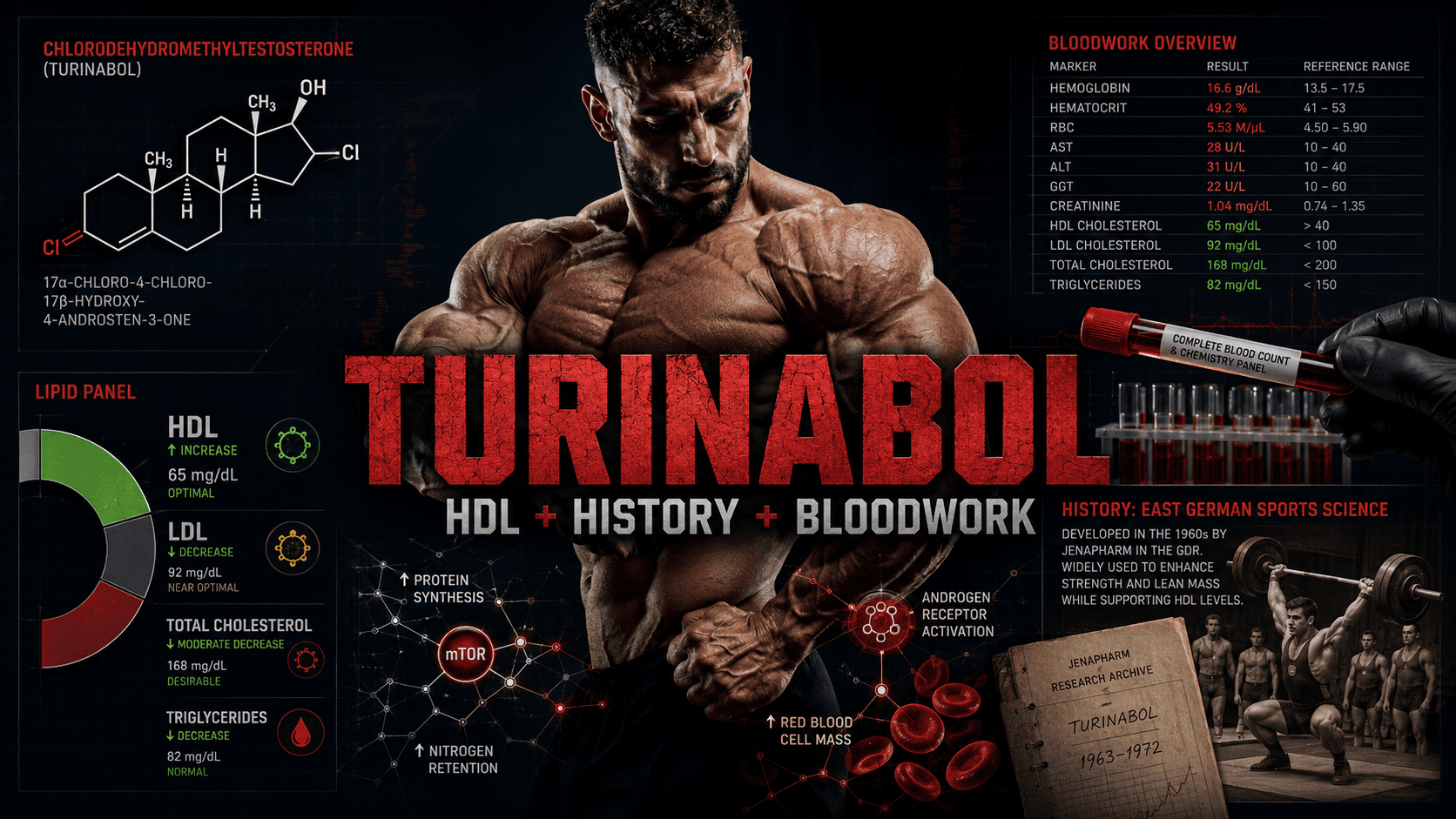
Turinabol
Chlorinated Dianabol derivative, no aromatization, moderate anabolic activity, significant HDL suppression, detection window history, and where it fits in practice.

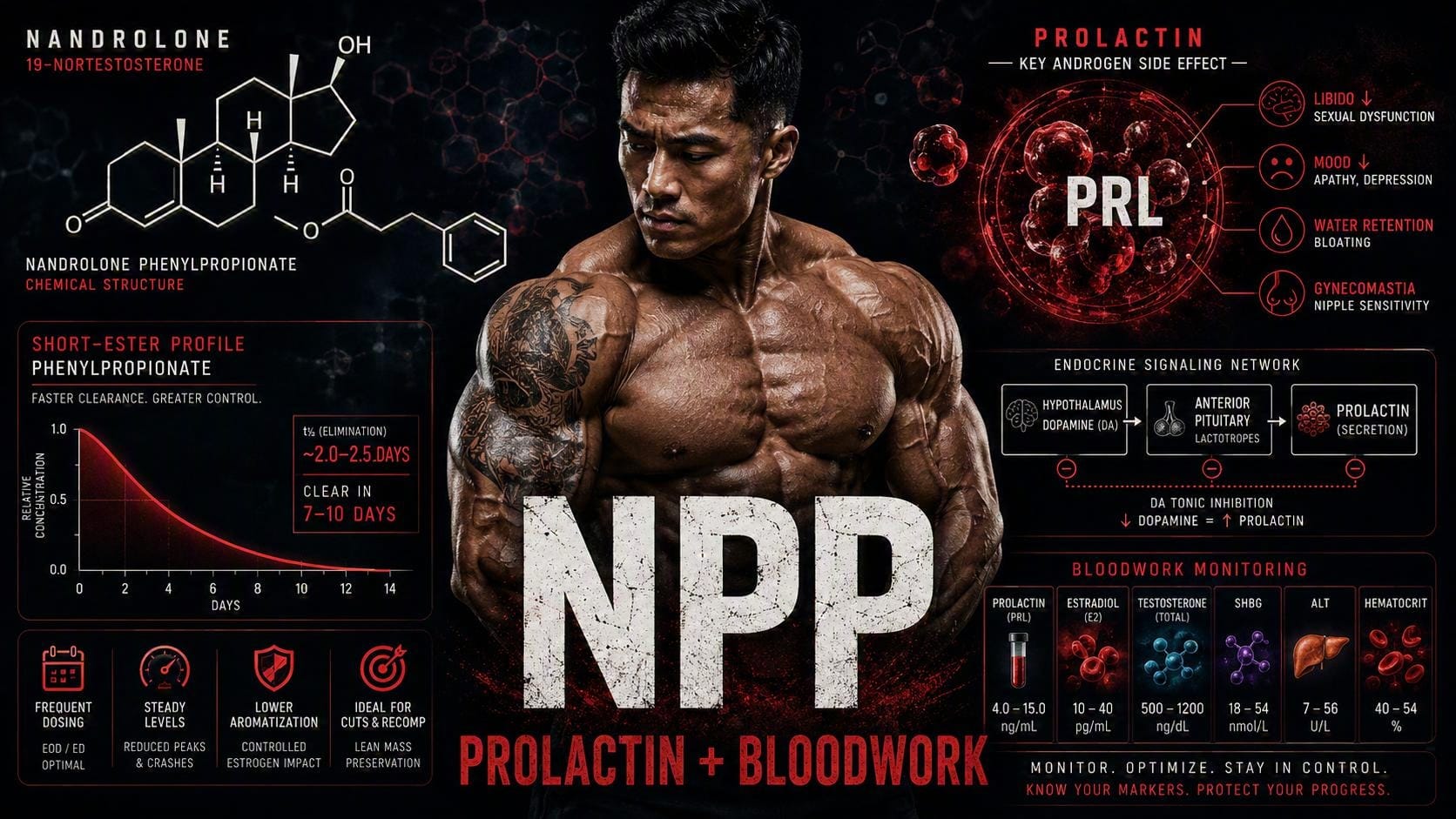
NPP (Nandrolone Phenylpropionate)
Short-ester nandrolone, faster onset and clearance versus Deca, progestogenic activity, prolactin monitoring, and practical differences in injection frequency and recovery timing.

Proviron (Mesterolone)
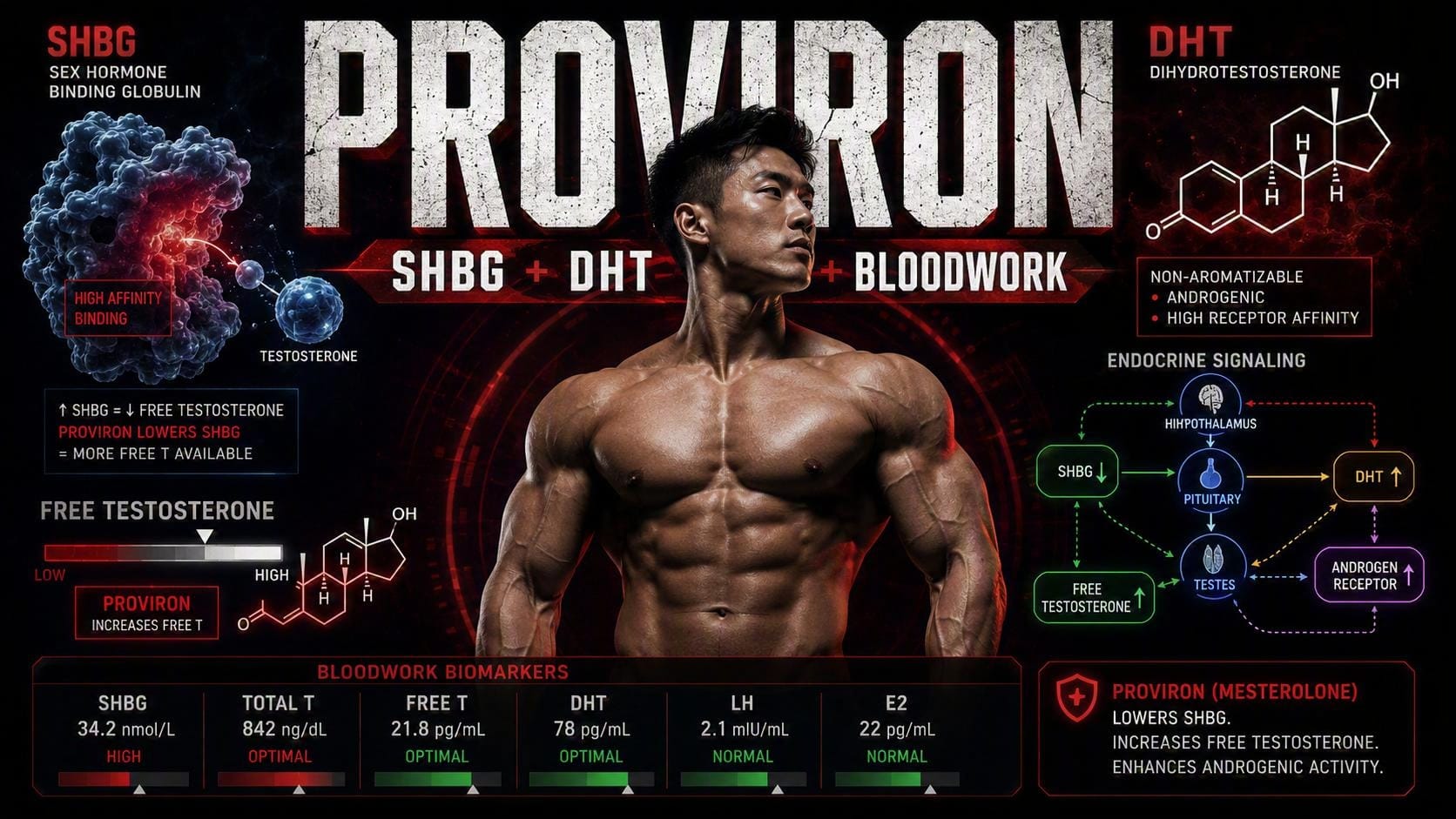
Oral DHT derivative, SHBG binding and free testosterone elevation, androgenic effects without anabolic contribution, and its role in estrogen management context.

Halotestin (Fluoxymesterone)
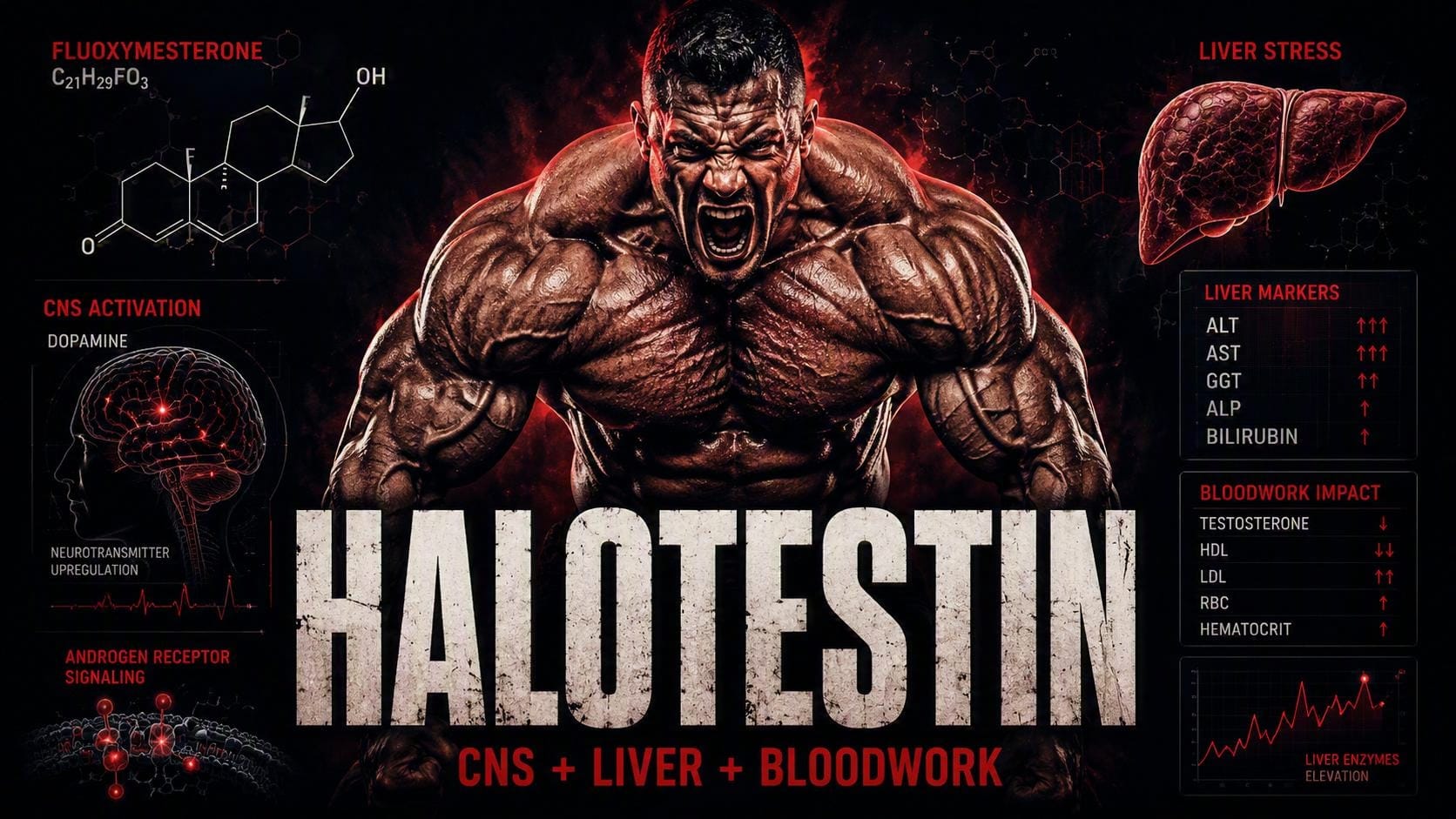
Extreme androgenicity, no aromatization, short-term aggression and strength application, severe hepatotoxicity, and why Halotestin sits at the edge of the compound risk spectrum.
Sustanon 250
Four-ester testosterone blend, overlapping release curves, why injection frequency matters more than with single esters, aromatization pattern, and TRT vs cycle context.
Superdrol (Methasterone)
One of the most potent oral androgens available — rapid dry mass gains, no aromatization, severe liver strain, cardiovascular impact, and why short cycles are the only rational approach.
Clenbuterol
Not an anabolic steroid — a beta-2 adrenergic agonist used for fat loss. Mechanism, cardiovascular strain, receptor downregulation, cycle structure, and what the research actually shows.
Testosterone Undecanoate
Ultra-long ester testosterone used in TRT (Nebido). Injection intervals, slow onset, difficulty adjusting estrogen, and how it differs from weekly TRT protocols in practice.
DHB (Dihydroboldenone)
1-Testosterone cypionate — high anabolic-to-androgenic ratio, no aromatization, significant injection site pain, cardiovascular strain, and bloodwork monitoring priorities.
MENT (Trestolone)
Extremely potent 19-nor compound, no SHBG binding, high aromatization requiring AI management, no 5-alpha reduction, and why its potency makes bloodwork monitoring non-optional.